The Short Version
The border between Spain and Gibraltar is one of Europe's strangest lines on the map: a few hundred metres of fence and tarmac that have been besieged, sealed shut for 13 years, and argued over for three centuries. And it has just made history again: on 15 July 2026, under a new UK-EU treaty, the routine passport checks ended, and the fence itself, after 118 years, came down.
If you're staying with us in Sabinillas, the frontier is about 30 minutes down the coast, which makes this the easiest international border crossing of your life, and, right now, one of the most interesting. Here's the whole story: how to cross it now, what the treaty changed, and how a fence in the sand came to matter so much.
Status as of 15 July 2026: it happened. The UK-EU treaty on Gibraltar was formally signed in Brussels on 14 July and entered provisional application just after midnight on 15 July 2026. Routine immigration checks at the land border have ended, and the physical barriers (la Verja) have been removed: where the fence stood there is now an open crossing zone roughly 180 metres wide, with different-coloured tarmac marking where British territory begins. Expect a gradual bedding-in over summer 2026 rather than an overnight transformation, and keep carrying your documents. We'll keep updating this page as the new arrangements settle.
How to Cross the Border
Park in La Línea, walk across
The golden rule of the Gibraltar frontier hasn't changed in decades and survives the treaty intact: leave the car in Spain. From Sabinillas, drive west on the AP-7 towards Algeciras, take the La Línea de la Concepción exit, and park near the border; the municipal car parks and private lots around Avenida Príncipe de Asturias typically charge around €7-8 for a full day, a five-minute walk from the crossing.
Then walk. The pedestrian crossing takes 10-15 minutes end to end on a normal day, against vehicle queues that have historically stretched to 30-60 minutes at weekends and in peak season. Add Gibraltar's cramped town-centre parking and its narrow one-way streets, and driving across buys you nothing but stress. Once you're through, the town centre is a further 10-15 minutes on foot, or a short ride on the local buses that wait near the frontier (cheap flat single fares; if you'll hop on more than a couple of times, the Hopper day pass, £8.80 adult / £5.50 child for all routes, is sold as an e-ticket at buytickets.gi).
If you've hired a car for your stay (our garage add-on keeps it off the street for €10 a night), the run to the frontier is one of the simplest drives on this coast: one motorway, one exit, clear signs.
Documents: what you need in your pocket
- Until 14 July 2026 full checks applied: UK citizens needed a passport, EU citizens a passport or national ID card: no documents, no crossing.
- Since 15 July 2026: routine immigration checks at the land border have ended. But (and this matters) official guidance is still to travel with valid documents. The treaty permits temporary controls, police can carry out non-routine checks, and you'll want ID with you in any case. Treat "no routine checks" as "no queueing at a booth", not "leave the passport at the apartment".
One quirk worth knowing for non-EU visitors: don't expect a stroll into Gibraltar to pause or reset your 90-day Schengen allowance. Once routine checks end there's no exit stamp at the land border at all, so your time in Spain simply keeps counting. (Fly or sail into Gibraltar, though, and you'll meet full Schengen-style entry checks at the airport or port; that's where the controls have moved.)
Gibraltar Border Queue Times: When to Cross
Roughly 15,000 people cross this frontier every day, most of them to work, one of the busiest labour borders in Europe for its size. That daily tide sets the rhythm of the queues:
- Avoid 08:00-09:00 and 17:00-18:00, when cross-border workers surge through in both directions.
- Mid-morning on a weekday is the sweet spot: arrive at the La Línea car parks around 09:30 and you'll usually walk straight through.
- Summer weekends are the worst of it: historically up to 30 minutes on foot, longer by car.
Check the live queue before you leave. The vehicle queue at the frontier is streamed in real time at frontierqueue.gi: a live look at how backed up the border is right now, so you can time your run, or decide to park in La Línea and walk instead of guessing.
Pro tip: cross the border twice. Seriously: the crossing itself is part of the fun, because the pedestrian route walks you straight across the live runway of Gibraltar International Airport (cars now use a tunnel beneath it; walkers still take the tarmac, with barriers closing briefly for landings). Time your return for late afternoon and you'll have the runway walk in golden light with the Rock glowing above you.
Turn the runway into the highlight. The barriers close for a few minutes around every landing and take-off, so glance at Gibraltar Airport's live flight times and play it whichever way you fancy: time your crossing to watch a jet touch down just metres from your feet, or dodge those slots and stroll straight over without the wait.
At the crossing itself
The booths and barriers at the land frontier came down with the treaty: where la Verja stood there is now an open strip roughly 180 metres wide, resurfaced with different-coloured tarmac to show where British territory begins: the 300-year-old frontier reduced to a change in paving. The crossing should progressively feel like walking between two Schengen countries. Officials on both sides still expect a staggered transition while the new customs arrangements bed in, so build in a little slack during summer 2026 and treat any leftover queueing as the last gasp of an old ritual.
How a Fence in the Sand Became Famous
You can't really understand the celebration around 15 July without the history, because this short stretch of border has been an open wound for generations.
Britain captured Gibraltar in 1704 and Spain ceded it "in perpetuity" under the Treaty of Utrecht in 1713, a clause Madrid has regretted ever since. For two centuries the dispute simmered: sieges, blockades and diplomatic stand-offs, until by 1908 the British had put up a permanent fence across the sandy isthmus, a fence Spain never formally accepted as a border at all (officially, Spanish documents call it "la Verja", the fence). That is the barrier that finally came down on 15 July 2026, 118 years after it went up.
Then it boiled over. In 1967, Gibraltarians voted on their future: 12,138 to 44 to remain British. Franco's response escalated until, on 8 June 1969, he closed the frontier completely. The gates were locked. Telephone lines were cut. Around 4,800 Spanish workers lost their jobs in Gibraltar overnight, and families with relatives on both sides were split for a generation; people famously gathered at the fence to shout news across no-man's-land and hold up newborns for grandparents to see. To visit relatives a few hundred metres away, you had to sail from Algeciras to Tangier in Morocco and back up to Gibraltar: a day's journey to cross a street.
The thaw came slowly after Franco's death. The gates opened to pedestrians on 15 December 1982, and fully, to vehicles at last, on 5 February 1985, the year before Spain joined the European Community. In February 2025, Gibraltar marked the 40th anniversary of that full reopening; barely 18 months later, the barriers themselves came down for good.
Brexit, and four years of talks
The 2016 Brexit vote put the frontier back in jeopardy: Gibraltar had voted about 96% Remain, precisely because its lifeline runs through that fence. A last-minute framework deal between the UK and Spain on New Year's Eve 2020 kept things moving while a permanent fix was negotiated, and the negotiation took over four years. The milestones:
- June 2025: political agreement announced between the UK, the EU and Spain.
- December 2025: the full legal text finalised.
- 1 April 2026: EU member states unanimously approved the treaty and set 15 July 2026 for provisional application (an earlier April start was pushed back to give businesses time to prepare).
- 14 July 2026: the treaty was formally signed in Brussels.
- 15 July 2026: provisional application began just after midnight, with routine land-border checks ended and the barriers removed.
- Autumn 2026: full ratification by the European Parliament expected; until then the treaty runs on provisional application.
What the Treaty Means for a Day Tripper, in Plain English
Strip away the diplomacy and here's what the 2026 treaty does to your day out:
- The queue at the fence is gone. Routine immigration checks have ended and the physical barriers at the land border have been removed. The crossing should eventually feel like walking from Spain into Portugal.
- The checks move, they don't vanish. Schengen entry checks now happen at Gibraltar's airport and cruise port, run by Spanish officials working alongside Gibraltar's own. Arrive by land and you bypass all that; arrive by air or sea and you'll clear both sets of controls there.
- Gibraltar does not join Schengen or the EU. It stays a British Overseas Territory; sovereignty is explicitly untouched. This is plumbing, not politics.
- Shopping survives, with limits. A new EU-Gibraltar customs union phases in for goods, and for an initial period of around three years a personal allowance of roughly €300 applies when crossing back into Spain by land (around €430 by sea or air), with the usual quantitative caps on tobacco and alcohol. Duty-free Main Street prices remain the draw; just don't fill the boot, and check current allowances before a big purchase.
- The thousands of daily cross-border workers are protected, which is the treaty's real point, and why both sides of the fence are celebrating.
- Your documents still travel with you. Spot checks and temporary controls remain possible, especially during the bedding-in months.
For you, staying on the coast, the net effect is simple: the one mildly tedious part of a Gibraltar day trip (the border queue) has been engineered away, and you're here early enough to walk the crossing while it still feels remarkable.
A Day Trip from Sabinillas, 30 Minutes Door to Frontier
From our beachfront apartment in Sabinillas, the frontier is around 35 km to the southwest, about half an hour on the AP-7. Cross in the morning, and the Rock, the macaques, St Michael's Cave, Main Street's duty-free and a proper pub lunch are all within walking distance or a short Rock Tour ride; our full Gibraltar day-trip guide covers all the sightseeing, eating and itinerary detail so we won't repeat it here. You'll be back on the sand in Sabinillas for a sunset swim.
And if standing at the fence gets you thinking about borders generally, the ferry across the Strait makes Tangier, Morocco an equally feasible day out; or browse the full day trips from Sabinillas overview for everything within reach.
Very few places let you stand where a 300-year-old frontier dissolved, weeks after it happened. This summer, this coast is one of them: walk the strip where la Verja stood for 118 years, and notice that the border is now a change in the colour of the tarmac.
Fancy seeing history happen from a beachfront base? Check availability and book direct at our apartment in Sabinillas: the Gibraltar frontier is 30 minutes away, the beach is 30 seconds, and we're always happy to share the latest border news before you set off.
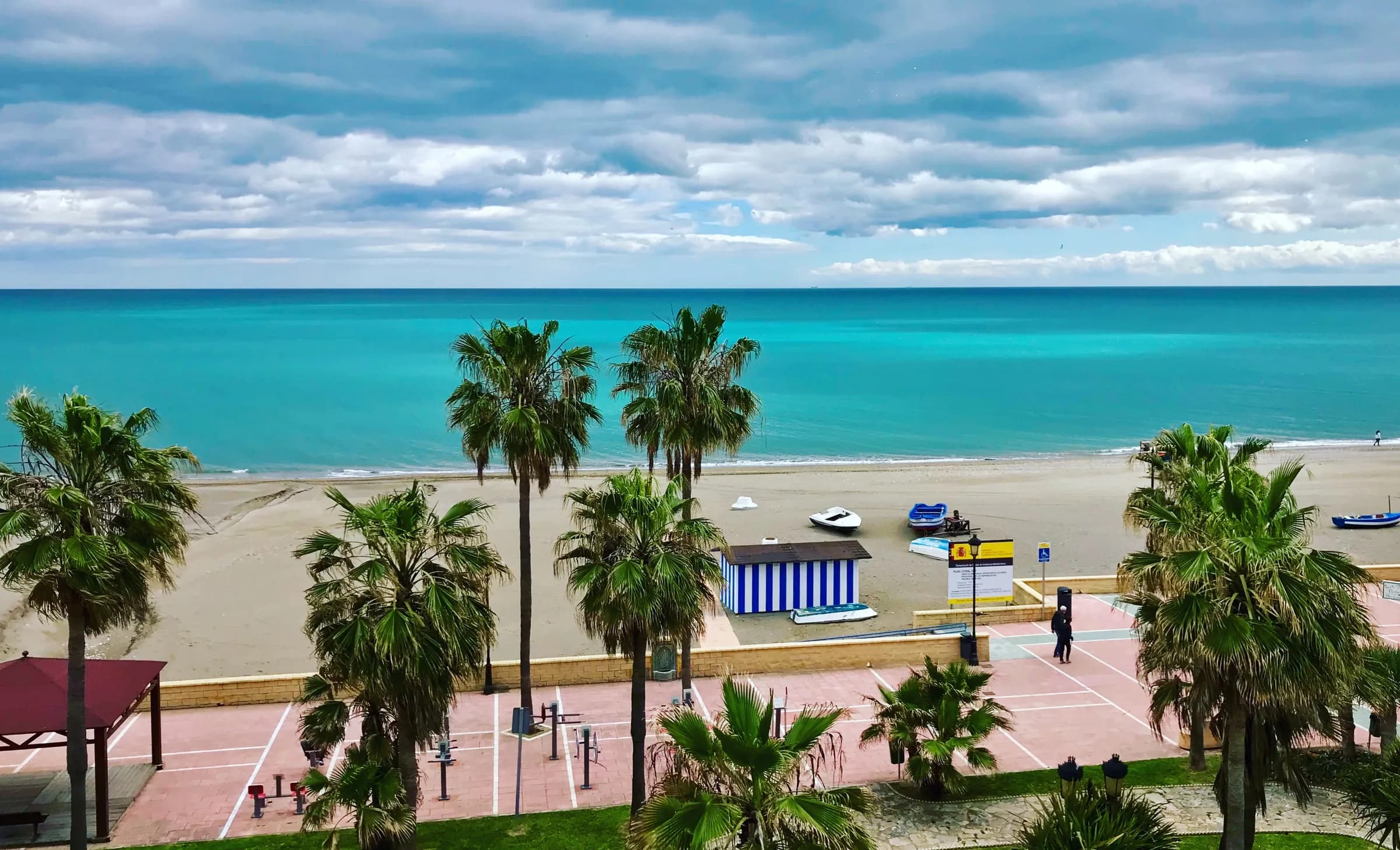
Stay Right on the Beach
The sand is 30 seconds from the door, and the balcony looks straight out at it. Book direct and save up to 20%.
- 3 Bedrooms
- 6 Guests
- 96 m²
Frequently Asked Questions
Related Articles
Gibraltar National Day: What Happens on 10 September
Gibraltar National Day is 10 September: red and white everywhere, the Casemates rally, a drone show and a rock concert. What to expect, and how to cross.

Day Trip to Morocco from Spain: Tarifa to Tangier
A day trip to Morocco from the Costa del Sol is easier than you think: the one-hour ferry from Tarifa to Tangier, the medina and the scams to dodge.
Day Trips from Sabinillas & the Western Costa del Sol
Best day trips from Sabinillas and the western Costa del Sol: Ronda, Gibraltar, Caminito del Rey, white villages and Tangier, with drive times and costs.
The Local's Costa del Sol, Monthly
One email a month: what's on in Sabinillas, the best local finds, and first pick of apartment dates. Free welcome gift: our Sabinillas Insider Guide.
We respect your privacy. Unsubscribe at any time.
Comments
No comments yetHave a tip, a question or a correction? Every comment is read and approved by hand before it appears, usually within a day.
No comments yet. Be the first to share a tip or ask a question.