The smell of sardines spitting fat over charcoal. Ice counters piled with gleaming prawns. Trawlers landing the night's catch a few kilometres up the coast. Staying at our beachfront apartment in Sabinillas puts one of Spain's simplest luxuries within walking distance: fish that was in the Mediterranean this morning, cooked tonight in your own kitchen with the sea right outside the window.
This guide covers where that fish is sold, when to go, and how to shop for it like someone who lives here. We start at the fishmonger at the end of your street and work up the coast to the grandest fish market in Málaga.
First, a Word on the Street Markets
The famous Sabinillas street markets are not where the fish is. The Friday market on the paseo (roughly 09:00-14:00) is great for clothes, leather goods, shoes, flowers, and fruit and veg, but there are no fresh fish stalls. The Sunday market near the fairground is a flea market: bric-a-brac, the odd antique, some produce. Turn up with a cool bag expecting the day's catch and you'll go home with a sundress and a bag of olives.
The fish is in three places, in rising order of spectacle. And if you'd rather have someone else do the cooking, the beach bars have you covered; more on that further down.
Sabinillas: The Pescaderías
Sabinillas grew out of a fishing village, and that heritage survives in the town's pescaderías (fishmongers' shops) rather than at any market stall.
Pescadería Dieguichi (Calle Fuengirola 9, in the old fishermen's neighbourhood) is the institution. The Dieguichi family has sold fish here for more than 40 years. The grandfather once carried it in saddlebags, the father delivered by bicycle, and today the family runs the shop along with a stall in the Manilva covered market, another in Casares, plus their own restaurant and chiringuito. Their fish comes mainly from the Estepona lonja (fish auction), with first call on the catch of Sabinillas' own small boats. This is where the town's grandmothers shop. It's a short walk from the apartment.
Pescadería Andalucía (Calle Miguel Delibes 2) opened in 2023 and makes a solid second option for fresh and frozen fish at fair prices, handy when Dieguichi has a queue out the door.
The larger supermarkets in town also have fish counters. They're fine for a weeknight dorada. But the pescaderías are where you get the advice, the filleting on request, and the pick of the catch.
Pro tip: go in the morning. Tell them how you plan to cook it ("a la plancha", "al horno", "frito") and let them choose the fish. They'll steer you right every time.
Estepona: A Real Working Fish Auction
Fifteen minutes by car, Estepona has one of the last working fishing ports on this stretch of coast, with a lonja (fish auction) run by the town's Cofradía de Pescadores, a fishermen's guild more than 80 years old.
How it works. The purse-seine and trawler boats fish through the night and land at dawn for the morning sale, then the main public auction runs in the late afternoon, roughly 17:30-19:00, when the trawlers come in. It's a Dutch auction: the price starts high and drops fast until a buyer slaps it shut.
Can you join in? You can watch, not bid. The modern lonja has a public viewing area behind glass, and the sale is a spectacle: crates of glittering fish sliding down the belt, the price ticking down, a buyer striking in a split second. Local operators such as Turismo Marinero run guided port-and-auction visits if you want the full story. Come from about 17:00, wear closed shoes, and keep clear of the forklifts. This is a workplace, not a theme park.
So how do you get auction fish? Two ways. The pescaderías, including Dieguichi in Sabinillas, buy here daily, so in practice you already are. And the Cofradía runs an official online shop, delalonjaatucasa.com, which sends fish straight from the auction with a full cold chain. It delivers to the apartment while you're staying.
Don't confuse the port with Estepona's Mercado de Abastos on Calle Villa. Once the town's traditional food market, it was renovated in 2024 into a gastro food hall: a handful of restaurants (including a good seafood specialist) and speciality shops, open daily until late. Lovely for lunch in the old town, but not a place to buy raw fish.
Atarazanas: The Great Fish Market in Málaga
Willing to drive 75 minutes east? The fish market in Málaga is the one worth the petrol. Mercado Central de Atarazanas is the crown jewel of Andalusian food markets: a 19th-century iron-and-glass hall built on the site of 14th-century Nasrid shipyards (atarazanas means "shipyards" in Arabic), with a vast stained-glass window at one end and a fish hall at the back that stops first-timers in their tracks. It sits about five minutes' walk from Calle Larios, the city's main shopping street.
Getting there from Sabinillas. By car it's roughly 75-90 minutes on the AP-7 toll motorway (a few euros in tolls, much faster) or the free, slower A-7 coast road. Don't try to park near the market; aim for the Salitre or Cervantes underground car parks and walk in. Coming without a car? Avanza coaches run from Estepona to Málaga's main bus station (Estación de Autobuses), which is a 15-minute walk or a short taxi from Atarazanas. The train doesn't help here, as the nearest Cercanías line runs from Fuengirola rather than the western towns, so for a day in the city the bus or the car wins. Pair the market with our Málaga city guide and make a full day of it.
Hours. Monday to Saturday, roughly 09:00 to 14:00. The fish section is closed on Mondays (the boats don't fish on Sundays), and the fishmongers start packing up well before the doors shut. Go Tuesday to Saturday, before 11:00, for the full theatre.
What you'll find. Stalls heaped with whole fish on ice: dorada (sea bream), lubina (sea bass), pargo (red snapper), mero (grouper), lenguado (sole), merluza (hake), sardinas and boquerones (anchovies), alongside shellfish from gambas to spider crab and the eye-wateringly priced percebes (goose barnacles). Prices are chalked up by the kilo, and the banter is half the fun.
The eating part, and why Atarazanas earns the detour. From late morning, several stalls turn into tiny bars: they grill the seafood you've just been ogling and serve it across a counter while you stand. Pick, they cook, you eat, the market roaring around you. Bar Mercado Atarazanas is the best known, doing Málaga's classic fritura malagueña (a mixed fry of small fish and squid) for roughly €12-20 a head with a glass of cold white. Nowhere else in the province lets you buy your seafood and eat it on the spot like this.
The Three Markets at a Glance
| Sabinillas pescaderías | Estepona lonja | Atarazanas, Málaga | |
|---|---|---|---|
| What it is | Family fishmongers | Working fish auction | Grand covered food market |
| From the apartment | Walk (5-10 min) | 15 min by car | 75-90 min by car |
| Can you buy? | Yes, over the counter | No, watch only | Yes, by the kilo |
| Best time | Mornings | From ~17:00 | Tue-Sat before 11:00 |
| Eat on the spot? | No (take it home) | No | Yes, at the grill-bar stalls |
| Why go | Easiest, freshest, local | The spectacle | Buy, gawk and eat all at once |
Seasonal Catch Guide
Buying with the seasons is how you eat best and cheapest. A rough Costa del Sol calendar:
| Fish (Spanish) | English Name | Best Season | How It's Usually Cooked |
|---|---|---|---|
| Sardinas | Sardines | May-September | Espeto (skewered over a wood fire) |
| Boquerones | Anchovies | Spring-Summer | Fried, or marinated in vinegar |
| Dorada | Sea bream | Year-round | Grilled or baked in salt |
| Lubina | Sea bass | Year-round | Grilled or baked |
| Gambas | Prawns | Year-round | Pil-pil or grilled |
| Pulpo | Octopus | Autumn-Winter | Grilled with paprika |
| Mero | Grouper | Autumn | Baked, or in stews |
| Calamares | Squid | Summer-Autumn | Fried in rings, or grilled |
The summer sardine is the one to plan around. From roughly June to September the espeto, sardines threaded on a cane and grilled over an open wood fire on the sand, is the defining taste of this coast. You'll smell the smoke before you see the chiringuito.
How to Buy Fish Like a Local
A little Spanish goes a long way at the counter, and the staff warm up the second you try; our Spanish phrases for tourists covers the rest of the holiday.
- "¿Qué hay fresco hoy?" (What's fresh today?) is the single best question. It hands the fishmonger the wheel and points you at the day's catch.
- "Quiero medio kilo de..." (I want half a kilo of...): fish is sold by weight; whole fish weighs more than fillets, so allow for the head and bones.
- "¿Me lo limpia?" (Can you clean it for me?): they'll gut, scale and fillet on request, for free.
- "¿Cómo se cocina mejor?" (How is it best cooked?): they'll tell you straight: "a la plancha" (griddled), "al horno" (baked), "frito" (fried).
How much to buy. Plan on roughly 200-300 grams of fish per person for a main, more if it's whole and bony. A dinner for four wants around 700-800 grams of fillets, or 1-1.5 kg of whole fish. When in doubt, say how many you're feeding and let them weigh it out.
Spotting a good fish (universal, but worth repeating at the ice):
- Bright, clear eyes, never cloudy or sunken
- Firm flesh that springs back when you press it
- A clean, sweet sea smell with no hint of ammonia
- Shiny, metallic skin
- Gills a fresh red, not brown or grey
If You'd Rather Someone Else Cooks It
Restaurants and chiringuitos around Sabinillas cook the fish they buy themselves, not fish that customers bring in, so there's no point arriving with a bag of sardines from the market. You don't need to, because the local versions of "fresh fish, zero effort" are better:
- Order the day's catch at a chiringuito. The beach bars buy from the same boats and the same lonja you would. Ask "¿qué hay fresco hoy?" and get espetos straight off the wood fire or a whole grilled dorada, around €5-7 for a sardine skewer and €15-25 for a whole fish with sides. Our chiringuitos guide names the best spots.
- Eat inside Atarazanas in Málaga. Pick your seafood at the grill-bar stalls and eat it on the spot, the market roaring around you; see above.
Cooking it yourself in the apartment's fully equipped kitchen, with the sea out the window, is half the holiday anyway. It's what the locals do.
Planning Your Fish Mission
Four ways to do it, from the lazy to the obsessive:
Option 1: the easiest. Walk to Pescadería Dieguichi in the morning, ask what's fresh, walk home, cook it on the balcony over the beach. Under an hour, start to finish. Cost: €10-25, depending on what catches your eye.
Option 2: zero effort. Skip the shopping and order the day's catch at a beachfront chiringuito: espetos over the wood fire while you nurse a cold beer. Two hours, no washing up. Cost: €25-40 per person.
Option 3: the spectacle. Drive to Estepona around 17:00, watch the lonja auction from the public stands (or book a Turismo Marinero tour), then have dinner by the fishing port. Three to four hours. Cost: €30-50 per person.
Option 4: the pilgrimage. Drive to Málaga on a Tuesday-to-Saturday morning, be at Atarazanas by 09:00 to shop and gawk, then eat grilled seafood at the market bars from 11:00. Four to five hours including the drive. Cost: €40-70 per person.
Want fresh fish in the fridge the moment you arrive? We can arrange grocery pre-stocking before check-in. Browse our extras, or check dates and book direct and tell us when you reserve.
For more on eating well around here, see our guide to the best restaurants in Sabinillas and the best chiringuitos on the beach.
Stay Right on the Beach
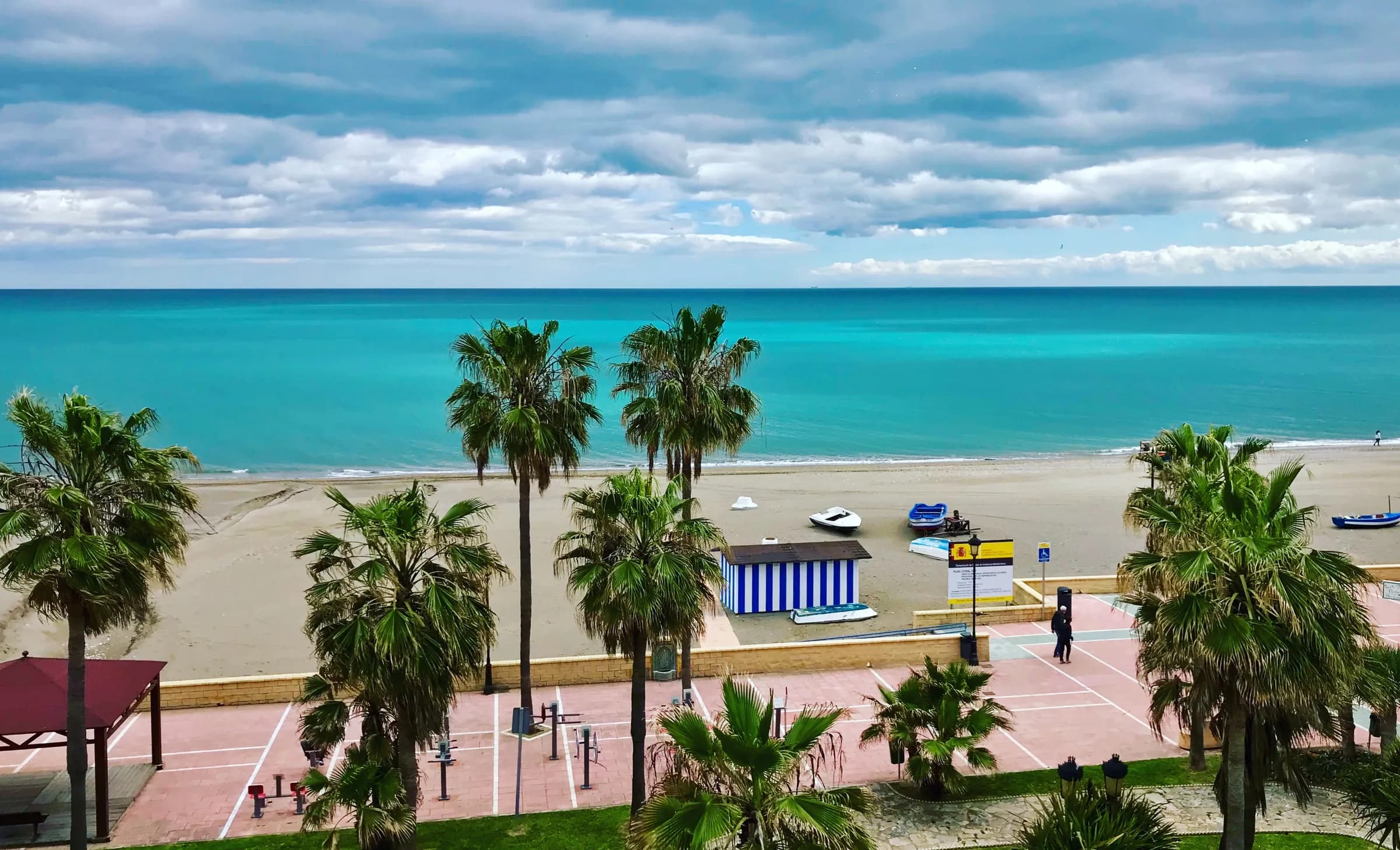
The sand is 30 seconds from the door, and the balcony looks straight out at it. Book direct and save up to 20%.
- 3 Bedrooms
- 6 Guests
- 96 m²
Frequently Asked Questions
Related Articles
Things to Do in Málaga: A Day Trip from Sabinillas
The best things to do in Málaga in a day from Sabinillas: Alcazaba, Picasso Museum, cathedral, the port and beaches, with prices, hours and how to get there.
Chiringuitos on the Costa del Sol: Sabinillas Guide
A local's guide to the best chiringuitos on the Costa del Sol around Sabinillas and Manilva: where to eat espetos on the beach, what to order, and prices.
Restaurants in Sabinillas: Where Locals Eat
A local guide to restaurants in Sabinillas and Manilva: the best chiringuitos, tapas bars and seafood spots, with prices and walking distances.
The Local's Costa del Sol, Monthly
One email a month: what's on in Sabinillas, the best local finds, and first pick of apartment dates. Free welcome gift: our Sabinillas Insider Guide.
We respect your privacy. Unsubscribe at any time.
Comments
No comments yetHave a tip, a question or a correction? Every comment is read and approved by hand before it appears, usually within a day.
No comments yet. Be the first to share a tip or ask a question.