Why Málaga Deserves a Day (or Two)
Most people only see Málaga's airport. They land, grab a hire car, and barrel off down the coast without a backward glance. Big mistake.
The city is Andalucía's most likeable cultural heavyweight: world-class museums, one of the best food scenes in Spain, and two thousand years of history layered into streets you can walk in an afternoon. It has a Roman theatre, a Moorish fortress and Picasso's birthplace within a few hundred metres of each other. And it never feels stuffy about any of it.
We have been hosting guests at our beachfront apartment for years, and the ones who make the trip into Málaga always come back buzzing. There is something about getting lost in the cobbled old town, falling into a tapas bar where the owner treats you like a regular by the second drink, then watching the sun drop over the harbour from a terrace. That is a good day out.
At 98 kilometres from Sabinillas, Málaga is close enough for a day trip but big enough to feel like a proper city break. This guide walks you through the best things to do in Málaga, how to get there from the apartment, and exactly what everything costs.
Getting There from Sabinillas
The drive takes about 1 hour 15 minutes. Head north on the A-7 coast road through Estepona and Marbella, then follow signs for Málaga centro. It is well-signposted the whole way. With petrol around €1.55 a litre, budget roughly €20 for the return trip in fuel.
In a hurry? The parallel AP-7 toll motorway (Autopista del Sol) skips the coastal traffic and shaves off 15-20 minutes. The full Manilva-Málaga run costs around €10 off-season, but the toll climbs to nearly €20 in the summer peak (roughly June to August, plus Easter). Off-season it is worth it; in August, weigh it against the free A-7.
Prefer not to drive? Two options, both with caveats. The Cercanías C-1 train runs from Fuengirola into Málaga centre in about 46 minutes for around €2.70, but getting from Sabinillas to Fuengirola first takes over an hour by coast bus, so it only makes sense if you are driving to Fuengirola anyway. The Avanza coach runs direct from Sabinillas to Málaga, but with stops along the way you are looking at roughly 2 hours 15 minutes each way.
| Journey Option | Duration | Cost | Best For |
|---|---|---|---|
| Drive (A-7, own car / hire) | ~1h 15m | ~€20 fuel | Flexibility, exploring at your own pace |
| Drive (AP-7 toll) | ~1h | €20 fuel + €10-20 toll | Saving time, skipping coast traffic |
| Train via Fuengirola | ~2h+ total | ~€3 train (plus the leg to Fuengirola) | No city parking; only if Fuengirola-bound |
| Direct Avanza coach | ~2h 15m | €15+ | A relaxed, car-free journey |
For a day trip we'd drive, every time, if you have a licence and feel happy on Spanish roads (motorway driving here is genuinely easy). You get the freedom to rejig the plan on the fly, and parking is cheaper than you'd think.
Pro tip: Leave Sabinillas by 09:00 to reach Málaga around 10:15. You'll land before the coaches and beat the worst of the midday heat at the Alcazaba, which has barely any shade.
The Best Things to Do in Málaga
The sights cluster into three walkable zones: the harbour and the Alcazaba; the centre with the cathedral and Picasso Museum; and the old town (Casco Antiguo). You can do the lot on foot. Here's what's worth your time, roughly in the order we'd tackle them.
The Alcazaba and Castillo de Gibralfaro
The Alcazaba is the sight that defines Málaga: an 11th-century Moorish palace-fortress climbing the hill above the harbour. It is a masterclass in medieval Islamic design: shaded courtyards, trickling water channels that cool the air, horseshoe arches and defensive walls stacked up the terraces. Walk the ramp to the top and the whole bay opens out below you. It's the one sight even Alcazaba-sceptics rave about.
Higher up sits the Castillo de Gibralfaro, a 14th-century castle linked to the Alcazaba by an old walled passage. The two share a combined ticket: €5.50 general, €1.50 reduced, and you can use it across both within 48 hours; handy, because the walk up to Gibralfaro is a sweaty 20 minutes. Short on time? Pick the Alcazaba; it's the richer experience. Go up to Gibralfaro only if you want the full 360-degree panorama and have an hour to spare. The Alcazaba on its own is €3.50.
Opening hours run 09:00-20:00 in summer (1 April-31 October, last entry 19:00) and 09:00-18:00 in winter (last entry 17:00). And here's the money-saver: the Alcazaba is free every Sunday from 14:00. Turn up at 14:00 on a Sunday and the headline sight costs you nothing; just expect company.
Museo Picasso Málaga
Picasso was born here, a few streets away on Plaza de la Merced, and the Museo Picasso Málaga is the city's pilgrimage site for art lovers. It sits inside the 16th-century Palacio de Buenavista and holds more than 200 works spanning his whole career: Blue Period, Cubist experiments, ceramics, the lot. It's intimate and beautifully lit, never the exhausting slog some big galleries become.
General admission is €13 (€11 reduced; under-17s free), audio guide included. It opens daily, usually 10:00-19:00 (March-June and September-October) and to 18:00 in the quieter months; check museopicassomalaga.org for the exact day. One more tip worth its weight in gold: the last two hours every Sunday are free (so 17:00-19:00 in summer). Allow an hour and a half; art devotees will happily lose longer.
Málaga Cathedral (La Manquita)
The Cathedral of Málaga is nicknamed La Manquita ("the one-armed lady") because its second tower was never finished. Locals are fond of the lopsided silhouette; it gives the place character. Inside, you get soaring Renaissance vaulting, a magnificent set of carved mahogany choir stalls and one of Spain's finest baroque organs.
Entry is €10, audio guide included, with under-13s free. Allow about 45 minutes. If you've a head for heights, the separate rooftop terrace tour (around €10, roughly 200 spiral steps) gets you up among the bell towers for cracking views, not one for tiny children or dodgy knees. There are also free entry slots daily from 08:30-09:00 (until 09:30 on Sundays), but those are really for worshippers and you won't get the audio guide.
Roman Theatre and the Layers Beneath
Right at the foot of the Alcazaba lies the Teatro Romano, a Roman theatre from the age of Augustus (around 2,000 years old) only rediscovered in 1951. It's compact, but it neatly sums up Málaga: Roman stage, Moorish fortress rising straight behind it, modern city in front. Entry is free, and there's a small interpretation centre next door. It takes ten minutes and you'll walk past it anyway on the way up to the Alcazaba, so don't skip it.
Atarazanas Central Market
The Mercado Central de Atarazanas isn't a tourist sight so much as the city's pantry. The 19th-century iron market hall is fronted by a wonderful stained-glass window picking out Málaga's maritime history in blues and golds. Inside, fishmongers holler, vendors stack pyramids of oranges, and locals prop up the tapas bars long before noon.
Entry is free (open roughly 08:00-15:00, Monday-Saturday). Come at 10:00-11:00 for the full racket, or after 13:00 for elbow room. Pull up at one of the standing bars for a plate of fritura (fried fish) or espetos (grilled sardine skewers); €5-8 a plate, eaten on your feet like everyone around you. Go even if you're not hungry; the smell, colour and rhythm of the place is pure Málaga.
Muelle Uno and the Port
Muelle Uno (Quay One) is the polished modern flip-side to the old town. This waterfront promenade is lined with boutiques, restaurants and bars looking back across the marina to the Alcazaba on its hill: a genuinely striking contrast, sleek glass against ancient stone. It opened in 2011 as part of the port's regeneration and now anchors the Centre Pompidou Málaga, the French museum's first international outpost, housed under a multicoloured glass cube ("El Cubo") on the quay (general admission around €9). Wandering Muelle Uno costs nothing; you pay only for what you eat, drink or buy. It's a fine spot for a slow lunch with harbour views.
SOHO: The Street Art District
Between the centre and the port, the SOHO district (Barrio de las Artes) is Málaga's open-air gallery. Giant murals by international street artists cover whole building fronts, the legacy of the MAUS project (Málaga Arte Urbano Soho). Give it 30-45 minutes on foot. It's compact and easy to wander, with craft-beer bars, contemporary kitchens and small galleries dotted through. One for anyone who likes their culture a bit edgier.
Where to Eat
Málaga's food more than holds its own against any Spanish city: superb seafood off the local boats, a deep tapas habit and a wave of inventive young kitchens.
Seafood by the Sea
The eastern beaches are where you eat fish properly. Pedregalejo and El Palo are lined with old chiringuitos grilling sardines over open driftwood fires: more local, less polished than the central seafront, and all the better for it. Reckon on €15-30 a head with wine.
For the full theatre, taxi out to El Tintero on the seafront at El Palo (€25-40 a head). There's no menu worth the name: waiters stride the room non-stop, calling out the dishes on their trays, and you grab what tempts you with a raised hand. At the end, someone counts your stack of empty plates to work out the bill. Loud, chaotic, brilliant, and unmistakably Malagueño.
Tapas Culture
Málaga's tapas bars are where the city eats. Order a glass of wine (€2-3) and pick a couple of tapas off the chalkboard. One thing to know: unlike Granada, free tapas with your drink aren't the norm here; most bars charge a few euros each. A relaxed tapas crawl comes in around €12-18 a head for several wines and a clutch of small plates. Try the local sweet Málaga Virgen wine if you fancy something properly regional.
For the full run-down of the city's best bars, see our complete tapas guide to Málaga.
Quick Lunch
If you're keeping the day moving, Atarazanas Market is your best bet: a plate of fried fish or espetos at a standing bar for €5-8, fresh, cheap and quick. Eat it on your feet and you'll blend right in.
Good to know: Lunch in Spain runs 13:00-15:00, dinner rarely starts before 20:00, and many kitchens shut 15:30-19:30. Plan your meals around that or you'll find yourself hungry at 17:00 with nothing open.
Málaga's Beaches
The city has two urban beaches worth your towel.
Playa de la Malagueta
La Malagueta is the famous one: 1,200 metres of dark golden sand backed by a palm-lined promenade, a ten-minute walk east of the cathedral. It's clean, holds Blue Flag status, and has bars dotted along for drinks and snacks. The crowd is more local than touristy: Spanish families, older couples, the odd dedicated sunbather. The water's swimmable most of the year, though it's properly cold October-May (around 14-17°C). For more on the region's best stretches, see our guide to Blue Flag beaches in Málaga province.
Pedregalejo Beach
A couple of kilometres east, Pedregalejo is where the chiringuito life really kicks in. The little coves are backed by wooden beach bars turning out grilled fish, paella and cold beer. It feels like a fishing village despite being inside the city. A long lunch here (cold beer, sardine espetos, feet in the sand, sea breeze) is one of those Mediterranean afternoons you remember.
A Suggested Day-Trip Itinerary
A realistic timed plan for a full day (roughly 09:00-18:00 on the ground):
09:00-10:15: Drive from Sabinillas. Park near the Alcazaba (€20-25 all day).
10:15-11:45: The Alcazaba. Take an hour and a half to wander up at a leisurely pace and soak in the views. Glance at the free Roman theatre on the way in.
12:00-13:00: Walk to the cathedral; 45 minutes inside, or just admire La Manquita from the square.
13:00-14:00: Quick lunch at Atarazanas Market (standing-bar tapas).
14:15-15:45: Picasso Museum (1.5 hours), or swap in SOHO street art (45 min) plus a café stop if art isn't your thing.
16:00-17:00: Stroll along La Malagueta beach, cold drink at a beachfront bar.
17:00-18:00: A final loop of the old town, pick up a souvenir, one last café con leche.
18:00: Drive back to Sabinillas (home around 19:15; the return is quieter than the morning run).
Full, but not frantic. Tweak it to taste: skip the Picasso Museum if art leaves you cold, or drop the beach for more old-town time.
Practical Information
| Detail | Information |
|---|---|
| Distance from Sabinillas | 98 km (about 1h 15m by car on the A-7) |
| Best time to visit | April-May or September-October (great weather, fewer crowds) |
| Parking | €2-3/hour or €20-25 all-day; central car parks near the Alcazaba, Plaza de la Marina and Muelle Uno |
| Alcazaba + Gibralfaro | €5.50 combined (€1.50 reduced), Alcazaba alone €3.50; summer 09:00-20:00, winter 09:00-18:00; free Sun from 14:00 |
| Picasso Museum | €13 (€11 reduced, under-17s free); daily ~10:00-19:00/18:00 by season; free last 2h Sunday |
| Cathedral | €10 with audio guide; ~45 min; rooftop tour ~€10 extra |
| Roman Theatre | Free entry |
| Atarazanas Market | Free; open ~08:00-15:00, Mon-Sat |
| Eating out | Tapas €12-18/person; seafood €25-40/person |
| Headline cost (two people) | ~€57 attractions + €30-60 food + €20-25 parking ≈ €105-140 |
Málaga as an Artist's City
Here's the angle most guidebooks miss. Málaga is Picasso's birthplace, yes, but it's also a city that has bet its future on art and won. The whole SOHO transformation happened inside the last fifteen years. Street art is treated as legitimate culture here, not vandalism, and the city now packs in close to forty museums, from the Picasso to the Centre Pompidou's glass cube on the quay to the Russian Museum collection in an old tobacco factory.
If you're at all curious about how cities reinvent themselves, Málaga is a working example. A century ago it was a struggling industrial port. Fifty years back, it was package-holiday overflow from the Costa del Sol. Today it's a cultural destination in its own right: museums, murals, a regenerated waterfront, a serious food scene. Walk it in 2026 and you can feel the confidence. It isn't trying to be Seville or Granada. It's busy becoming its own thing while keeping faith with what came before.
For more of the region, browse our day trips from Sabinillas guide for other Andalusian adventures.
Planning Your Day Trip
Málaga's real strength is how easy it is: close enough to Sabinillas for a day out, substantial enough to fill it. Plenty of day trips feel like a box to tick. Málaga is a place you'll plot to return to.
Pack comfortable shoes (the old town is all cobbles), sun cream, and a light layer for the evening. If you're driving, save an offline map in case the signal drops in the multi-storey car parks.
From the apartment, you can give Málaga the whole day and roll home at sunset; the drive south is the easier of the two, so arriving back around 19:30 is comfortable.
Guests often ask whether you need car hire to do Málaga from Sabinillas. No: the bus or train will get you there. But a car gives you control, and on a packed day that matters. If you'd like wheels for your stay, we can arrange car hire for you.
For getting to and around the wider coast, see our Málaga airport transfer guide. And to make the most of home base between trips, our in-depth Sabinillas guide covers the beaches, the Sunday market and everything in between. Further afield, our guides to Ronda and the white villages of Andalucía round out the day-trip options.
And if a day in the city sounds good but you'd rather wake up on the beach, book our apartment here in Sabinillas. You'll have a calm base 98 kilometres down the coast, the Mediterranean on your doorstep, and Málaga an easy morning's drive away whenever the mood strikes.
If you are here in December, Málaga is worth a second, shorter visit after dark. The city's Christmas lights run from late November to 6 January, and the show on Calle Larios costs nothing.
Stay Right on the Beach
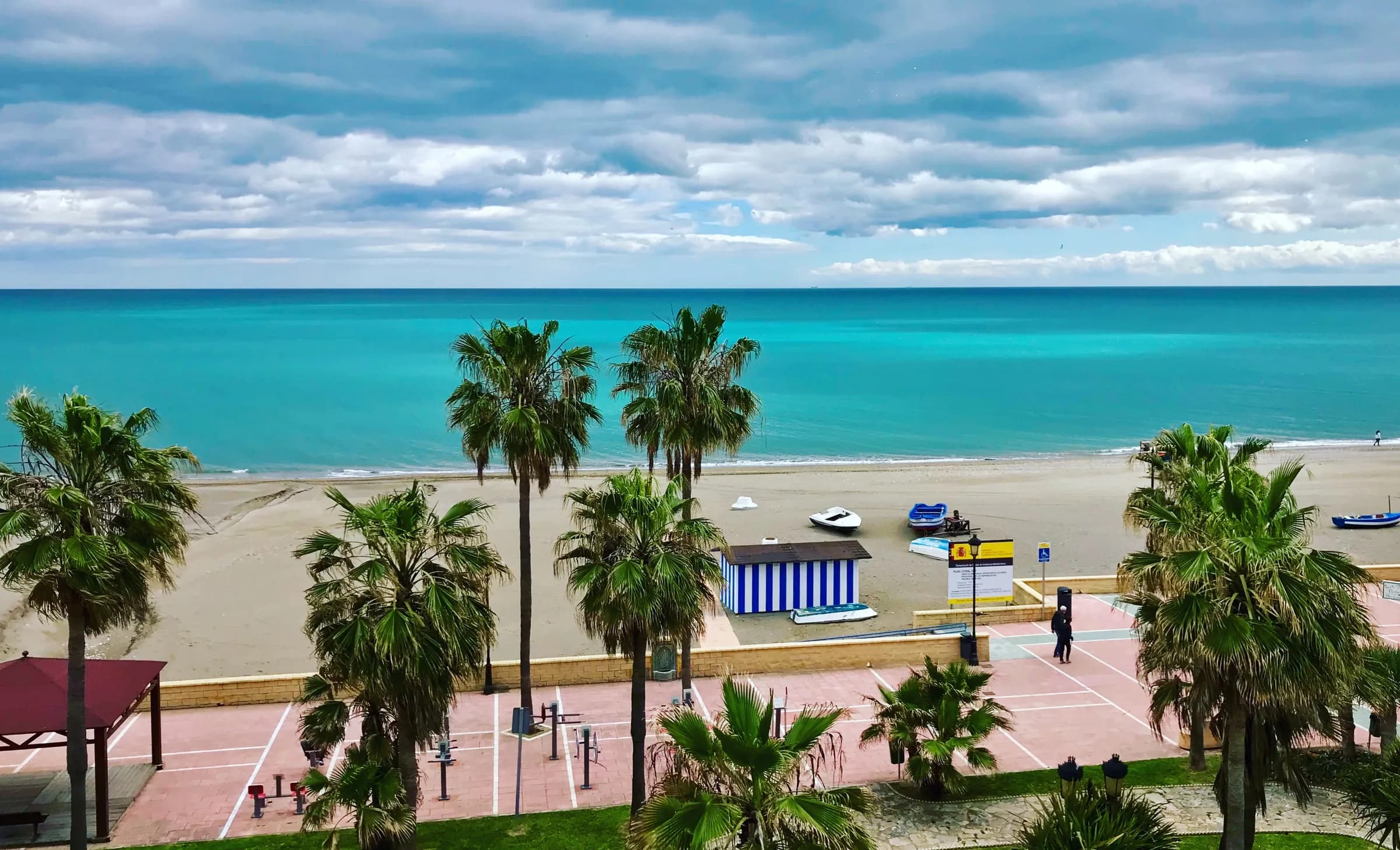
The sand is 30 seconds from the door, and the balcony looks straight out at it. Book direct and save up to 20%.
- 3 Bedrooms
- 6 Guests
- 96 m²
Frequently Asked Questions
Related Articles

Best Tapas in Málaga: A Local's Bar Guide
Where to find the best tapas in Málaga: the bars locals use, what to order (boquerones, espeto, ajoblanco), and how the tapa-versus-ración thing works.

Day Trips from Sabinillas & the Western Costa del Sol
Best day trips from Sabinillas and the western Costa del Sol: Ronda, Gibraltar, Caminito del Rey, white villages and Tangier, with drive times and costs.

Málaga Airport to Estepona & Sabinillas: Transfer Guide
Málaga Airport to Estepona and Sabinillas, every way: private transfer, taxi fares, the Avanza bus, the train that won't reach you, plus the Gibraltar shortcut.
The Local's Costa del Sol, Monthly
One email a month: what's on in Sabinillas, the best local finds, and first pick of apartment dates. Free welcome gift: our Sabinillas Insider Guide.
We respect your privacy. Unsubscribe at any time.
Comments
No comments yetHave a tip, a question or a correction? Every comment is read and approved by hand before it appears, usually within a day.
No comments yet. Be the first to share a tip or ask a question.