The pueblos blancos of Andalucía sit in the mountains just inland from the Costa del Sol, barely 15-40 minutes from Sabinillas. Yet they feel a world away. Streets too narrow for two cars. Whitewashed walls glowing at midday. Old men outside the bar, nursing a coffee, watching nothing in particular. And views that run from the Mediterranean to the hills behind Ronda.
We call them the pueblos blancos, the white villages of Andalucía, and they're some of the most authentic, least touristy corners of the western coast. While Marbella sprawls and the beachfronts fill up every August, these villages have barely changed in a century. This is the inland heart of the region, and it's an easy day out from the apartment.
What Are the Pueblos Blancos?
The pueblos blancos are Andalucía's traditional hill villages: whitewashed houses and narrow cobbled streets built into the slopes of the Serranía de Ronda and the Genal valley. The whitewash is a legacy of the Middle Ages, shaped as much by the Moors as by the Christian kingdoms that followed, and it was never just for show. Lime wash reflects the summer sun and keeps rooms cool, it's a mild disinfectant, and it was cheap to make and quick to reapply. So it became the standard finish for farming communities scattered across the sierra, and the look stuck.
Over the centuries the pueblos blancos became famous in their own right. Nearly every village in the Serranía de Ronda, the mountain country inland from the coast, keeps the tradition going: white walls, cobbled lanes, a small plaza with a fountain, and a bar serving cold beer and local ham. These aren't theme parks or restorations. They're living towns where locals far outnumber tourists, Spanish is the only language you'll hear, and the day still bends around lunch and the siesta.
Most cluster around the Serranía de Ronda and the lush Genal valley, with the Sierra de las Nieves National Park, Spain's newest, declared in 2021 (national park history), rising behind. Several are within a comfortable day's drive of Sabinillas, and below we've mapped the route, the road notes, and which ones are worth your time. And if you're here between late October and mid-November, the same valley turns into the Copper Forest, the Genal's three-week chestnut autumn — the identical villages under entirely different colours.
Which Pueblo Blanco Should You Pick for One Day?
If you've only got a single day and don't want to spend it all driving, choose by what you're after:
- First taste, minimal effort: Casares. Fifteen minutes inland, postcard-perfect, easy to combine with a beach afternoon.
- The big view: Gaucín. The "Eagle's Nest", with Gibraltar and Morocco on the horizon on a clear day.
- Something different with kids: Júzcar, the blue village, deep in the green Genal valley.
- Art and quiet: Genalguacil, the open-air gallery, best in an Encuentros de Arte year.
- One village plus a proper town: Casares in the morning, then push on to Ronda for the afternoon and the famous gorge.
- The dinner village: Benahavís, east towards Marbella, a white village that lives for its restaurants — our Benahavís guide covers the tables and the river gorge behind them.
You really can't go wrong with Casares as a first stop. It's the closest, the most dramatic from a distance, and the one our guests rave about most.
Casares: The Closest White Village
Distance from Sabinillas: 15 km (15-20 minutes by car via the MA-8300)
Casares is the first white village you reach driving inland from Sabinillas, and arguably the prettiest from a distance. It's draped across a steep hillside in a way that makes the whitewash make sense: the houses cascade down the slope, almost stacked on each other, each capped with its own terracotta roof. From the approach road the whole village reads like spilt sugar.
The old town is tiny (you can walk it in 20 minutes) but the views are immense. On a clear day you see from the coast across to the inland hills. A Moorish castle crowns the top. In 1361 the exiled Nasrid emir Muhammed V signed a pact here with King Peter I of Castile that restored him to the throne of Granada: a reminder of how strategic this frontier once was (the Pact of Casares). The ruins are free to enter, and the climb up through the old gate is rewarded with the full panorama (details on the castle). Down in the main square, the bars serve cold beer and tapas where the locals gather.
Parking is the catch. Spaces are narrow and scarce in peak season, so arrive before 11:00 or after 15:00 to avoid circling. For lunch, the village does better than first impressions suggest: try the local chivo (roast kid goat) and the café-bars on the square. Casares deserves its own write-up, and we've given it one: see our full Casares white village guide for restaurants, the castle, and the walk up.
Gaucín: The Eagle's Nest
Distance from Sabinillas: 27 km (around 40 minutes by car)
Gaucín calls itself El Nido del Águila, the Eagle's Nest, and it has earned the name. The village clings to a ridge at roughly 600 metres, so high and so abruptly perched that it looks like it might lift off.
The drive up is the price of admission, and it's worth paying. From Sabinillas, take the A-377 inland past Manilva, then climb the mountain in earnest. The road throws hairpins at you and drops sharply on one side: spectacular, but not one for nervous drivers or queasy passengers. As you near the top the village suddenly appears on the skyline, impossibly placed.
Gaucín is bigger and more developed than Casares, home to around 1,600 people (population data), with a ruined hilltop castle (the Castillo del Águila), a scattering of galleries and a long-standing community of artists, mostly British and northern European. The reason you come is the view: on a clear day you can see across the Strait of Gibraltar to the Rif mountains of Morocco. There are more cafés and craft shops here than in the other villages, and the back lanes are a tangle of passages, tiny plazas and washing strung between balconies. Photogenic without trying to be.
For lunch, the village has a handful of well-regarded restaurants and bar terraces with valley views; ask whoever pours your first coffee where they'd eat that day.
Genalguacil: The Art Village
Distance from Sabinillas: around 43 km (about 50 minutes by car, with steep mountain sections)
Genalguacil has earned the nickname Pueblo Museo, Museum Village, because the old town is studded with murals, sculptures and installations. The story behind it is a good one. The population had collapsed from around 1,500 in the 1950s to a few hundred by the early 1990s (Genalguacil Pueblo Museo), and the village was emptying out fast. In 1994 the council took a gamble: invite artists from around the world to make work in the streets and squares. It worked: more than 250 artists have taken part since, and today barely 400 people call the open-air gallery home.
Today Genalguacil is an open-air gallery. The pieces range from bold abstract splashes to whole walls painted floor to roofline; some are decades old and fading, others freshly restored. It doesn't feel staged or "made for the camera": the art has become part of how the village sees itself.
Every even-numbered year it hosts Encuentros de Arte (Encounters with Art), a biennial festival where visiting artists live in the village and create new work in its streets and squares. In 2026 the residency runs 16 July-15 August, the eighteenth edition (official 2026 dates), so time your visit for those weeks and you'll find the place buzzing; outside that window it's quiet but no less rewarding. There are a few simple bars for a bite, but for a proper sit-down meal most people push on towards Ronda, about 40 km and 50 minutes further. Here, the art, the views and a slow wander are the point.
Júzcar: The Blue Village
Distance from Sabinillas: around 70 km (about 1 hour 15 minutes by car, up past Gaucín towards Ronda)
Júzcar is famous for not being white. In June 2011 Sony España painted all 175 buildings in the village (houses, the town hall, even the church) blue, to launch The Smurfs film, with a promise to whitewash it all back afterwards (175 buildings in total, per EFE). When the campaign ended, the locals voted to keep the paint. The visitors, and the income, had arrived, and they weren't keen to lose them.
Since then Júzcar has been a curiosity: cobalt-blue facades, shutters, even the church, all under the original terracotta roofs, set against the deep green of the Genal valley. It photographs brilliantly and there are Smurf nods everywhere, though copyright stops the village from officially branding itself the "Smurf Village": these days it markets itself as the Aldea Azul, the Blue Village, instead. A small blue-themed zone charges a modest entry fee in high season; wander the rest of the streets and it's free.
Under the paint, mind you, it's a normal pueblo blanco with all the history and character you'd expect, home to around 240 people (population data). Walk the lanes, find a bar, take your time. The blue is a great hook, but the views and the genuine village life are the reasons to linger. It's smaller than Gaucín, bigger than Casares: 30 to 40 minutes on foot.
The upkeep is a village effort, not a one-off publicity stunt. As the current mayor, Francisco Lozano, put it in 2023: "Sony painted the village twice, and we've painted it twice more" (EFE, via okdiario). The town hall supplies the paint; residents repaint their own façades.
Good to know: the road to Júzcar is long, winding and steep, climbing past Gaucín before dropping into the valley. If you're prone to car-sickness, this is the toughest drive of the day. Allow a full hour, not 30 minutes, and don't attempt it on a tight schedule.
What's the Best Driving Route to the White Villages?
The best one-day plan is a there-and-back run inland: the mountain roads don't connect into a tidy loop, so some backtracking is unavoidable. Budget 8-10 hours door to door. Here's a sensible route if you want more than one village:
Duration: 8-10 hours total (roughly 3-4 hours driving, 5-6 hours in the villages)
- Sabinillas (start 08:00-09:00) → drive to Casares (15 min, 15 km)
- Casares (walk, photos, coffee, 09:30-11:00) → drive to Gaucín (30 min on the A-377)
- Gaucín (walk, lunch, 11:30-14:30) → drive to Genalguacil (35 min) or Júzcar (about 50 min if you'd rather)
- Genalguacil or Júzcar (walk, coffee, 15:00-16:30)
- Return to Sabinillas (45-60 min)
Total distance: roughly 120-160 km depending on which villages you choose: budget around three hours of driving on mountain roads.
If time is short, drop Genalguacil and do Casares, Gaucín and Júzcar instead: all strung along the same valley, with less backtracking.
Driving Notes for the Pueblos Blancos
A few practical pointers, because the roads here aren't the AP-7:
- Fuel up first. There are no petrol stations in these villages. Fill up in Sabinillas or Manilva before you head inland.
- Trust the road, not the distance. "40 km" can mean 50 minutes of hairpins. Pad every estimate.
- Park at the edge. Leave the car in the marked spaces or at the village entrance: the cobbled streets inside are barely one car wide and a wrong turn means an awkward reverse.
- Watch the cyclists. The climbs around here are popular with road cyclists; give them room on blind bends.
- Carry your documents. Keep your hire-car papers and insurance in the car; the Guardia Civil do occasional checks on mountain roads.
- Sat-nav with care. Some shortcuts it suggests are single-track farm tracks. When in doubt, stick to the numbered roads (MA-8300, A-377, A-369).
For more on getting a car sorted, our guide to car hire on the Costa del Sol covers the airport desks, excess insurance and the usual traps.
How Do the White Villages Compare?
Casares wins on convenience, Gaucín on views, Genalguacil on art and quiet, and Júzcar on novelty. Here's how the four stack up side by side:
| Village | Distance | Drive time | Road difficulty | Best for | Food |
|---|---|---|---|---|---|
| Casares | 15 km | 15-20 min | Easy, mostly direct | First visit, a half day, easy views | A handful of bars; try the chivo |
| Gaucín | 27 km | ~40 min | Medium, winding | Big views, photography | Several restaurants & terraces |
| Genalguacil | 43 km | ~50 min | Hard, steep | Art lovers, quiet | Limited (Ronda nearby for more) |
| Júzcar | 70 km | ~1 h 15 | Hard, long & winding | Novelty, photos, families | A few simple local spots |
Planning Your Visit
Best time: spring (April-May) and autumn (September-October) give you warm but not scorching days and a fraction of the summer crowds. For the art, time your visit for mid-July to mid-August in an even-numbered year (16 July-15 August in 2026) to catch Genalguacil's Encuentros de Arte (official 2026 dates). Midsummer midday is otherwise punishing in the streets: go early or save the walking for late afternoon.
What to bring:
- A camera or a charged phone: the light and the views are exceptional
- Proper walking shoes; the cobbles and steps are no place for flip-flops
- Water and sun cream: there's little shade in the squares at noon
- Your hire-car documents and insurance
Costs at a glance:
- Walking the villages: free
- Lunch: around €12-20 per person for hearty local food
- Parking: free or a euro or two
- Genalguacil's art spaces (when open): around €2-5
- Júzcar's blue/Smurf zone in high season: a small entry fee; check on arrival
Why Visit the White Villages from Sabinillas?
Because they're 15 to 40 minutes away and feel like a different country from the coast: real Andalusian villages where locals outnumber tourists, Spanish is the language you hear in the bars, and nobody's selling you a timeshare. We host guests at our beachfront apartment, and the reaction from the ones who drive inland to the pueblos blancos is remarkably consistent: "Why did nobody tell us about this?"
The white villages feel untouched by the commercialisation that defines the coast. Locals still pack the bars at lunch. Cafés serve strong coffee and simple bocadillos. The rhythm is properly Spanish: lunch is the main event, the siesta is real, and the evening starts late. It's the same unhurried feel you get in Sabinillas itself, only up in the hills.
Most visitors to the Costa del Sol spend the whole trip on the beach or in the busier resort towns. These villages are 15 to 40 minutes away, and a single day inland changes how you see the entire region. If you fancy stretching your legs further, the trails up Sierra Bermeja start from the same hills.
Book your stay with us as your base and the pueblos blancos become an easy day out rather than a logistics headache. We're happy to point you to the best lunch, suggest the route that suits your nerve at the wheel, and share the local knowledge the guidebooks miss.
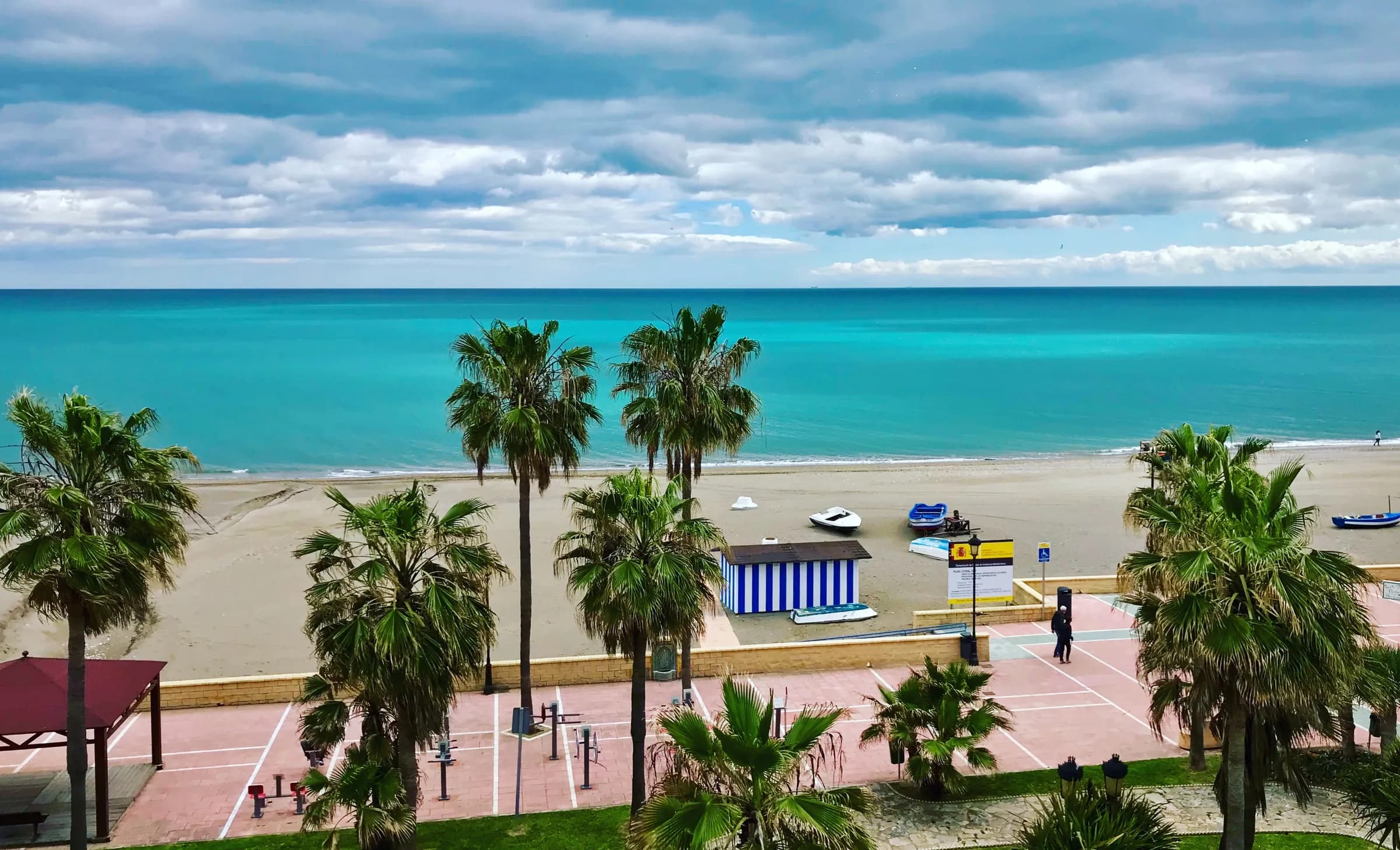
Stay Right on the Beach
The sand is 30 seconds from the door, and the balcony looks straight out at it. Book direct and save up to 20%.
- 3 Bedrooms
- 6 Guests
- 96 m²
Frequently Asked Questions
Related Articles
Hiking on the Costa del Sol: Sierra Bermeja Trails
A walker's guide to hiking on the Costa del Sol: Sierra Bermeja's red peridotite peaks, rare pinsapo firs and realistic trail grades, an hour from Sabinillas.
Casares, Spain: White Village Guide & Day Trip
Casares, Spain is the cliffside pueblo blanco 20 minutes from Sabinillas. Castle, miradores, Roman baths and where to eat: a complete day-trip guide.

Ronda Day Trip from Sabinillas: Things to Do & Itinerary
A Ronda day trip from the Costa del Sol: the best things to do, where to eat, how to get there from Sabinillas or Málaga, and a full one-day itinerary.
The Local's Costa del Sol, Monthly
One email a month: what's on in Sabinillas, the best local finds, and first pick of apartment dates. Free welcome gift: our Sabinillas Insider Guide.
We respect your privacy. Unsubscribe at any time.
Comments
No comments yetHave a tip, a question or a correction? Every comment is read and approved by hand before it appears, usually within a day.
No comments yet. Be the first to share a tip or ask a question.