Cycling the Costa del Sol from Sabinillas
Mention cycling the Costa del Sol and most people picture the gridlocked seafront at Marbella. The western end is a different world. Around Sabinillas, Manilva and Estepona you get flat, paved promenades for an easy spin and proper mountain roads that climb into the Sierra Bermeja within half an hour of the beach. The riding is quieter, the surfaces are good, and the weather does most of the work from May through October. This guide covers the routes we send guests on, plus where to hire a bike and what to expect from traffic and heat. For the wider picture, browse all our Costa del Sol activities and route guides.
The landscape shifts fast. Ride inland from the sand and within a few kilometres you're among cork oak forest and white hill villages that feel a world away from the resort coast. That contrast is the whole appeal: pedal a flat 8 km coastal loop in the morning, attempt a leg-burning climb in the afternoon, and sleep by the beach. Few places pack so much variety into one base.
A word on conditions. Westbound coastal rides usually have the wind behind you; the Levante, an easterly that funnels up from the Strait of Gibraltar, can turn a gentle eastbound leg into a grind, especially in spring. Otherwise the roads are rideable most of the year. Guests who ride here tell us the same thing again and again: fewer cars than they feared, decent tarmac, and routes that go somewhere worth the effort.
Road riding vs leisure pedalling
Be realistic about what kind of cyclist you are, because the western Costa del Sol caters to two very different camps. Leisure riders (families, occasional cyclists, anyone after a flat amble with a beer at the end) should stay on the coastal promenades and the cycle lanes towards Estepona. No traffic to speak of, no climbing, sea on one side the whole way. Road and gravel cyclists chasing elevation will want the inland lanes towards Casares, Gaucín and the Genal valley, and the brutal pull up to Los Reales. Trying to do the serious climbs on a clunky beach-cruiser hire bike is a recipe for misery, so match the bike to the plan (see bike hire below).
Coastal Routes: Flat, Easy, and Scenic
Sabinillas to La Duquesa Promenade
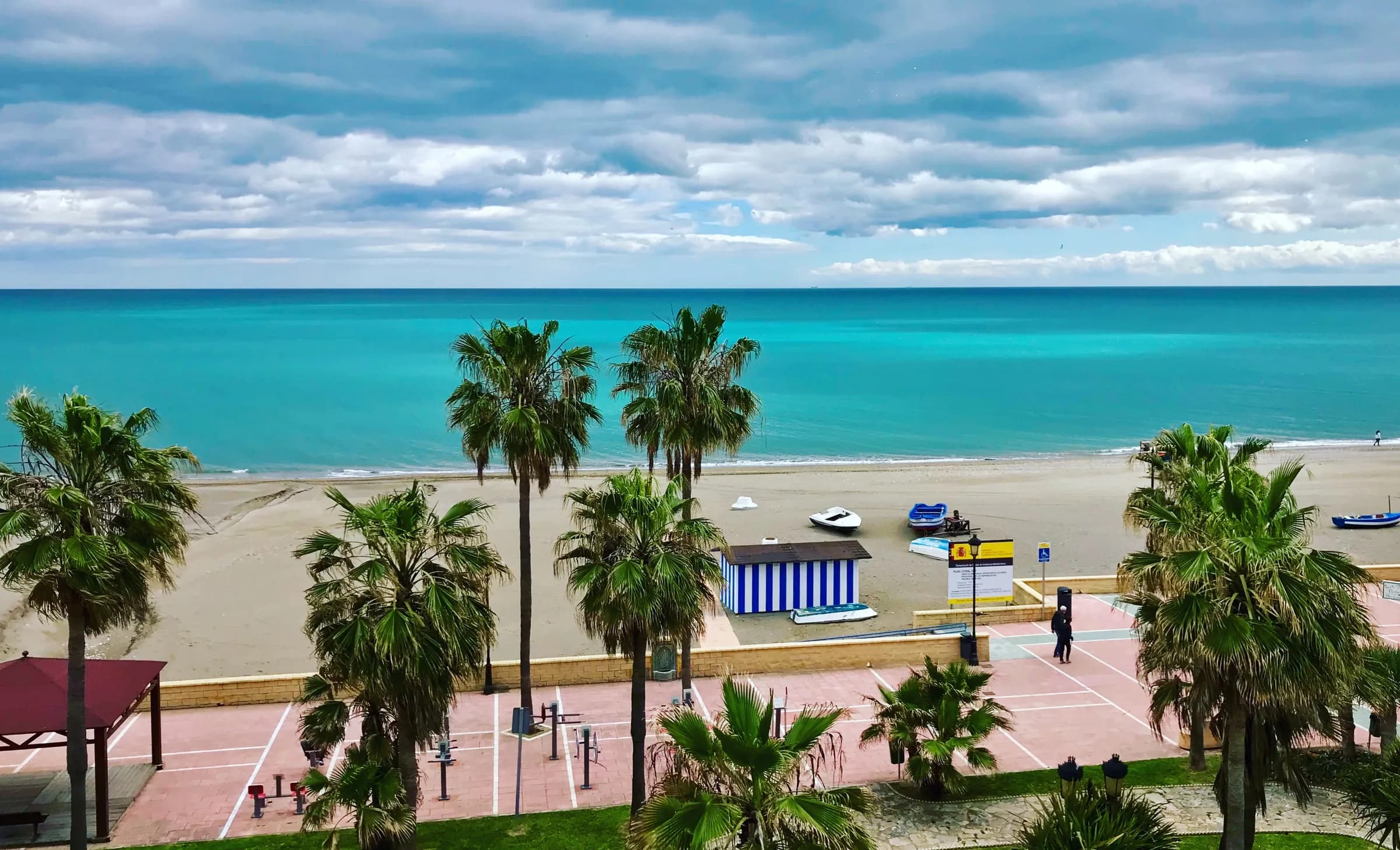
The most accessible ride for all abilities starts right here at our apartment. The coastal promenade connecting Sabinillas to Puerto de la Duquesa is approximately 4 kilometres one-way, entirely flat, and paved. The route hugs the coastline, offering constant sea views, and the road passes directly in front of several chiringuitos (beach restaurants) where you can stop for refreshments.
The ride is essentially a straight shot along the beach with one short section where the promenade briefly joins city streets as you transition from Duquesa to Sabinillas. This is not a technical route; speed is less interesting than simply soaking in the Mediterranean atmosphere whilst moving under your own power. Most cyclists ride this stretch multiple times, varying the stopping points. Arrive at a chiringuito before 13:30 or after 15:00 to secure a table for fresh grilled fish and a cold drink.
Extended Coastal Route: Sabinillas to Estepona
Riding the other way out of Sabinillas, northeast up the coast, brings you towards Estepona. Estepona has invested heavily in cycling infrastructure, building a network of seafront cycle lanes and gradually extending a coastal corridor for cyclists and walkers along its 20-odd kilometres of coast. The town is working towards becoming the most bike-friendly destination on the Costa del Sol.
The ride from Sabinillas to Estepona hugs the coast through Casares Costa and small seaside settlements on flat coastal road. Total distance from Sabinillas to central Estepona is roughly 12-15 km depending on routing. This makes for a pleasant half-morning ride within reach of most recreational riders. Return is generally easier if you've been riding into an easterly wind on the outbound journey.
The Senda Litoral Section (Coastal Path)
The Senda Litoral (Málaga Coastal Path) is an ambitious long-distance project connecting 14 coastal municipalities with a 160-180 km walking and cycling path. Sections of it are complete, though the route remains a work in progress. Near Sabinillas, the section from Torre Sal headland to Castillo de la Duquesa (approximately 5.7 km) is walkable and rideable, though it's primarily designed for walkers rather than cyclists.
Check current conditions locally before planning a longer coastal path cycling trip; some sections are closed seasonally, and the route is not fully uniform. The promenade rides listed above are more reliable options for cycling.
Mountain Routes: For Experienced Cyclists
Manilva to Los Reales de Sierra Bermeja
This is the serious cycling route in the region. Starting from Manilva, just inland from Sabinillas, the climb to Los Reales de Sierra Bermeja runs roughly 32 kilometres one-way (around a 65 km round trip), gaining height to around 1,450 metres at the Pico de los Reales, the high point of the range. The standard cycling ascent (the Peñas Blancas-Los Reales climb) packs about 20 km of relentless uphill into that. The road threads through cork oak forest and quiet mountain country the whole way up. The Sierra Bermeja is also covered in depth in our guide to hiking Sierra Bermeja, which maps out the wider landscape, the pinsapo fir forest at the top and the villages on its flanks.
This is challenging terrain. Sections are steep, the elevation climbs steadily, and it's only suitable for cyclists with solid climbing fitness. The payoff, however, is dramatic: views across the Strait of Gibraltar on clear days and a landscape that feels utterly removed from beach tourism. Many serious road cyclists in the region train on variations of this route.
The ride can be split into stages if you're basing yourself locally. Ride from Sabinillas up to Manilva pueblo in the morning (only 3-4 km, but gently climbing the whole way), rest and refuel, then attempt the climb in the late afternoon when temperatures are slightly cooler. Alternatively, some riders tackle it as a full day from Sabinillas with an early 06:00 start.
White villages loop: Casares and Gaucín
A less punishing way into the mountains links the white villages (pueblos blancos) inland from Sabinillas. A typical loop takes in Casares and Gaucín, both stacked up their hillsides and joined by quiet, winding lanes. Distance depends on your routing, but reckon on 40-50 km with steady climbing rather than savage gradients.
The first big landmark is Casares, the postcard village whose whitewashed houses tumble below a Moorish castle. The climb up the MA-8300 from the coast is the usual warm-up. If you want the full lowdown on the village, our Casares white village guide covers the castle, the viewpoints and where to eat once you've earned it. Push on towards Gaucín, known locally as the "balcony of the Serranía", and on a clear day you'll spot Gibraltar and the Rif mountains of Morocco from the road.
These are scenic rides more than technical ones, with shops, cafés and village squares to refuel at along the way. Surfaces are reliable tarmac, and although it's hilly throughout there are gentler stretches between the pulls. Carry enough water for the gaps between villages; they can be longer than they look on the map.
The Genal valley
For riders who've ticked off the obvious routes, the Genal valley is the local secret. Drop north and east from Gaucín and you descend into one of Andalucía's loveliest river valleys: chestnut woods, tiny villages such as Genalguacil with its open-air sculptures, and lanes so quiet you'll go ten minutes without seeing a car. It's properly remote cycling: little phone signal, few shops, and what goes down must come back up, so it's for confident riders with the legs for a long day. Autumn is the moment, when the chestnut forests turn copper and gold. Many of these villages also sit on the Manilva and Genal wine trail, so a slow lunch with a glass of local Moscatel makes a fine reward; just remember the cycling alcohol limit (more on that below).
Route Comparison Table
| Route | Distance | Elevation | Difficulty | Surface | Best For |
|---|---|---|---|---|---|
| Sabinillas-La Duquesa | 8 km return | Flat | Easy | Paved promenade | All abilities, families |
| Sabinillas-Estepona | ~25-30 km return | 150 m | Easy-Moderate | Paved coastal road + paths | Recreational riders |
| Manilva-Sierra Bermeja climb | ~32 km one-way (~65 km return) | ~1,450 m | Hard | Mountain roads | Experienced cyclists |
| White Villages Loop | 40-50 km | 400-600 m | Moderate-Hard | Mountain tarmac | Fit cyclists seeking scenery |
Bike hire near Sabinillas
The easy first option: book a bike with your stay. Bike hire is one of our direct-booking extras at €12 a day; add it through the extras catalogue when you reserve, or up to 48 hours before arrival, and a bike is ready for you without hunting down a shop. For a promenade potter or the ride to Estepona, it's all you need.
For specialist kit (carbon road bikes, gravel bikes, e-bikes for the climbs), the closest shop is La Casa de Las Bicicletas (Calle Miguel Hernández, 104, 1C, 29692 San Luis de Sabinillas), a short walk from the apartment, with bikes for everything from a flat promenade potter to a proper road day. Ask us and we'll point you to the right option for your trip.
Several other operators serve the wider western coast, so it's worth shopping around for the bike type you need:
- Bikestardo covers the Costa del Sol from Málaga down to the Estepona area (about 15 minutes away), with road bikes, gravel bikes, mountain bikes and e-bikes, handy if you want a quality carbon road bike rather than a heavy town bike.
- Cycle Classic Tours lean towards multi-day road-bike hire and guided rides, and prefer a few days' notice, so they suit a planned cycling holiday more than a spur-of-the-moment afternoon.
- Estepona has a couple of general hire shops along the seafront for cheap daily town bikes: fine for the promenade, not for the climbs.
A few practical pointers. Always check brakes, gears and tyre pressure before you leave the shop, and confirm a helmet, basic puncture kit and lights are included. In spring and autumn (the busy riding seasons), road bikes and e-bikes in the right size sell out, so reserve ahead rather than turning up on the day.
Are e-bikes worth it here?
For most visitors, yes. An e-bike flattens the one thing that puts people off this coast: the hills. You can ride from the beach up to Casares without arriving a sweaty wreck, and a couple sharing one strong rider and one nervous one can finally ride together. Expect roughly €30-45 a day for a decent e-bike, more than a town bike but far less than car hire. Check the battery range covers your plan with a margin: a big climbing day can drain a battery faster than the headline figure suggests, and there's nowhere to recharge halfway up a mountain.
If you're staying at our beachfront apartment in Sabinillas, bike hire is easy: add our €12/day bike extra to your booking, or collect something more specialist from La Casa de Las Bicicletas round the corner, ride whenever the mood strikes, and bring it back when your legs have had enough.
Save money: Rather than hiring a car for a day, many guests hire a bike instead; a couple of days on two wheels often saves €50 or more in car hire plus fuel, even if you only ride 10-15 km.
Best Months for Cycling
May and June are exceptional months. Temperatures range from 18-22°C, the sea is warm enough to cool off during a break, and the landscape is green from spring rainfall. Crowds haven't peaked yet, and restaurants are less frantic than July-August. For comprehensive seasonal guidance, our best time to visit the Costa del Sol article outlines month-by-month conditions across all activities.
September and October are equally excellent. October typically sees daytime highs of 23-26°C with milder evenings (14-17°C) and 7-8 hours of daily sunshine. The summer heat has broken, yet the water remains warm from months of heating.
Avoid July and August for cycling. Daytime temperatures regularly exceed 30°C, with some days reaching 32-35°C. The Levante wind picks up, and the psychological challenge of cycling in that heat outweighs any benefit. Most serious local cyclists take a break or ride very early (05:00 starts) in summer.
Winter months (November-March) are rideable but inconsistent. Average temperatures are mild (11-18°C), but winter brings occasional rain and stormy conditions. If you're lucky with the weather, winter offers excellent cycling. If weather turns, it's miserable.
April is a transition month: sometimes warm and perfect, other times still rainy and cool. Treat it as optional rather than planned.
Safety & Practical Tips
Helmet Laws & Safety Equipment
Children under 16 must wear a helmet in all areas, urban and rural. Adults must wear helmets outside urban zones; riding through Sabinillas town centre without a helmet is technically legal, but we recommend helmets regardless. Non-compliance fines reach €200.
In poor visibility (dawn, dusk, night), Spanish law requires a white front light, a red rear light, and a rear reflector (pedal and wheel reflectors are recommended extras). Most bike rentals include lights, but confirm before riding in low light.
Spanish Cycling Rules
All cyclists must obey standard traffic regulations: red lights, stop signs, one-way streets. Riding whilst using a phone or earphones is prohibited (fines up to €200). When passing vehicles, drivers must maintain at least 1.5 metres distance or use the opposite lane entirely.
The legal blood alcohol limit for cyclists is the same as for drivers: 0.5 g/litre. In practice, if you're riding to a restaurant for lunch, keep it to one drink with the meal or you'll be over the limit for the ride home.
Traffic: what to expect
Cycling here is calmer than the central Costa del Sol, but it isn't traffic-free, so plan around the busy roads. The one to respect is the N-340 / A-7 coast road: fast, busy and with stretches you really don't want to ride, especially near junctions and in summer. Wherever possible, use the promenades and the dedicated cycle lanes instead, and treat the N-340 as something to cross rather than follow. The motorway proper (the AP-7 toll road) is off-limits to bikes anyway.
Inland it's the opposite story: the lanes up to Casares, Gaucín and into the Genal valley carry very little traffic, though they're narrow and twisty, with blind bends and the odd impatient driver, so claim your space and use lights. Towns get fiddly: Estepona's seafront cycle network is excellent, but the old centre is pedestrianised and best walked. Spanish drivers are generally courteous to cyclists and the 1.5-metre passing rule is taken seriously, but Sunday mornings see big local club groups out: friendly, fast, and worth a wave.
Weather & sun precautions
Hydration is critical. Carry at least 1 litre of water (2 litres for longer rides). A small backpack or frame bag keeps hands free. Many cyclists underestimate how quickly they dehydrate in Mediterranean sun, even in spring and autumn.
Sun protection means sunscreen (SPF 30+ applied every two hours), lightweight long-sleeved cycling jersey, and a cap under your helmet. The reflective UV rays bouncing off the road and sea are intense.
Wind awareness: The Levante (easterly) wind can be brutal on eastbound coastal routes, especially in spring. Start early and plan to return with a tailwind if possible. Local bike rental shops can advise wind conditions on the day.
Navigation & Route Confirmation
Establish GPS routes beforehand using Komoot, Strava, or Wikiloc. Spanish roads occasionally lack clear cycling signage, and your phone becomes your trusted navigation device. Download offline maps before starting.
Practical Information Table
| Consideration | Detail |
|---|---|
| Best riding time of day | 07:00-11:00 or 17:00-19:00 to avoid midday heat |
| Minimum water per ride | 1 litre for short rides (under 30 km); 2 litres for longer rides |
| Sunscreen reapplication | Every 2 hours |
| Tyre puncture kit | Carry spare tube, tyre levers, and pump; not all routes have nearby shops |
| Phone battery | Bring a portable charger if relying on GPS navigation |
| Mechanic contacts | Local bike rental shops offer basic repairs |
Planning a cycling trip from Sabinillas
If you're building a few days of riding around Sabinillas, give it two or three days to do the range of routes justice. Start gentle, build up, and keep the big climb for when your legs have found their rhythm. Here's the shape we'd suggest:
| Day | Route | Roughly | Notes |
|---|---|---|---|
| 1 | Sabinillas-La Duquesa promenade, lunch at a chiringuito | 8 km, 3-4 hrs with stops | Flat warm-up, learn the local lanes |
| 2 | Coastal ride to Estepona, or a moderate white villages loop via Casares | 25-50 km | Half-day on the coast or a fuller hill day |
| 3 | Repeat a favourite, or, if you climb well, the Manilva to Los Reales ascent | ~65 km return | Big day; dawn start in warm months |
Treat it as a guide, not a rule. Heat, wind and how the legs feel matter more than any plan, so swap a hard day for a flat one without guilt.
For visiting cyclists, our beachfront apartment provides a perfect base. You're metres from the coastal promenade, close to restaurants for post-ride meals, and central enough to reach all routes within 10-30 minutes by car or bus. Wake at sunrise, ride the morning coastal route, cool off in the sea from our beach access, and spend the afternoon at leisure.
For deeper local knowledge on current route conditions, wind patterns, and quiet roads, the area has its own cycling community; the Club Ciclista Manilva is a good starting point for connecting with local riders. For a full picture of the area beyond cycling, our complete guide to Sabinillas covers restaurants, markets, and activities that pair perfectly with a cycling holiday.
Bring lights and reflectors, carry water, apply sunscreen, check the wind forecast, and ride during the mild months. The western Costa del Sol rewards cyclists with genuine routes, Mediterranean views, and the kind of cycling experience that feels more authentic than typical resort-based riding. Whether you're riding the flat 4 km coastal promenade or tackling the 1,400-metre climb to Los Reales, you're cycling on roads where Spanish locals ride for pleasure, not just tourists on holiday. When you're ready to base yourself here for a proper cycling escape, book our apartment and ride from your doorstep on the beach.
Stay Right on the Beach
The sand is 30 seconds from the door, and the balcony looks straight out at it. Book direct and save up to 20%.
- 3 Bedrooms
- 6 Guests
- 96 m²
Frequently Asked Questions
Related Articles

Manilva Guide: Wine, Roman Baths & Beach Town
A local's guide to Manilva on the Costa del Sol: Europe's most southerly vineyards, free Roman sulphur baths, the Duquesa castle and the beach at Sabinillas.

Hiking on the Costa del Sol: Sierra Bermeja Trails
A walker's guide to hiking on the Costa del Sol: Sierra Bermeja's red peridotite peaks, rare pinsapo firs and realistic trail grades, an hour from Sabinillas.

Casares, Spain: White Village Guide & Day Trip
Casares, Spain is the cliffside pueblo blanco 20 minutes from Sabinillas. Castle, miradores, Roman baths and where to eat: a complete day-trip guide.
The Local's Costa del Sol, Monthly
One email a month: what's on in Sabinillas, the best local finds, and first pick of apartment dates. Free welcome gift: our Sabinillas Insider Guide.
We respect your privacy. Unsubscribe at any time.
Comments
No comments yetHave a tip, a question or a correction? Every comment is read and approved by hand before it appears, usually within a day.
No comments yet. Be the first to share a tip or ask a question.