Manilva: One Town, Three Faces, by the Mediterranean
Most people arrive in Manilva without quite realising they have. They book "Sabinillas", or "Duquesa", or "the Costa del Sol", and only later piece together that all three sit inside one small Andalusian municipality on the coast between Estepona and Gibraltar. Manilva is the umbrella. Under it: a hilltop village, a beach town, and a marina, plus a hidden run of Roman ruins, sulphur springs and Europe's most southerly vineyards.
We've been hosting guests here for years, a short walk from the sand. What strikes us most is how much of Manilva slips past the average visitor. They come for the beach and the sunshine (fair enough) and leave never having tasted a wine that has grown in this soil for two thousand years, never having lowered themselves into a Roman bath, never having climbed the lane to the old village. This guide is the antidote.
Manilva the municipality has 18,818 registered residents (2024 padrón), swelling well past 30,000 in summer. It splits, neatly, into the places you'll hear named.
| Place | What it is | Where it sits |
|---|---|---|
| Manilva (town) | The original hilltop village: narrow streets, the church, the wine centre, the vineyards above | 3-4 km inland, in the hills |
| San Luis de Sabinillas | The main beach town: promenade, Blue Flag beach, restaurants, two weekly markets | On the coast (our apartment's home) |
| Puerto de la Duquesa | A small yachting marina ringed with bars, restaurants and a golf course | On the coast, just south |
| Castillo de la Duquesa | A tiny fishing hamlet built around an 18th-century castle on a Roman site | On the coast, beside the marina |
Get the geography straight and the rest of the place opens up. Sabinillas is where you sleep and eat. The village is where the wine and the history live. Duquesa is the evening stroll with a boat-lined view. None of it is more than a few minutes apart.
Wine Country by the Sea: Europe's Most Southerly Vineyards
The last thing you expect to find on the Costa del Sol is a serious wine region. Yet here it is, minutes inland from the beach: a working wine trail where vines have grown for nearly two millennia, the Mediterranean spread out below them.
Manilva sits at 36°N. To put that in perspective, these are among the most southerly commercial vineyards in continental Europe. That fact speaks both to the climate and to the stubbornness of the people who keep the vines alive against relentless development pressure.
A 2,000-Year History in One Grape
The Moscatel de Alejandría (the Alexandria Muscat) arrived in Manilva around 2,000 years ago, in Roman times. Nobody recorded who planted it. The grape simply took root and never left. For two millennia, this single variety has defined the terroir, the identity and the survival of Manilva's wine culture.
The Moscatel de Alejandría is a large white grape, almost delicate to look at. Eat it fresh off the vine and it's sweet, perfumed, faintly addictive. Dry it and you have raisins. Ferment it and it becomes wine, anywhere from bone-dry to lusciously sweet, depending on how the winemaker chooses to work it.
Here the tradition leans sweet. These wines carry a distinctive character: floral aromatics of rose, honey and stone fruit; a soft, almost silken palate; a finish that lingers with honeyed warmth. They reward slow sipping in the late afternoon, when the light turns gold and the sea breeze rises off the coast.
The vines grow on sunny slopes below the Sierra Bermeja, on chalky albariza-type soil prized for quality wines across southern Spain. Many are 60-plus years old, and they yield very little: sometimes under a kilogram of fruit per vine. That concentration is exactly what separates a serious wine from an industrial one. Less fruit, more flavour in the glass.
Good to know: The vines are farmed organically, with no synthetic pesticides or herbicides. It's a commitment rooted partly in environmental values and partly in plain economics: small family farms can't carry the cost of industrial chemical regimes.
The Nilva Story: Saving Vineyards from the Bulldozer
Walk through these vineyards and you're watching a last stand. Development has been ferocious on this coast. Urbanisations sprawl, motorways carve through valleys, golf courses swallow hillsides. Manilva's vines occupy premium land: slopes over the sea, minutes from the Estepona and Marbella property markets.
Thirty years ago the vineyard area was far larger. Development pressure, thin profits and the simple exhaustion of ageing farmers thinned it out. Bulldozers replaced pickers. Then came Nilva, a project that changed the trajectory.
Nilva began as a community effort to save what was left. The logic is elegantly simple. If vineyards are to survive, they must turn a profit. Profit means selling wine, not just grapes. Selling wine means a story worth telling: preserved old vines, a heritage grape, sustainable farming, the Moscatel tradition. Tell that story well and you build a wine-tourism business that keeps the vines economically alive.
It worked. In 2019, Nilva's "Save the Vineyards of Manilva" project won the Skål International Sustainable Tourism Award in the Countryside and Wildlife category, recognition that sustainable farming, community preservation and rural tourism can thrive together, even on the edge of Europe's most built-up coastline.
Today Nilva farms the 1.8-hectare Peñoncillo vineyard, 60-year-old vines on a steep hillside near the sea, and runs an interpretation centre, CIVIMA, that tells the Manilva wine story across three rooms: the grape, the winemaking, and the harvest traditions. Every bottle is, in a quiet way, a vote for the particular over the generic.
Visiting the Bodega: The Tasting Experience
There's only one bodega genuinely open to visitors in Manilva: Nilva Enoturismo. It's in Manilva village, just inland from the coast, with the meeting point at the CIVIMA building (Calle Doctor Álvarez Leiva, 2, beside the fire station and the Plaza de la Vendimia).
Tours run on set days, with slots through the morning; confirm current times on Nilva's official page when you book, as the schedule shifts by season. Each tour lasts about two hours and costs around €30 per person. Booking ahead is strongly recommended (call +34 609 290 370 or email info@nilva.es). The winery and the Peñoncillo vineyard are a short drive (or roughly a 10-minute walk) apart, so factor in moving between the two.
What happens on a tour? You start at CIVIMA, where the guides walk you through the 2,000-year history, the Moscatel grape and the conservation work that keeps the vineyards alive. Then you head out to the vineyard itself: the steep terraces over the sea, the old vines up close. The cellar visit follows: small-scale, intentional, built around quality rather than volume. It all ends in the tasting room with Nilva's Moscatel wines paired with local tapas.
The view from that tasting room is the part guests remember. The vineyard slopes away towards the water, and on a clear day you can see across the Strait of Gibraltar to Africa. Wine, food, view and story together; you can't buy that combination anywhere else on the Costa del Sol.
Let Us Sort the Booking
If wrangling Spanish phone lines doesn't appeal, just ask us. We'll book your Nilva tour when you reserve your stay or once you've arrived, match the slot to your plans, pass on any dietary notes for the tapas, and explain how to get up to the village: a €12-15 taxi, your hire car, or the uphill walk for the energetic. The tour is booked directly with Nilva at their standard rate, around €30 per person.
Things to Do in Manilva Beyond the Wine
The vineyards are the headline, but Manilva keeps two genuine surprises for anyone willing to drive ten minutes off the beach. Both are Roman, both are free, and both are the kind of thing that makes you wonder why the coach tours never stop here.
Baños de la Hedionda: A Free Roman Sulphur Bath
Down in the green valley of the Río Manilva, where the river runs under a motorway viaduct, the Romans built a domed bathhouse around 2,000 years ago. Baños de la Hedionda, literally "the stinking baths", still stands. Four vaulted chambers survive, fed by a natural sulphur spring, and the smell of rotten eggs hits you well before the water does. Legend has it Julius Caesar bathed here to cure a skin complaint while governing southern Spain; whatever the truth, locals have sworn by the sulphurous water for centuries.
Here's what makes it special: it's a working, swimmable ruin, and entry is completely free. There's no ticket office, no café, no railings: just an extraordinary ancient structure you can wade into. The water sits at around 18°C all year, cold enough to make you gasp, and the sulphur is strongest in high summer.
A few practical notes from experience:
- Bring everything. No facilities means no toilets, no shop, no shade beyond the chambers. Pack water, a towel, and shoes you don't mind soaking; the rocks are slippery.
- Park properly. There's a marked car park a few hundred metres before the baths. Parking checks do happen on the access track, so use it.
- Time it. Sunday afternoons in fine weather are busy and the pools fill up. A weekday morning is calmer and cooler.
- Mind the smell. The sulphur clings to swimwear and skin. It washes off, but don't wear your favourites.
The baths sit on the boundary between Manilva and Casares; if you're already heading up to the white village of Casares, the two pair naturally into one afternoon (see our Casares white village guide).
Castillo de la Duquesa: A Castle on a Roman Fish Factory
On the coast, beside the Duquesa marina, a squat 18th-century fortress guards the shore. The Castillo de la Duquesa was built in 1767 by Francisco Paulino of Seville, but the real story is underneath and around it. The castle stands on the bones of a Roman seaside settlement, and when archaeologists excavated the site in 1989, they found something remarkable.
This was a Roman fish-processing hub. The ruins around the castle include the outlines of salting pools, a marketplace of small shops around a courtyard, baths, a villa and a necropolis. The factory made salted fish (chiefly tuna) and garum, the pungent fermented fish sauce the Romans prized across the empire. It was, for centuries, one of the main sources of wealth on this stretch of coast.
Today the castle houses the Manilva Archaeological Museum, displaying finds from the site. Entry is free, generally Monday to Friday from 8:00 to 15:00 (worth confirming locally, as hours can shift). It's a quick, rewarding stop: twenty minutes inside the museum, a wander around the excavated ruins, and you've added two thousand years of context to the marina coffee you're about to have at Puerto de la Duquesa.
Markets, Beach and the Promenade
Back in Sabinillas, Manilva's everyday pleasures need no booking at all. The Friday and Sunday markets spread along the seafront paseo: fruit, cheese, olives, clothes and bric-a-brac, with the Sunday market the larger of the two. The Blue Flag beach runs the length of the town, backed by a promenade of chiringuitos grilling sardines over wood fires. It's flat, walkable and unhurried, the antidote to the high-rise stretch up the coast. For the full picture of the beach town itself, see our Sabinillas beach guide.
The Fiesta de la Vendimia: Manilva's Harvest Festival
Every year on the first weekend of September, Manilva village erupts for the Fiesta de la Vendimia, the grape harvest festival. This isn't a manufactured tourist event. It's a genuine Andalusian celebration of the harvest and the farmers who keep these vineyards going. In 2026 it falls on 5-6 September; our full Fiesta de la Vendimia guide has the day-by-day programme and how to do it from Sabinillas.
Saturday evening holds the solemn heart of it: a mass for Nuestra Señora de los Dolores (Our Lady of Sorrows), spiritual protector of the vineyards, followed by a procession through the village with the traditional grape offering. It's a real expression of agricultural devotion, not folk theatre.
Sunday is the big public day: a daytime fair in the Domingo Rociero style, with immaculately groomed horses, riders in traditional Andalusian dress, flamenco, and food and wine stalls through the streets.
Then, towards Sunday evening, the moment everyone waits for. In the Plaza de la Vendimia, locals gather for the treading of the grapes, the symbolic first crushing of the season, done barefoot in the old way, pressing fresh fruit into the first must of the vintage. Exact timings drift year to year, so check the programme the Ayuntamiento de Manilva publishes each September.
The festival winds down with evening food stalls, local wine, music and dancing, the relaxed, joyful close of a proper Spanish village fiesta.
| Detail | Info |
|---|---|
| When | First weekend of September (typically Friday-Sunday) |
| Where | Manilva village; main events in the Plaza de la Vendimia |
| Highlights | Saturday mass, procession & grape offering; Sunday fair with horses and flamenco; grape treading Sunday evening |
| Cost | Free to attend; food and wine for sale |
| Distance from Sabinillas | 3-4 km (10-min drive or an uphill walk) |
| Advance booking | Not needed; arrive early for the procession |
For families: The Vendimia is genuinely fun for children. The horses, the parade and the foot-treading are real spectacles, and the food is excellent. Expect crowds, and plan to stay a few hours to do it justice. For more family ideas, see our guide to the Costa del Sol with kids.
Getting to Manilva and Around
Manilva is easy to reach but spread out, so a little planning pays off.
| From | Distance / time | Notes |
|---|---|---|
| Málaga Airport (AGP) | ~90 km / 75 min | Straight down the AP-7 toll road or the slower A-7 |
| Gibraltar Airport (GIB) | ~40 km / 35 min | Often cheaper flights; quick hop along the coast |
| Estepona | ~15 km / 15 min | Nearest large town for shopping and dining |
| Sabinillas → Manilva village | 3-4 km / 10 min | By car, taxi (~€12-15), or a 45-min uphill walk |
| Sabinillas → Baños de la Hedionda | short drive inland | Follow signs up the Manilva river valley; park in the marked car park |
| Sabinillas → Castillo de la Duquesa | ~2 km / walkable | Along the coast beside the marina |
For day trips, a hire car is the practical answer; public transport between the villages and up to the vineyards is patchy. If you'd rather not drive, our airport transfer guide and car hire tips cover the options. Within Sabinillas itself, you won't need a car at all.
A Brief Practical Guide
| Detail | Info |
|---|---|
| Best time to visit | September for the harvest and festival; October-May for cooler, quieter vineyard visits |
| Wine tour | Nilva Enoturismo, from CIVIMA in Manilva village; ~2 hours, ~€30pp incl. tasting + tapas |
| Booking the tour | +34 609 290 370 / info@nilva.es, or ask us to arrange it with your stay |
| Roman baths | Baños de la Hedionda: free, no facilities, ~18°C water, busy Sundays |
| Castle & museum | Castillo de la Duquesa: free, generally Mon-Fri 8:00-15:00 (confirm locally) |
| Markets | Sabinillas seafront, Friday and Sunday mornings |
| Parking | Free near CIVIMA and the Plaza de la Vendimia; marked car park at the baths |
| Dining | Small restaurants in Manilva village; more choice on the Sabinillas promenade and at Duquesa marina |
Planning Your Manilva Day
Manilva isn't complicated, but it doesn't reveal itself by accident; you won't stumble on the vineyards or the baths from the beach. A little intent goes a long way.
If you're staying at our beachfront apartment, the wine is easy:
Option 1: Ask us to book it. Tell us when you reserve (or once you arrive) and we'll sort your Nilva slot and the logistics. The tour is around €30 per person, paid to Nilva. Easiest path by far if you'd rather skip the phone calls.
Option 2: Drive yourself. Hire a car (handy for the wider area anyway), follow the signs up to Manilva village, and book Nilva directly. You'll have flexibility on timings and can fold in the Roman baths, a village lunch, or the castle on the way back.
Option 3: Walk. Up for a 45-minute uphill walk through the town? The vineyards are reachable on foot. Book your tour time in advance so you're not left waiting.
For most guests the sweet spot is letting us handle the booking: it removes the friction, and Nilva's guides tell the real story at a pace that lets the strangeness of it all sink in: world-class wine, ancient baths and Roman ruins, all within a few minutes of the sand.
For the bigger picture of the area (beaches, restaurants and what's nearby), read our complete Sabinillas guide, and pair your wine day with our local restaurant picks. When you're ready, you can arrange this wine experience along with your stay at our booking page.
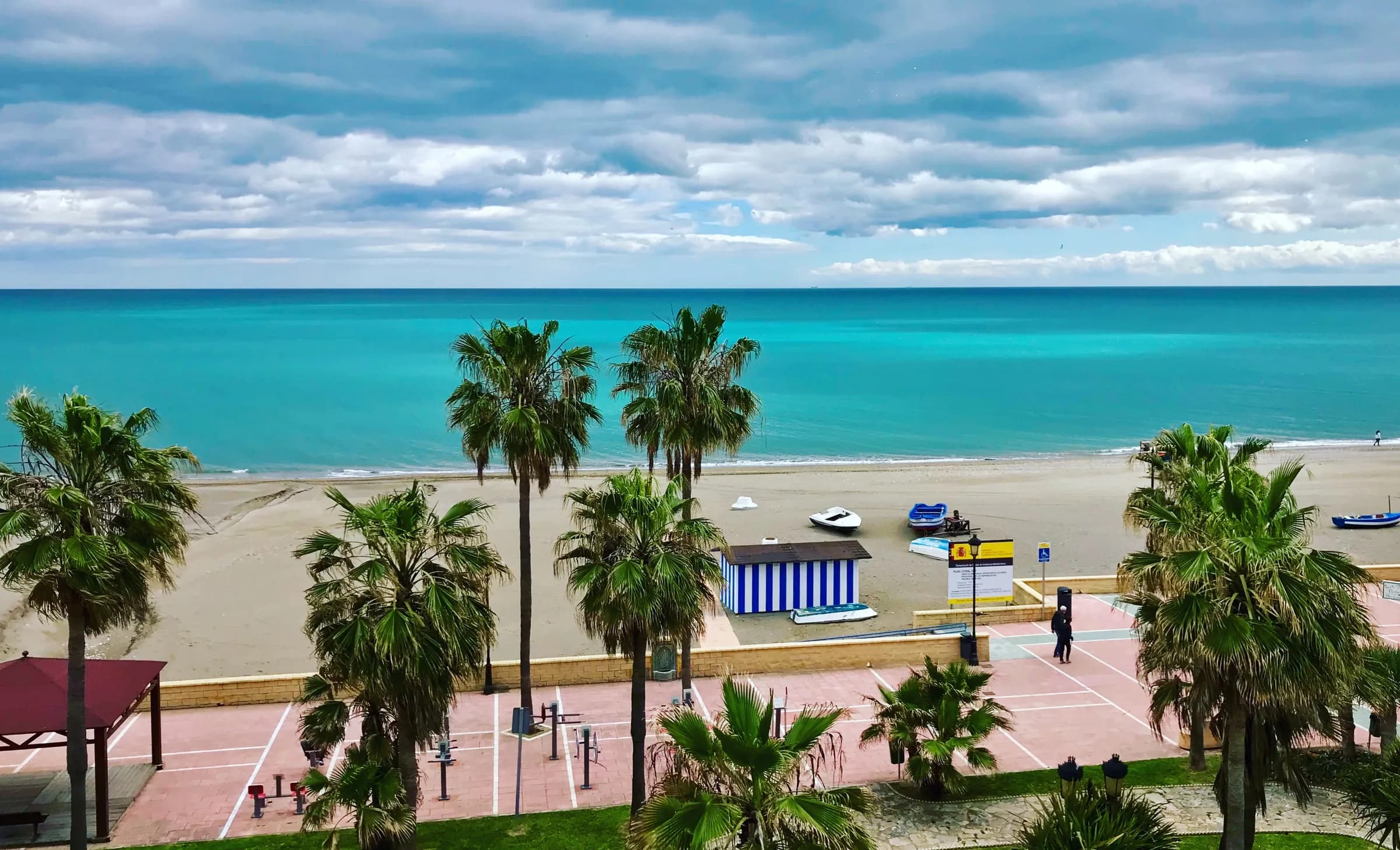
Stay Right on the Beach
The sand is 30 seconds from the door, and the balcony looks straight out at it. Book direct and save up to 20%.
- 3 Bedrooms
- 6 Guests
- 96 m²
Frequently Asked Questions
Related Articles
Casares, Spain: White Village Guide & Day Trip
Casares, Spain is the cliffside pueblo blanco 20 minutes from Sabinillas. Castle, miradores, Roman baths and where to eat: a complete day-trip guide.

Ronda Wine: Best Bodegas to Visit at Altitude
Ronda wine, explained: the high-altitude reds, which bodegas to visit, what tastings cost, and how to plan a wine day trip from the Costa del Sol.
Puerto de la Duquesa: Restaurants, Boats & Golf
Your local guide to Puerto de la Duquesa near Sabinillas: the best marina restaurants, dolphin-watching boat trips, Duquesa golf, the beach and sunsets.
The Local's Costa del Sol, Monthly
One email a month: what's on in Sabinillas, the best local finds, and first pick of apartment dates. Free welcome gift: our Sabinillas Insider Guide.
We respect your privacy. Unsubscribe at any time.
Comments
No comments yetHave a tip, a question or a correction? Every comment is read and approved by hand before it appears, usually within a day.
No comments yet. Be the first to share a tip or ask a question.