Perched 435 metres above the Mediterranean, Casares is the white village everyone photographs and few can pronounce. Whitewashed houses spill down a near-vertical hillside, crowned by a ruined Moorish castle that looks out over two provinces, Málaga and Cádiz, to Gibraltar and, on the clearest days, the mountains of Morocco. The Spanish call it a pueblo blanco. That undersells it. This is one of the most striking hill towns in southern Spain, and one of the easiest to reach from the coast.
Here is the part that surprises people. From our beachfront apartment in Sabinillas you can see the hills that hold Casares, and you can be standing in its main square inside twenty minutes. Coffee by the sea at nine; a cold beer in a medieval square by eleven. Same light, completely different century.
Why Casares, Spain is the white village to choose
There are dozens of pueblos blancos in Andalucía. Casares earns its reputation on geography. Most white villages have a church at the top. Casares has a fortress, proof it was built to defend the frontier of Moorish Granada, not to charm tourists. The streets are genuinely steep, the alleys genuinely narrow, and the place is still lived in: around 8,500 people, Spanish families on holiday in August, locals nursing a café con leche at eleven in the morning while the rest of the village naps.
It also wins on crowds. Mijas gets the coach parties. Frigiliana gets the Instagram queues. Casares, tucked behind the Sierra Bermeja, stays comparatively quiet; you can have the castle to yourself if you arrive early. Geranium pots line the windowsills, the whitewash gets repainted by hand, and in late afternoon the western sun turns the whole hillside the colour of honey. It is the kind of view that explains why Andalucía looks the way it does on every postcard.
Getting there from Sabinillas
The drive from our apartment takes 15 to 20 minutes. Leave Sabinillas and join the A-7 towards Estepona. Just before Torre de la Sal (around Km 147) the brown signs for Casares send you inland onto the MA-8300, which climbs roughly 15 km from sea level into the hills. Coastal sprawl gives way to farmland, then to mountain road. The final approach is steep but well surfaced; any car copes fine.
Parking near the pueblo (the old town) is tight, by design: the village predates cars by several centuries. There is a car park beside the visitor centre on the western edge, and you can usually park free along the main road that runs above the houses, then walk down into the streets and up to Plaza de España.
Good to know: Park before 11:00 or after 15:30 if you want a space close in. Many locals drive up early, take a slow breakfast at a village bar, then wander. Between roughly 12:00 and 15:00 the car park fills with Spanish families arriving for lunch, and you may end up parking lower down.
By bus, without a car
You can do Casares without driving, though it takes planning. The Avanza L-77 runs roughly twice a day, Tuesday to Saturday, along the coast (Marbella, San Pedro, Estepona, Sabinillas, Manilva) and up to Casares pueblo. From Estepona the journey is about an hour; the fare is €2.52. The catch is the timetable: only a couple of services daily and none at all on Sundays or Mondays, so check live times on the Avanza Málaga app before you commit, and have a plan for the return. For the Roman baths there is no useful bus at all. If you are staying with us and would rather not drive, our free car-hire referral points you to a reliable local agency.
The Moorish castle: free, and open at all hours
At the crown of the village sits the Castillo de Casares, a Moorish fortress that began life as a watchtower guarding the inland frontier of the Nasrid kingdom of Granada. Don't come expecting battlements and furnished chambers; it is largely ruins. Come for the panorama, which is the real treasure here. There is no ticket, no gate and no closing time: you walk up and the view is yours.
From the walls, on a clear day, you can pick out:
- The whole village laid out below you like a relief map
- The valleys and ridges running inland towards Ronda
- The coastal plain stretching east to Gibraltar
- The Rif mountains of Morocco across the Strait, when the air is sharp
The climb from Plaza de España takes 10 to 15 minutes and it is genuinely steep, with uneven steps and no handrail in places. Wear proper shoes and bring water; there is no café and no shade up top. Late afternoon is glorious, when the light goes gold and the heat eases, but it is also the busiest window (most people arrive 17:00-18:00). Come at opening-of-the-day instead and you may have the ramparts to yourself.
The cemetery, the churches and the hilltop cluster
The summit holds more than the castle, and this corner is what most day-trippers miss.
Just below the fortress is the cemetery, and it is, oddly, one of the loveliest spots in Casares. Built on bare rock, the graves sit above ground in whitewashed tiers, packed tight against the clifftop with the valley dropping away beyond. It is still in use, immaculately kept, and utterly peaceful. Go quietly and respectfully; this is a working cemetery, not a tourist attraction.
Beside it stands the Iglesia de la Encarnación, the village's old parish church at the highest point of the town. It stood as a roofless ruin from the Civil War in 1936 until restoration in the mid-2000s, and now serves as a cultural centre and museum rather than a place of worship. Nearby you'll also find the tiny 19th-century Ermita de la Vera Cruz. Together with the castle and cemetery, this is the historic heart of Casares: the oldest stones in town, and the best 360-degree views outside the castle walls. That cemetery gate is also where, every 1 November, the village keeps one of the province's warmest small traditions alive — school students roasting chestnuts for All Saints' Day and the tostón.
Down in Plaza de España, the square most people think of as the centre, the Ermita de San Sebastián anchors one side. This 17th-century chapel houses the image of Nuestra Señora del Rosario del Campo, the village patroness, who is carried out each May in a romería down towards the valley where the Genal and Guadiaro rivers meet. The square itself, with its handful of bars and the bronze statue of Blas Infante, is where village life happens. Order a café con leche, take an outdoor table, and just watch.
Blas Infante, the Father of Andalusia
A short walk from the square, at Calle Carrera, 51, is the birthplace of Blas Infante, born here on 5 July 1885. A writer, lawyer and politician, he designed the green-and-white Andalusian flag and shield and is honoured across the region as the "Father of Andalusia"; he was executed by Nationalist forces in 1936. His house now holds the tourist information office and a small permanent exhibition on his life and ideas. If Spanish history interests you, give it twenty minutes. If not, the doorway makes a good photo and you can move on. The office is your best bet for current opening hours, romería dates and, crucially, booking the Roman baths.
The best photo of the castle
For the classic shot (the whole white cascade rising to the castle) you want a mirador (a viewpoint balcony) rather than the streets themselves. Mirador Cancho Andares, a short uphill walk on a paved path, frames the entire village and fortress in one go. The Mirador de la Plaza (Marcelino Camacho) is the easiest place to line up the castle above the rooftops. Both beat fighting for an angle in the narrow lanes.
Where to eat in Casares
Casares is not wall-to-wall tourist tavernas; it is small and a little remote, which keeps the cooking unpretentious. If you're coming up from the coast, it's worth reading our local picks for restaurants in Sabinillas too, for the same authentic-and-fairly-priced philosophy down by the sea.
Restaurante Sarmiento (Brasa Andaluza), on the MA-8300 just below the village, is the headline act: reworked Andalusian cooking over a charcoal grill, with a terrace that looks out over the hills. The grilled meats are the thing to order; it is one of our favourites for a special meal. Budget roughly €30-50 a head with wine, and reserve ahead at weekends.
For something more everyday, the bars around Plaza de España do simple, well-priced raciones and tapas: sit outside, order a local wine, and you won't go far wrong. Down on the N-340 coast road at the Casares turn-off, minutes from Sabinillas, Venta La Choza is the kind of unhurried roadside venta where locals eat: traditional, generous, around €15-30 a head. And on Casares Costa, the beachfront strip rather than the pueblo, the chiringuitos do grilled fish and Mediterranean plates with sea-view terraces, a natural lunch stop on the way home, usually €18-28 for a main.
A practical note on timing: most kitchens shut between roughly 16:00 and 20:00 for the afternoon. Lunch runs 13:00-16:00; dinner starts around 20:00 and goes late. Turn up at 18:00 hungry and you'll find the village asleep.
Baños de la Hedionda: ancient Roman sulphur baths
This is the part that makes the trip inland worthwhile even if hill towns aren't your thing. The Baños de la Hedionda are natural sulphur springs in a quiet river valley, used and built up by the Romans some 2,000 years ago. Four vaulted bathing chambers still survive, and water channels nearby hint that the complex was once far larger. Hedionda, fittingly, means "stinking", and the sulphur is unmistakable. For booking details, the walk in, and the best time to go, see our full guide to the Baños de la Hedionda.
The legend
According to local lore, Julius Caesar bathed here after the Battle of Munda (45 BC) and was cured of a skin affliction, then ordered the baths built up. True or not, it is a story the valley has dined out on for two millennia, and it tells you how long these waters have been prized.
Getting there and what it's like
The baths sit within Casares municipality but are reached from Sabinillas or Manilva, not the pueblo. From the A-7 take the exit at the roundabout by the Lidl west of Sabinillas and follow signs for the Camino de los Baños. The last stretch is a dirt track; a normal two-wheel-drive car manages it carefully in dry weather, but it is not a smooth road. There's a parking area, and from there it's about a 500-metre walk down to the springs.
Two things to set expectations. First, the water is a constant 18°C: bracing, even cold, not a warm spa soak; on a hot August day it is wonderful, in spring it'll take your breath away. Second, this place is completely undeveloped: no café, no kiosk, no loungers, no lifeguard. Just the old stone, the green river pools and the smell of sulphur. Bring swimwear, water, snacks and something for your feet.
Free access, but book the chamber in summer
The outdoor pools and the river are free and open; wade in whenever you like. The Roman vaulted chamber is capacity-limited (around 24 people at a time) and in high season, roughly mid-June to mid-September, needs a free advance reservation via the Casares tourist office (turismo@casares.es, +34 952 89 55 21) or the town's Eventbrite listings. Outside those months you can usually just turn up. Visits to the chamber are short, about an hour, and slots go quickly in August.
For families: the outdoor pools are shallow enough for children, and there's no entry fee. But there's no lifeguard and the rocks are slippery, so supervise closely, and pack everything in, because there's nowhere to buy so much as a bottle of water.
Casares Costa vs Casares Pueblo
One thing to get straight before you set off. Casares Costa is the modern coastal strip: villas, golf resorts and new developments spread along the shore between Estepona and Manilva. Casares Pueblo is the historic white village in the hills, and the subject of this guide. They share a town hall and little else. The costa has the beaches and the apartments; the pueblo has the history, the castle and the view. For a day trip, point yourself firmly at the pueblo; it is in a different league.
One night a year that advice flips. Every August the Torre de la Sal, the 16th-century watchtower on the Casares Costa shore, is ringed with more than 5,000 candles for the Noche de Luna y Sal: a grand piano and a string trio playing on the rocks above the water, a dance group added for 2026, and a fire show, from 22:00. The 2026 edition falls on Friday 14 August, the third year it has run. Entry is free, but capacity is capped and the tickets have to be picked up in person beforehand, from Casares town hall or the Tenencias de Alcaldía in Secadero or Casares Costa. Seating is unnumbered, so regulars turn up well before the hour. It is a far shorter hop than the pueblo, 3-4 km from Sabinillas and five to eight minutes by car, though the small car park by the tower fills fast on a night like this.
At a glance
| Detail | Information |
|---|---|
| Distance from Sabinillas | ~15 km, 15-20 minutes by car |
| By bus | Avanza L-77, Tue-Sat only, ~2/day, ~1 hr from Estepona, €2.52 |
| Castle entry | Free, open at all hours |
| Roman baths | Pools free; vaulted chamber needs a free summer booking (mid-Jun-mid-Sep) |
| Baths water temp | A constant 18°C: cold and bracing, not warm |
| Best time to visit | Spring (Mar-May) or autumn (Sep-Nov); mild, clear light |
| Duration | 2-4 hrs for the village; +1-2 hrs for the Baños de la Hedionda |
| Difficulty | Steep cobbled streets and a stiff castle climb; proper shoes essential |
| Facilities (pueblo) | Bars, cafés, restaurants; no supermarket up in the old town |
| Tourist office | Calle Carrera 51 (Casa Natal de Blas Infante); turismo@casares.es, +34 952 89 55 21 |
| Accessibility | Steep throughout; not suitable for wheelchairs or pushchairs |
A perfect Casares day from Sabinillas
Here's how we'd run it. Drive up for 10:00-10:30, before the lunch crowd, and start with the steep streets and the castle while it's quiet and cool. Work down through the cemetery, the Encarnación and Plaza de España, then take a long, unhurried lunch at one of the village restaurants. Early afternoon, drop back down to the coast and turn off at the Lidl for the Baños de la Hedionda; a cold sulphur soak is the perfect antidote to a hot midday on the cobbles. You're back in Sabinillas for sunset with time to spare for dinner by the sea.
Done this way, you move through 2,000 years and a full sweep of landscape (castle, valley, river, coast) in a single, easy day.
If Casares whets your appetite, it's the ideal first step into the wider network of white villages across Andalucía: Gaucín, Genalguacil and Jimena de la Frontera are all 30-50 minutes on, sharing the same hilltop drama. It also slots neatly into our overview of the best day trips from Sabinillas, alongside Ronda, Gibraltar and Málaga. And for walkers, the ridges you can see from the castle hide some of the area's finest hiking routes in the Sierra Bermeja.
For guests at our beachfront apartment in Sabinillas, all of this is on the doorstep: a morning drive up the hill, home for dinner. If you've come without a car, our free car-hire referral sorts that out, and the whole inland sweep of the western Costa del Sol opens up.
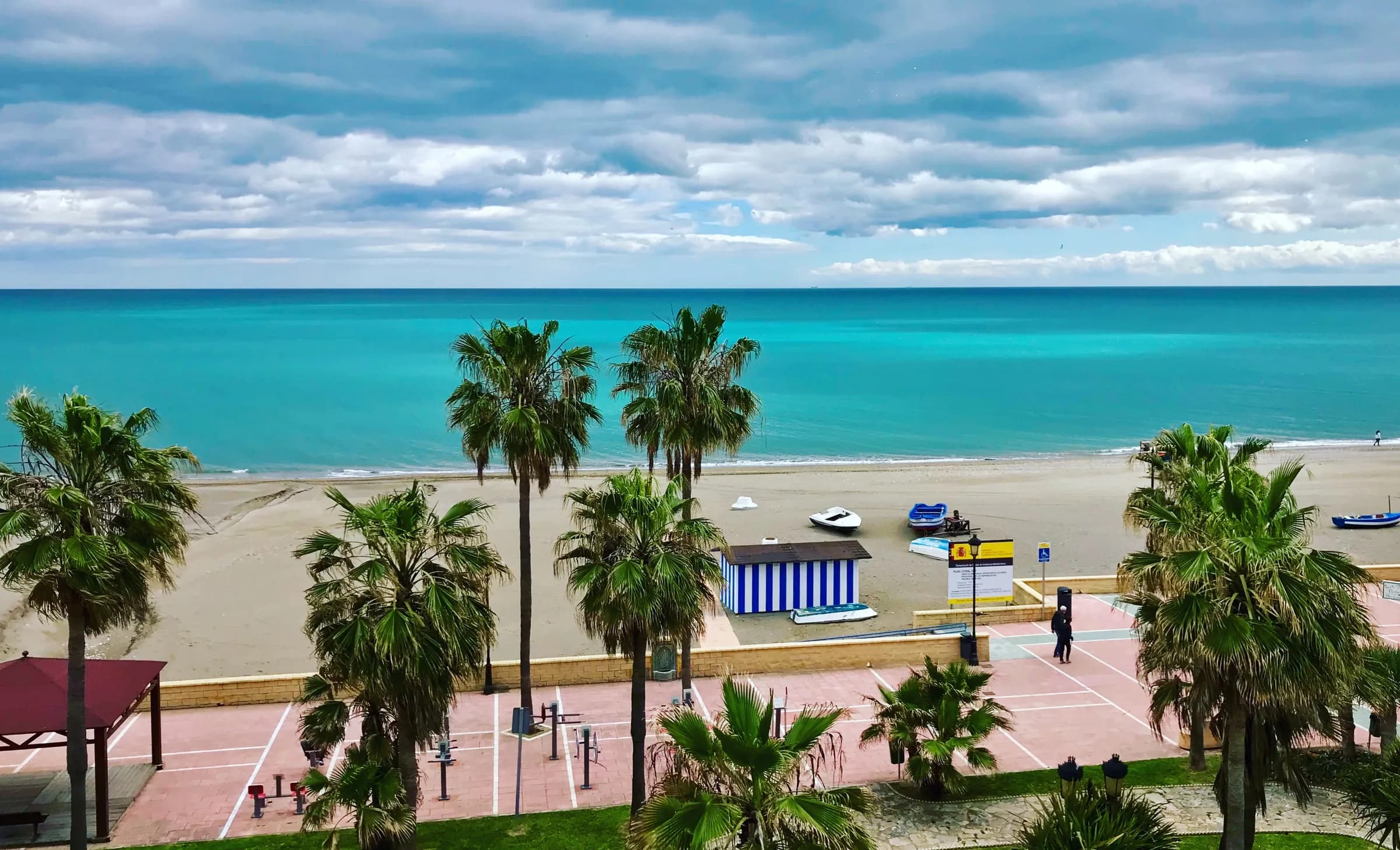
Stay Right on the Beach
The sand is 30 seconds from the door, and the balcony looks straight out at it. Book direct and save up to 20%.
- 3 Bedrooms
- 6 Guests
- 96 m²
Frequently Asked Questions
Related Articles
Hiking on the Costa del Sol: Sierra Bermeja Trails
A walker's guide to hiking on the Costa del Sol: Sierra Bermeja's red peridotite peaks, rare pinsapo firs and realistic trail grades, an hour from Sabinillas.
Pueblos Blancos: White Villages Drive from Sabinillas
The pueblos blancos within an hour of Sabinillas: Casares, Gaucín, Júzcar and Andalucía's white villages, with a driving route and road notes.
Day Trips from Sabinillas & the Western Costa del Sol
Best day trips from Sabinillas and the western Costa del Sol: Ronda, Gibraltar, Caminito del Rey, white villages and Tangier, with drive times and costs.
The Local's Costa del Sol, Monthly
One email a month: what's on in Sabinillas, the best local finds, and first pick of apartment dates. Free welcome gift: our Sabinillas Insider Guide.
We respect your privacy. Unsubscribe at any time.
Comments
No comments yetHave a tip, a question or a correction? Every comment is read and approved by hand before it appears, usually within a day.
No comments yet. Be the first to share a tip or ask a question.