Hiking on the Costa del Sol: Why Bother With the Mountains?
Say "Costa del Sol" and most people picture beaches, sangria and sunburn. Mountains don't get a look-in. Their loss. Within 30 to 45 minutes of our beachfront apartment in Sabinillas, the coast rears up into some of southern Spain's most dramatic high ground: where the Mediterranean meets bare mantle rock, where the geology runs back 21 million years, and where, on a clear day from 1,452 metres, you can see Africa across the Strait of Gibraltar.
The western end of this coast is quietly brilliant walking country. Spring throws down wildflowers, autumn delivers the best temperatures of the year, and even in winter, when the seafront turns grey and flat, the peaks stay crisp and clear. The real draw is the range of it. You can knock out an easy 3 km coastal stroll before breakfast and tackle a proper 8 km mountain route the same afternoon, then be back at sea level for grilled fish by sunset.
A word of caution up front, because it matters here more than almost anywhere: this is hot, exposed terrain. Get the season right and it's a joy. Get it wrong and it's miserable, or worse. We'll be straight with you about when to go and when to stay on the sand.
Easy Walks Near Sabinillas
Not everyone fancies driving inland with a rucksack. You don't have to. Our Paseo Marítimo, the seafront promenade, runs about 2.5 km along the bay, joining central Sabinillas to the port of La Duquesa (Puerto de la Duquesa) to the south-west. It's genuinely good walking: flat, palm-shaded in stretches, with chiringuitos (beach bars) and cafés turning up roughly every 500 metres.
The path passes the Castillo de la Duquesa, the restored 1767 coastal fort that now holds Manilva's free archaeological museum, a natural halfway stop. Beyond the marina the route carries on towards Urb Playa Paraíso, though that section is rougher and less maintained. Most people do the round trip from the town centre to La Duquesa and back: 4 to 5 km in all, an hour to ninety minutes at a dawdle, longer if the coffee wins.
This isn't a hike. It's a cultural walk, tuned to the everyday rhythm of a working stretch of coast. Go in the morning, when the fishing boats are still unloading and the light off the water is at its best. Hat, sunscreen, a small bag with water. Done. For a deeper dive into the beach itself, our Sabinillas beach guide covers the chiringuitos and the lie of the sand.
Sierra Bermeja: The Burning Mountain
Head inland and the whole picture changes. Sierra Bermeja fills the horizon: 1,452 metres of rust-red rock rising barely 10 km from the sea. Locals call it the Burning Mountain for the reddish stone smeared across its flanks. The colour is the headline. The geology is the real story.
Sierra Bermeja is one of the world's strangest natural laboratories. It's built mostly of peridotite: an ultramafic rock from the Earth's mantle, the layer beneath the crust we almost never see at the surface. Peridotite accounts for well under 1% of the planet's exposed rock. The Ronda peridotite massif here, spanning over 450 km², is the largest known exposure of subcontinental lithospheric mantle anywhere on Earth, shoved upward roughly 21 million years ago during the same tectonic upheaval that raised the Alps. Walk these slopes and you are, quite literally, treading on the inside of the planet.
That rust colour comes from iron oxide as the rock weathers. Because peridotite is starved of the minerals ordinary soil needs (calcium, potassium, phosphorus), it grows a one-off ecosystem. Up here live the pinsapares, rare Spanish fir forests (Abies pinsapo): ice-age survivors that hang on in only a handful of southern Spanish sierras, among them Grazalema and the Sierra de las Nieves. Sierra Bermeja's is the only pinsapo forest in the world rooted in peridotite.
One note on what you'll see. A major wildfire tore through Sierra Bermeja in September 2021, taking out parts of the Los Reales pinsapar along with it. Walk here now and you'll pass burned ground and blackened trunks standing among the old survivors: sobering, and oddly beautiful, as the mountain slowly knits itself back together.
Recommended Routes
The Sierra Bermeja natural park is reached from the south, climbing out of Estepona on the MA-8301 (the Genalguacil road). The gateway is Puerto de Peñas Blancas, the pass at around 960 m, a scenic 40 to 50-minute drive from Sabinillas via Estepona, with the villages of Jubrique and Genalguacil lying over the far side. From the pass, trails fan out in every direction.
Route 1: Pico de los Reales Summit Hike (Moderate, 5-6 hours)
The classic. Drive up to the Los Reales refuge (about 1,257 m), where there's parking and a picnic area. From there you climb through the pinsapo forest, cross the Garganta del Algarrobo ravine, then pick your way up rocky ground to Pico de los Reales (1,452 m), the highest point.
Two ways to play it. From the refuge it's a short, sharp summit walk: roughly 3 km return, about 200 m of climb, 1.5 to 2 hours. Start lower, down at Puerto de Peñas Blancas, and the day stretches to 8-9 km return with around 500 m of ascent, taking 4 to 5 hours. The trail is marked and mostly clear, but a few sections are steep and want sure feet. In spring the wildflowers are worth the climb on their own.
Best for: Walkers with decent fitness. On a clear day the view runs from the coast across the Strait to Morocco.
Route 2: Pinsapo-Garganta El Algarrobo-Pico Los Reales (Intermediate, 6-8 hours)
A longer circular that pairs forest walking with ridge-top views: roughly 9.3 km (5.8 miles) with around 560 m of ascent. It drops through the pinsapo forest, traces the Garganta ravine, climbs the rocky ridge to the summit, then loops back along the Paseo de los Pinsapos trail. More rewarding than the straight summit push, but it asks for the time and the legs.
Best for: Intermediate to experienced hikers. The ridge sections hold the best weather and the biggest views.
Route 3: Family-Friendly Los Reales Loop (Easy-Moderate, 2.5-3 hours)
Want the alpine scenery without the summit grind? The refuge-based loop around the Los Reales area is the answer: roughly 6.5 km (4 miles), starting and finishing at the refuge, with modest climbing. You walk through pinsapo woodland, catch the wildflowers in spring, and bag mountain views without the sustained slog. Fine for families with children aged eight and up.
Best for: Families, older walkers, anyone after mountain scenery without anything technical.
Route 4: Arroyo de la Cala-Sierra Bermeja Loop (Moderate, ~4 hours)
A satisfying loop above Estepona that climbs into the Sierra Bermeja foothills along the Arroyo de la Cala. It runs about 9.2 km with roughly 304 m of ascent, topping out near 371 m, and most walkers come in a little under four hours with stops. The terrain is varied and the coastal-mountain views open up as you gain height. Full route and GPS track on Wikiloc.
Best for: Reasonably fit walkers wanting a half-day loop without committing to a full summit day. It's also the most realistic option if you're coming up from the coast without a car for the high mountain; the start sits close to Estepona.
A Quieter Alternative: Sierra Crestellina, Above Casares
If the Los Reales car park looks rammed (and on autumn weekends it can), point the car at Sierra Crestellina instead, the limestone ridge that rears up directly behind the white village of Casares. It's a different mountain in every sense: pale grey rock rather than red, a protected paraje natural rather than a peridotite massif, and one of the best spots in the province to look up and find griffon vultures wheeling overhead. There's a resident colony here, and on a still day you'll see them riding the thermals along the crest.
The walking is gentler than the Los Reales summit. A well-known circular climbs from Casares up to the Mirador del Castillón viewpoint and back, roughly 6 to 7 km with a steady pull early on and head-spinning views down over the village and out to the coast. Combine it with a wander round Casares itself, easily one of the prettiest of the white villages of Andalucía, and you've a full, varied day out. Our Casares white village guide has the where-to-eat and how-to-park detail for the village end of the trip.
Casares is only about 20 minutes inland from Sabinillas by car, which makes this the most accessible mountain walk in the area, and a sound plan if Sierra Bermeja's high road is closed or the heat is building.
Route Comparison Table
| Route | Distance | Elevation Gain | Duration | Difficulty | Highlights |
|---|---|---|---|---|---|
| Pico de los Reales (from Peñas Blancas) | 8-9 km | ~500 m | 4-5 hours | Moderate | Highest peak, pinsapo forest, summit views (from the refuge: ~3 km, 1.5-2h) |
| Pinsapo-Garganta-Pico (Full Loop) | 9.3 km | 560 m | 6-8 hours | Intermediate | Best vistas, longer scenic experience, technical ridge |
| Los Reales Family Loop | 6.5 km | ~250 m | 2.5-3 hours | Easy-Moderate | Wildflowers, forest, minimal scrambling |
| Arroyo de la Cala Loop (Estepona) | 9.2 km | ~304 m | ~4 hours | Moderate | Coastal-mountain views, half-day, closest to coast |
| Sierra Crestellina (Casares) | 6-7 km | ~350 m | 3-3.5 hours | Easy-Moderate | Griffon vultures, village views, quieter |
| Sabinillas Promenade to La Duquesa | 4-5 km | Minimal | 1.5-2 hours | Easy | Coastal views, chiringuitos, castle |
Wildlife and What's Underfoot
For all the talk of bare rock, these mountains are alive. The pinsapo forest is the star, but the slopes also carry cork oak, wild olive and, in spring, a genuinely good wildflower show, orchids among them on the limestone of Sierra Crestellina. Overhead, the griffon vultures of Crestellina are the easiest big bird to spot; with luck you'll also pick out booted eagles or a short-toed eagle hovering for snakes. Mountain goats (Iberian ibex) work the steeper ground, usually at a sensible distance.
A practical note on the ground itself. Peridotite weathers into loose, gritty scree that rolls underfoot on the descent; this is exactly why we keep banging on about boots and poles. After rain the rock greases up alarmingly, so give the high routes a day to dry. And keep half an eye out in the undergrowth in warm months: this is snake country, and while bites are rare, the only one to genuinely respect is Lataste's viper. Watch where you put your hands and feet on rocky scrambles and you'll be fine.
What to Bring: Seasonal Checklist
Essential (all seasons):
- Water: Two litres per person minimum, three in warm months
- Hiking boots: Non-negotiable. Peridotite is crumbly and slick when wet
- Sun protection: Hat, sunglasses, SPF 50+
- Map or GPS: Download offline maps; no phone signal across large stretches
- First aid kit: Blister kit, tape, antiseptic
Spring (March-May):
- Light layers (mornings can be cool)
- Camera for the wildflowers
- Lightweight rain shell, just in case
Summer (June-August, not recommended):
- 3-4 litres of water per person
- High-SPF sunscreen, reapplied often
- A dawn start, no exceptions
- Electrolyte tablets
- Loose, light-coloured clothing
Autumn (September-November):
- Fleece or windproof (exposed ridges get blowy)
- Rain jacket (October-November bring occasional showers)
- Head torch (the days are shortening fast)
Winter (December-February):
- Waterproof jacket and trousers
- Thermal layers
- Don't go straight after rain; the rock is treacherous
Warning: Don't hike Sierra Bermeja in July or August. Temperatures top 32°C, the exposed rock bakes, and shade is non-existent above the trees. Heat exhaustion and dehydration are real risks, not scare stories. In high summer, stick to early-morning coastal walks and let the afternoons go to museums, tapas and a proper siesta.
Best Months for Hiking
October and November are the standouts. Daytime temperatures sit at 20-25°C, rain is still rare, and the light is gorgeous. The summer crowds have gone and the trails are quiet.
Late March to May runs it close. Wildflowers bloom from mid-April, days are 18-22°C and long, and May is often spot-on.
June and September are fine but warm, generally 24-28°C; start early and you'll be grand.
July and August: don't. (See the warning above.)
December to February are mild at 12-18°C but can turn wet, and the paths get muddy. That said, winter has its own pull: hardly a soul about, and crisp, clear skies that give the best long-range visibility of the year. For the full seasonal picture, see our best time to visit the Costa del Sol guide.
Getting to the Trailheads from Sabinillas
Los Reales & Pico de los Reales (car needed)
Distance: Around 40-45 km Drive time: 50-60 minutes Route: From Sabinillas, run up to Estepona (10-15 minutes), then follow signs inland towards Jubrique and Puerto de Peñas Blancas (the mountain pass). From the pass, take the forest road up to the Los Reales refuge car park.
The road is steep, narrow in places and properly winding; allow 30-40 minutes from Estepona to the refuge and don't push it. In a cold snap (typically January-March) the top section can shut for snow or ice, so ask in town before you commit to the drive.
Parking: There's a car park at the refuge. A basic bar/café sometimes operates there, but the hours are anyone's guess; don't rely on it. Bring your own food and water.
Without a car: there's no bus to the refuge. Your realistic options are car hire (around €25-40 a day from Estepona or Sabinillas) or a taxi up from Estepona, with a time arranged for the pick-up. Don't assume you'll get phone signal to call one from the top.
Sabinillas Promenade & La Duquesa (no car needed)
Start: The Sabinillas seafront, near the chiringuitos or the Paseo Marítimo entrance. Parking: Free street parking around town, plus an ample free beachfront car park. Getting here: Walkable from anywhere in the town. If you're staying with us it's about 30 seconds to the sand.
Foothill loops from Estepona (bus-reachable)
The Arroyo de la Cala loop and the lower Sierra Bermeja foothill walks start near Estepona, which the regular Avanza coastal buses serve from along the coast. From the bus station it's a short taxi to the trail edge, the only realistic car-free way into these mountains.
Planning Your Sierra Bermeja Hike
Time it with the shoulder season. If you're coming specifically to walk, book a week in Sabinillas in April-May or October-November. You'll get reliable weather, empty trails, and a town that still feels like itself rather than a tourist overflow. Our beachfront apartment puts you 30 seconds from the sand, which makes pairing mountain days with lazy coastal mornings easy.
Start early. Mountain mornings here are cool and quiet and well worth the alarm. Leave Sabinillas by around 06:30-07:00 for the Pico de los Reales summit and you'll be down by mid-afternoon, clear of the worst heat and the wind that builds on the ridges. Grab a café con leche at a seafront bar on the way out.
Pack a proper picnic. The refuge café can't be relied on. Carry a real lunch (jamón, cheese, bread, olives) and eat it at the summit or among the firs. If the region's wine grabs you, the Manilva wine route and its Moscatel tradition make a fine follow-up.
Sort your transport. The coast is walkable, but Sierra Bermeja needs wheels. Car hire runs roughly €25-40 a day locally; for the flat coastal walks, bikes go from around €12 a day; just ask us and we'll point you to someone reliable. For the bigger picture on driving here, see our car hire on the Costa del Sol tips.
Good to know: The Los Reales area gets busy on weekends from October to May; it's a popular day out from Málaga and Marbella. Want it to yourself? Walk midweek, or get up there at dawn.
If you'd rather not navigate solo, a few hiking outfits on the western Costa del Sol run guided Sierra Bermeja walks; ask us and we'll point you to someone we trust. Either way, once you're back down, the best restaurants in Sabinillas do the business for refuelling on fresh grilled fish.
More Walking Around Sabinillas
Sierra Bermeja is the showpiece, but it's far from the only walking here. The white villages loop (Casares, Gaucín, Jubrique) mixes gentle paths with outsized views. Our cycling routes near Sabinillas double nicely as walking routes if you'd rather your legs did less work. And if you're stitching together a full week, slot a hike between day trips from Sabinillas to Ronda or the coast; everything sits within an hour or two of our front door. For the wider lay of the land, the complete guide to Sabinillas ties it all together.
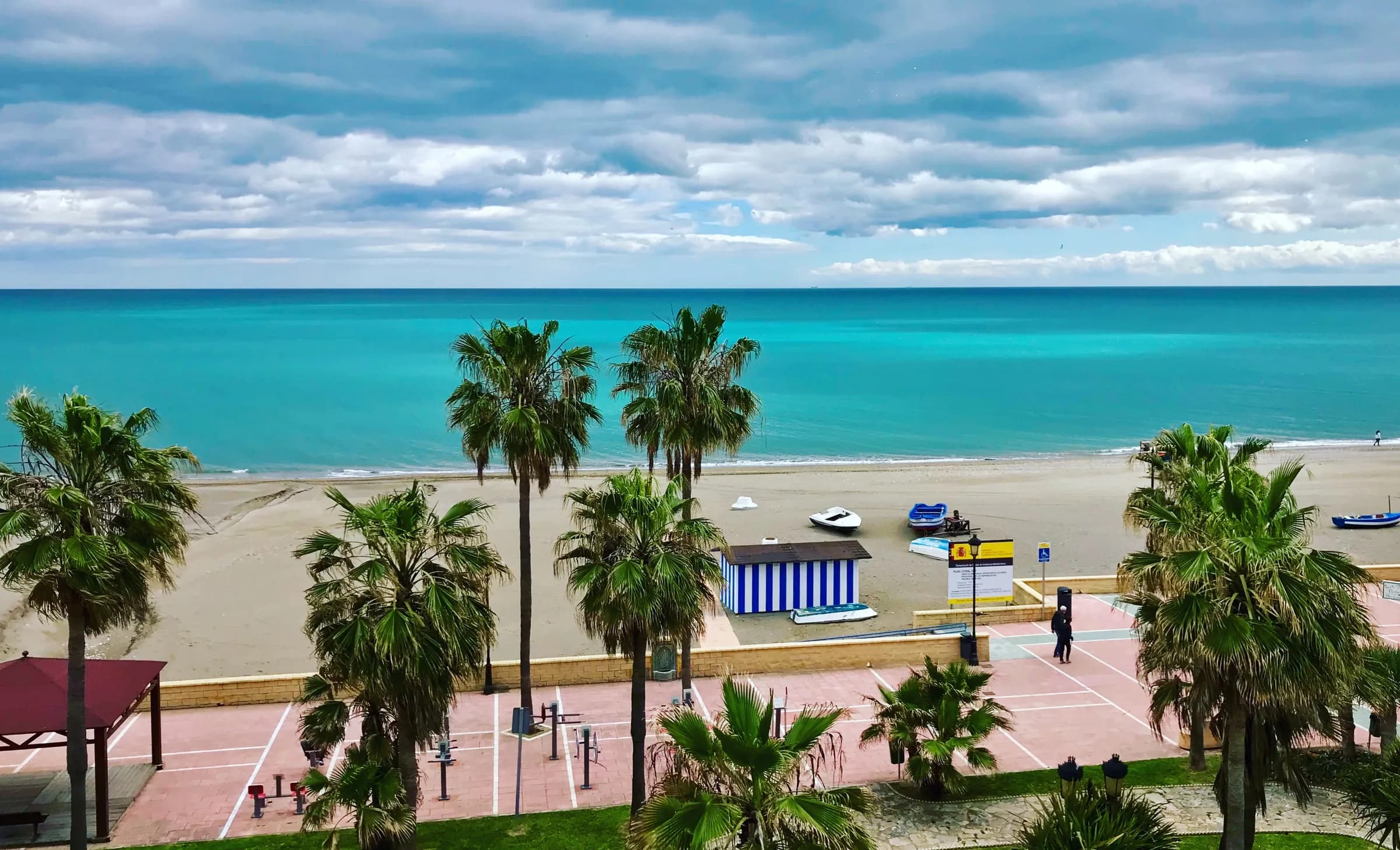
Stay Right on the Beach
The sand is 30 seconds from the door, and the balcony looks straight out at it. Book direct and save up to 20%.
- 3 Bedrooms
- 6 Guests
- 96 m²
Frequently Asked Questions
Related Articles

Casares, Spain: White Village Guide & Day Trip
Casares, Spain is the cliffside pueblo blanco 20 minutes from Sabinillas. Castle, miradores, Roman baths and where to eat: a complete day-trip guide.
Pueblos Blancos: White Villages Drive from Sabinillas
The pueblos blancos within an hour of Sabinillas: Casares, Gaucín, Júzcar and Andalucía's white villages, with a driving route and road notes.
Best Time to Visit the Costa del Sol: When to Go
Working out the best time to visit the Costa del Sol? A local's month-by-month verdict on the best season for beaches, day trips, low prices and fewer crowds.
The Local's Costa del Sol, Monthly
One email a month: what's on in Sabinillas, the best local finds, and first pick of apartment dates. Free welcome gift: our Sabinillas Insider Guide.
We respect your privacy. Unsubscribe at any time.
Comments
No comments yetHave a tip, a question or a correction? Every comment is read and approved by hand before it appears, usually within a day.
No comments yet. Be the first to share a tip or ask a question.