Check before you book: the live Sabinillas webcam and year-round temperature history show the current weather and how warm each season really gets, measured on the beachfront.
The Short Answer: Pick the Month That Matches Your Trip
Everyone wants a single answer to the best time to visit the Costa del Sol. Here it is: there isn't one. There's a best month for swimming, a best month for day trips, a best month for your wallet and a best month for having the beach to yourself, and they aren't the same month.
If you twisted our arm for one pick, it's September. Warm sea, sunny skies, the crowds gone, prices on the way down, and that low golden light this coast does so well. June runs it close. But if your priority is cost, or empty trails, or comfortable sightseeing in Ronda, you'll want a different square on the calendar entirely.
With more than 320 days a year that see at least some sunshine, no month is a write-off. The trick is matching the month to the holiday you want. This guide does exactly that: it's about the decision, not the data. For the full numbers (averages, rainfall, sea temperatures), head to our Costa del Sol weather month-by-month guide; here we'll tell you when to come and why. For the live sea and air temperatures, see the Costa del Sol weather in September on our weather hub.
Best Time to Visit the Costa del Sol, by What You Want
Skip to the row that fits you. Each verdict is explained in the seasons below.
| If you want… | Go in… | Why |
|---|---|---|
| Warm sea for swimming | July-September | Sea 21-22°C; September keeps the warmth without the peak crowds |
| The lowest prices | January-February, November | Rock-bottom rates and cheap flights; mild but not beach weather |
| Fewest crowds + good weather | Mid-September, October, May | Shoulder season, the sweet spot most regulars quietly book |
| Day trips (Ronda, Granada, white villages) | April-May, October-November | Cool enough to walk all day; no queues at the big sights |
| Golf | April-May, October-November | Highs of 19-23°C, no extreme heat, courses at their greenest |
| A family beach holiday | June or September | Warm weather either side of the August scrum |
| Festivals + atmosphere | June (San Juan), July-August (ferias) | The coast at its liveliest, prices at their highest |
| Winter sun + culture | December-February | Sunny days, empty monuments, lowest cost of the year |
Month-by-Month at a Glance
Use this as your quick reference. The "price band" column shows our seasonal pricing tier rather than a fixed figure; our exact nightly rate moves with the season and with demand, so the live booking calendar always shows the real price for your dates (from around €120/night in low season):
| Month | Avg High | Sea Temp | Rainy Days | Crowds | Price band | Best For |
|---|---|---|---|---|---|---|
| January | 16°C | 15°C | 8 | Very low | Low | Hiking, sightseeing, culture |
| February | 17°C | 15°C | 7 | Very low | Low | Carnival, almond blossom |
| March | 18°C | 15°C | 8 | Low | Low | Semana Santa, wildflowers |
| April | 20°C | 16°C | 6 | Low | Mid | Spring sightseeing, golf |
| May | 23°C | 17°C | 4 | Moderate | Mid | Excellent all-rounder |
| June | 26°C | 19°C | 1 | Moderate | High | Beach + sightseeing blend |
| July | 29°C | 21°C | 0 | High | Peak | Full beach season, festivals |
| August | 29°C | 22°C | 0 | Peak | Peak | Peak beach, Feria de Manilva |
| September | 26°C | 21°C | 3 | Moderate (dropping) | High | Our pick: warmth + value |
| October | 23°C | 20°C | 6 | Low | Mid | Hiking, autumn light |
| November | 19°C | 17°C | 7 | Very low | Low | Culture, quiet, wine harvest |
| December | 17°C | 16°C | 8 | Low (except holidays) | Low | Christmas, deals |
Spring (March-May): The Day-Trip Season
Spring is when the Costa del Sol wakes up. Daytime temperatures climb from 18°C in March to a pleasant 23°C by May, while nights stay cool (11-15°C). That balance is the point: warm enough to be outdoors all day, never punishing. For the month-level detail, see Costa del Sol weather in March and Costa del Sol weather in April.
The hillsides go green and flower in April and May after the winter rains. Restaurant terraces reopen. The countryside looks its best of the entire year. And crucially, this is the best window for day trips. You can walk every street of Ronda, climb around the Alcazaba in Málaga or queue-free into the Alhambra in Granada without melting; try the same in August and you'll spend the afternoon hunting for shade. Plan your routes with our day trips from Sabinillas overview.
The sea is still cool (15-17°C). Refreshing, not swimmable for most. So spring is a sightseeing-and-exploring season, not a beach one.
Watch the calendar for Semana Santa (Holy Week). It moves each year, usually landing between late March and mid-April (in 2026: 29 March-5 April). The processions are extraordinary: hooded penitents carrying enormous decorated floats through every town. Even quiet Sabinillas holds its own. But hotels and rentals fill for that week and prices firm up, so book early or sidestep it.
May is our sleeper pick. Prices sit in the moderate mid-season band, the weather is reliably lovely, and the coast hasn't yet filled with families and school groups. Hike in the morning, lunch with a sea view, walk the sand at sunset without dodging a single parasol.
Pro tip: May and October are also the two best months for golf on the western Costa del Sol; see our pick of the best golf courses on the Costa del Sol. Daytime highs around 23°C, fairways at their greenest, no afternoon heat to wilt you on the back nine.
Summer (June-August): Beach Season Proper
Summer turns the Costa del Sol into a proper beach destination. June arrives first with comfortable warmth (highs around 26°C) and a sea of about 19°C, swimmable without gasping for most people. July and August bring the full furnace (highs near 29°C, 32-35°C in hot spells) and warm seas (21-22°C).
June is our summer choice. Prices climb into the high-season band, but you dodge August's peak crowds and fiercest heat. And you catch San Juan on 23 June: bonfires lit along every beach at midnight for the summer solstice. Locals and visitors gather round the flames, wade in fully clothed at the stroke of twelve, and eat sardines grilled on espetos. It's the best single night of the year on this coast.
July brings the Virgen del Carmen (16 July), honouring the patron saint of fishermen, when decorated boats parade along the shore. Spanish families start arriving mid-month for their summer break. Beaches get busy, restaurants need booking, and the festive energy is unmistakable.
August peaks everything. Highs average around 29°C, with spells of 32-35°C, and the occasional terral wind day blowing dry heat off the interior, pushing it past 40°C. The sea is at its warmest (around 22°C). The whole of Spain seems to be on holiday at once. This is when first-line beach access, a community pool and proper air conditioning stop being nice-to-haves and start being the difference between a good day and a sweltering one.
August also brings the Feria de Manilva (usually early August), the municipality's biggest annual party, held just inland of Sabinillas (flamenco, horse parades, food stalls and late-night festivities), plus the Mercado del Mar, an evening street-food and live-music market on the beachfront at weekends.
Surviving the August midday: it is brutal between roughly 13:00 and 17:00, and pretending otherwise helps nobody. Start sightseeing at 7:00 or 8:00. Take the siesta seriously. Go back out from 17:00 once the light softens and the air cools. Wear SPF 50+ without negotiation; the Mediterranean sun here is no joke.
Autumn (September-November): The Sweet Spot
September is when we'd come if we could only come once. It's the single best answer to "best time to visit the Costa del Sol" for most travellers, and here's the why behind it.
Temperatures stay warm (highs around 26°C) but the brutal peak has gone. The sea sits near its annual warmest at 21°C: it peaked in August (around 22°C) and has been soaking up heat all summer, so swimming is glorious. And then the magic trick: Spanish school holidays end in early September, so the crowds fall off a cliff almost overnight. The beach that was shoulder-to-shoulder on 14 August is calm and spacious two weeks later. Prices ease back from the August peak, though September itself stays in the high-season band.
The grape harvest (vendimia) gets going in September, bringing wine festivals to nearby Manilva; pair it with our Manilva wine trail. And the light turns that warm, raking gold that makes every photograph look better than it has any right to.
October is the value pivot. Temperatures drop to a comfortable 23°C, the sea stays swimmable at around 20°C for most people, rain returns (about six days with measurable rain, often in short showers), and prices fall into the mid-season band. This is the ideal month for a ten-day trip that mixes beach mornings with day trips: warm enough to swim, cool enough to walk a hill town in the afternoon. See Costa del Sol weather in October for the detail.
November feels like early autumn back home, only milder. Around 19°C, lush green countryside after the autumn rains, and prices down to their lowest, low-season level (from around €120/night). Rain is the catch: about seven wet days, with November second only to December as the wettest month of the year, though it tends to come in short bursts, not grey all-day drizzle. The towns feel properly local again; you'll rarely see another visitor. Here is Costa del Sol weather in November in full.
Autumn is the second great window for the outdoors. It's prime time for hiking in the Sierra Bermeja: heat gone, sierra still green, trails empty. And October-November means Ronda, Granada's Alhambra and the white villages without the queues, exactly as they should be seen.
Winter (December-February): Cheapest Time, Mild Sunshine
Winter on the Costa del Sol catches northern Europeans off guard. Days hover around 16-17°C, genuinely pleasant for walking in the sun, though you'll want a light jacket morning and evening. Rain is part of the picture: December and January each see about eight wet days, and the sun comes back between the showers. With more than 320 days a year that see some sunshine, even "winter" serves up plenty of blue sky.
What winter isn't: it isn't cold. Nights average 10-11°C. Snow at sea level is virtually unheard of. The coastal towns stay open, and locals still take their coffee on the terrace.
This is the cheapest time to visit the Costa del Sol, full stop. January and February deliver the lowest prices of the year (from around €120/night) and the cheapest flights. The apartments fill with long-stay visitors: retirees and remote workers swapping a grey northern winter for sun, low costs and an outdoor life.
December carries the festive season: Christmas markets, nativity scenes, and the Three Kings parade on the evening of 5 January. Spanish families gather over the Christmas-New Year window (roughly 20 December to 6 January), so book those weeks early. December is also the wettest month of the year, so check Costa del Sol weather in December before you plan outdoor days.
For sightseeing, winter is quietly superb. The Alhambra, Ronda and the white villages see a trickle of visitors instead of a flood: no queues, no heat, no jostling for the famous photo. Museums, spa days and long indoor lunches all feel like the right call when the beach is marginal.
Swimming? Be realistic. The sea is 15-16°C. A handful of hardy locals and Scandinavian visitors plunge in year-round; with a wetsuit you'll manage. Most people are better off with a heated pool at a larger complex.
Save money: for the best value-for-money holiday of the year, take two weeks in January (low-season rates, cheap flights; see Costa del Sol weather in January) and fill them with hiking, day trips, local restaurants and markets. Your total spend can land 40-60% below a July trip, with richer culture and not a tourist crowd in sight.
How Long Are You Staying? Match the Trip to the Season
The right month also depends on how long you've got.
- A long weekend (3-4 nights): spring or autumn shoulder. You want reliable weather and short queues so you're not losing half your trip to crowds or a wet afternoon. October and May are ideal: pack one beach day and two day-trip days.
- A week (7 nights): June or September if you want a beach-led holiday with a couple of excursions; April/May or October if day trips are the priority and the sea is a bonus, not the point.
- A fortnight (14+ nights): winter wins on value, and two weeks is long enough to ride out the occasional rainy day. You'll also unlock our longer-stay rates and have time for the bigger day trips: Granada, Seville, even a day trip to Tangier.
Plan Around the Big Dates
A few fixed (and moveable) events are worth either chasing or dodging; they swing both atmosphere and price.
| Event | When | Worth planning around? |
|---|---|---|
| Semana Santa | Late March-mid April (moves yearly) | Spectacular processions, but prices firm and towns busy; book ahead |
| San Juan | Night of 23 June | Yes: beach bonfires, the best night of the year |
| Virgen del Carmen | 16 July | Lovely coastal boat parade; book restaurants |
| Feria de Manilva | Usually early August | Manilva's summer fair, just inland; expect peak crowds and prices |
| Vendimia (grape harvest) | September | Wine festivals near Manilva; a great reason to come in early autumn |
| Christmas & Three Kings | 20 Dec-6 Jan | Festive and family-focused; book these weeks early |
When to Book for the Best Price
A quick word on timing the booking itself, because it matters as much as the month you pick.
- July and August: book three to six months ahead. The best-value weeks and the most popular properties go first, and last-minute peak bookings are both pricey and slim on choice.
- Shoulder season (May, September-October): a month or two out is usually plenty, and you'll still have a good run of dates to choose from.
- Winter (November-February): the most flexible of all: you can often book a few weeks out, except for that Christmas-New Year fortnight, which fills early and should be booked ahead.
Because our nightly rate tracks the season and live demand rather than sitting at a fixed number, the surest way to compare months is simply to plug your dates into the booking calendar and read the real figure.
Our Verdict
Book May, June or September if your budget stretches to it. These three balance excellent weather, fair prices, manageable crowds and the one thing that makes or breaks a beach holiday: a sea warm enough that you want to get in.
If summer is your only window, June beats July and August for heat and crowds alike. If your trip is all about Ronda, Granada and the white villages, come in April, May or October when you can walk all day and skip the queues. And if winter fits your diary, don't hesitate: the weather is genuinely pleasant, the prices are genuinely low, and you'll see a more authentic Spain.
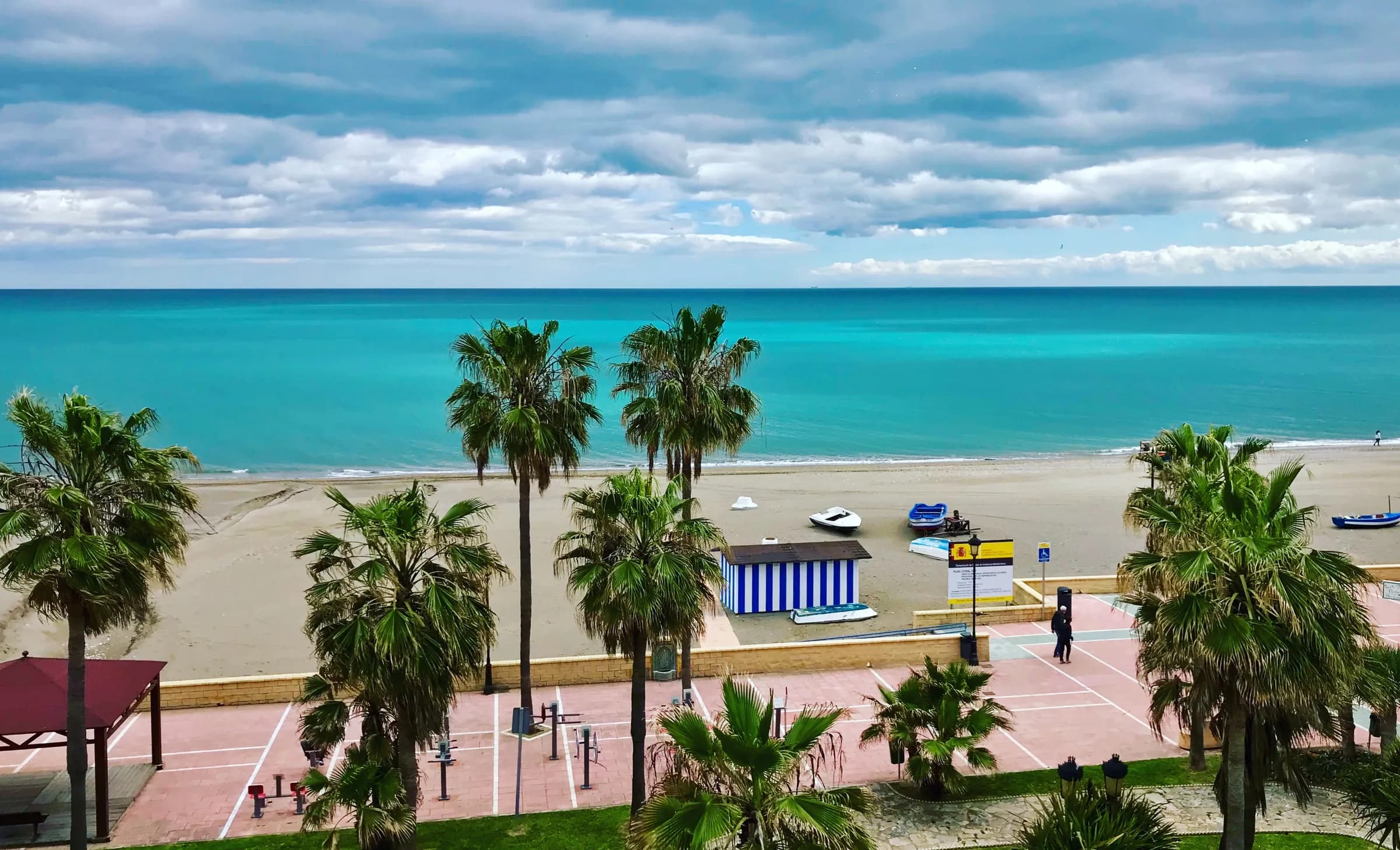
Our beachfront apartment is open all year. We've hosted July families who wouldn't swap the beach heat for anything, and January travellers who fell for Spain through its quieter winter side. Both leave planning the next trip. Travelling with children? Our family-friendly extras (free travel cot and high chair, plus pre-arrival grocery stocking) keep every season easy. New to the area? Start with our complete guide to Sabinillas and build your trip from there.
Stay Right on the Beach
The sand is 30 seconds from the door, and the balcony looks straight out at it. Book direct and save up to 20%.
- 3 Bedrooms
- 6 Guests
- 96 m²
Frequently Asked Questions
Related Articles

Costa del Sol Weather Month by Month
Costa del Sol weather month by month: average temperatures, sea temperature, rainfall and sunshine hours, plus what to pack and the best months to swim.

Day Trips from Sabinillas & the Western Costa del Sol
Best day trips from Sabinillas and the western Costa del Sol: Ronda, Gibraltar, Caminito del Rey, white villages and Tangier, with drive times and costs.

Sabinillas: The Complete Guide to This Costa del Sol Town
A local's complete guide to Sabinillas: the beach, restaurants, markets, fiestas, day trips and practical tips for this quiet western Costa del Sol town.
The Local's Costa del Sol, Monthly
One email a month: what's on in Sabinillas, the best local finds, and first pick of apartment dates. Free welcome gift: our Sabinillas Insider Guide.
We respect your privacy. Unsubscribe at any time.
Comments
No comments yetHave a tip, a question or a correction? Every comment is read and approved by hand before it appears, usually within a day.
No comments yet. Be the first to share a tip or ask a question.