We host guests year-round, and one question lands in the inbox more than any other: "What's the weather like in [month]?" The honest answer is that the Costa del Sol weather is reliably kind. Sunny, mild to hot depending on the season, and pleasant in every single month. But the detail matters, because the difference between a March and an August trip is the difference between a fleece in the evening and a 35°C beach by 10am.
This is a proper month-by-month breakdown: real temperatures, sea temperatures, rainfall, sunshine hours and crowds, plus what to pack and when the water is warm enough to swim.
Right now: for today's actual conditions, see the live Sabinillas beach webcam and weather, with real on-site air and sea temperatures next to the live view. For live weather and all the monthly averages in one place, see our Costa del Sol weather page.
What Is the Costa del Sol Climate Like?
Mediterranean and reliably mild: hot, dry summers, cool winters, and no month that's genuinely cold. The coast sees more than 320 days a year with some sunshine, with an annual mean temperature of about 18.5°C, sheltered from cold northerly air by the Sierra Bermeja and the Penibaetic mountains.
What that means: more than 320 days with some sunshine, not 320 cloudless days. Even the greyest winter months have bright spells between the showers, and the coast's total sunshine hours are among the highest on the Spanish mainland.
That mountain barrier is also why this stretch of Málaga province is the sunniest part of mainland Spain. London gets roughly 1,600 hours of sun a year. Berlin, less. You feel the difference the moment you step off the plane.
There are really two seasons. A hot, dry summer running May to September, and a mild, sometimes wet winter from October to April. Spring and autumn are the in-between months everyone underrates: warm, quiet and dry, without July's heat or July's prices.
What's the Weather Like Each Month on the Costa del Sol?
Average highs run from 16°C in January to 29°C in July and August, sunshine climbs from 5 hours a day in winter to 11 at the June-July peak, and rainfall is heaviest from November to March and almost nonexistent June to August. The table below is the whole year at a glance: typical monthly averages for the western Costa del Sol around Sabinillas, Estepona and Málaga, close enough for planning, though any given week can run warmer or cooler.
| Month | Avg High | Avg Low | Sea Temp | Rainfall | Sunshine/day | Rainy days | The feel |
|---|---|---|---|---|---|---|---|
| January | 16°C | 10°C | 15°C | 105mm | 5 hrs | 8 | Quiet, cool, hiking season |
| February | 17°C | 10°C | 15°C | 92mm | 6 hrs | 7 | Still winter, almonds blossom |
| March | 18°C | 11°C | 15°C | 85mm | 7 hrs | 8 | Warming up, wildflowers start |
| April | 20°C | 13°C | 16°C | 70mm | 8 hrs | 6 | Ideal spring weather |
| May | 23°C | 15°C | 17°C | 30mm | 9 hrs | 4 | Peak spring, beach season opens |
| June | 26°C | 18°C | 19°C | 8mm | 11 hrs | 1 | Hot, dry, near-perfect beach |
| July | 29°C | 20°C | 21°C | Minimal | 11 hrs | 0 | Peak summer, very hot |
| August | 29°C | 21°C | 22°C | Minimal | 10 hrs | 0 | Hottest, busiest, festival season |
| September | 26°C | 19°C | 21°C | 23mm | 8 hrs | 3 | Warm, calmer, still swimmable |
| October | 23°C | 16°C | 20°C | 80mm | 7 hrs | 6 | Still lovely, rain returns |
| November | 19°C | 13°C | 17°C | 120mm | 5 hrs | 7 | Rainy spell, beaches empty |
| December | 17°C | 11°C | 16°C | 123mm | 5 hrs | 8 | Rainiest month, festive towns |
A couple of things to read into that table. The sea is always a month or two behind the air, so the water is warmest in late summer, not midsummer. And "rainy days" (days with at least 1mm) rarely means a washout: most rain here arrives as a short, dramatic downpour that clears by lunch.
What's the Weather Like in Winter (December-February)?
Daytime highs of 16-17°C and sunshine down to about 5-6 hours a day: winter here is the coast's best-kept secret, with clear skies more often than not and the kind of soft light that makes the white villages glow. December is the wettest month of the year (around 120mm, with November close behind), spread over seven or eight days, so you still get plenty of dry, bright afternoons between the short, heavy bursts of rain. Those winter highs run a touch above the Costa Blanca's; our Costa del Sol vs Costa Blanca comparison sets the two coasts side by side for families.
The sea sits at 15-16°C. Cold for a proper swim unless you're hardy, so winter is for paddling, long beach walks and sunbathing in a jumper rather than serious sea time.
What makes winter genuinely worth it is everything else. This is hiking season, when the Sierra Bermeja is cool enough to climb and the countryside is green. Our Sierra Bermeja hiking routes are here. Almond trees blossom from late January, wildflowers follow in February and March, and the towns belong to the locals again. Flights and apartments are also at their cheapest all year.
Pro tip: Visit the Sunday market in January or February. Locals do their actual shopping there and tourists are rare: winter veg appears next to the last of the season's oranges.
Want the detail on each winter month? See Costa del Sol weather in December, Costa del Sol weather in January and Costa del Sol weather in February.
What's the Weather Like in Spring (March-May)?
March hovers around 18°C and April reaches a reliable 20°C, with rainfall dropping fast as the coast wakes up from winter: warm enough for lunch outdoors, cool enough to walk a city all afternoon without melting.
Wildflower season peaks from late March into April, and the inland countryside around Casares and Ronda turns properly colourful. If you fancy a day inland, our white villages guide maps the best of them.
By May the dial turns. Highs climb to around 23°C, the sea hits 17°C (swimmable for most), and the rain all but stops. The beach season opens and the chiringuitos fire up their grills, but accommodation is still well short of summer prices. For the best weather-to-crowds ratio of the year, May is hard to beat.
Month by month: Costa del Sol weather in March, Costa del Sol weather in April and Costa del Sol weather in May.
What's the Weather Like in June (Early Summer)?
Highs of around 26°C, sea up to a warm 19°C, daylight stretching past 9:30pm, and rainfall down to almost nothing: June is the month we quietly recommend most, with the full summer feel and none of August's intensity.
Crucially, it's softer on every front than July and August. Restaurants still have free tables, you can find a parking space, and the beach has room to spread out. The sun is strong, though (eleven hours of it a day), so sunscreen is not optional, and the local siesta starts to make sense as shops shut from roughly 14:00 to 17:00. For the full June picture, see Costa del Sol weather in June.
Save money: Book June instead of July. The weather is near-identical, but rates run noticeably lower before the peak kicks in.
What's the Weather Like in Peak Summer (July-August)?
Average highs of 29°C, occasional spikes past 35°C, the warmest sea of the year at 21-22°C, and effectively zero rain: this is full Mediterranean summer, glorious if you love heat and a buzzing beach, but also the busiest, priciest and most tiring time to come.
The good: the sea is warm enough for everyone, the water sports are at their best, and you get up to eleven hours of daily sun. The towns are alive late into the night.
The catch: midday is brutal. Sightseeing between noon and 4pm is genuinely uncomfortable, so plan beach mornings before 11:00 and save the indoor museums or a shaded lunch for the worst of the heat. Reservations become essential everywhere. And it's festival season: early August brings the Feria de Manilva, while earlier in summer San Juan (23 June) and the Virgen del Carmen (16 July) deliver bonfires, fireworks and decorated fishing boats. Wonderful if you want the spectacle, hectic if you want peace.
Watch for the terral, too. It's a hot, dry wind that funnels down off the mountains a handful of days each summer and shoves the temperature up sharply. Málaga city bakes hardest under it; Sabinillas, out west and cooled by the sea breeze, usually gets off lighter.
Month by month: Costa del Sol weather in July and Costa del Sol weather in August.
What's the Weather Like in Autumn (September-October)?
The summer heat eases to a comfortable 26°C and the sea stays beautifully warm at 21°C as the crowds vanish almost overnight: September might be the best all-rounder of the year, with beaches, restaurants and parking back to normal and prices falling.
October cools to about 23°C and the rain starts creeping back (around 80mm), but late-October beach days are still common, the sea holds at a swimmable 20°C, and the value is excellent. Reliable warmth, an empty coast, low prices: it's a quietly brilliant time to visit.
Month by month: Costa del Sol weather in September and Costa del Sol weather in October.
What's the Weather Like in November (Late Autumn)?
Mornings drop to around 13°C, afternoons stay pleasant at 19°C, and the sea cools to 17°C as November becomes one of the wettest months of the year, just behind December (around 120mm, roughly seven rainy days). The beaches empty out, the chiringuitos wind down, and the coast's winter residents start to arrive: still plenty of bright days between the showers, and noticeably cheaper than anything in summer. For the full November picture, see Costa del Sol weather in November.
Costa del Sol Sea Temperature: When Is the Water Warm Enough to Swim?
The sea is comfortably swimmable from June to early October, warmest at 22°C in August, with July and September close behind at 21°C. The single most common planning mistake is assuming "hot air means warm sea": the Mediterranean here takes its time to warm up and is just as slow to cool down, so the water peaks in late summer and stays swimmable well into autumn.
| Sea temperature | Months | Who it suits |
|---|---|---|
| 21-22°C (lovely) | July, August, September | Everyone, all ages |
| 19-20°C (warm) | June, early October | Most swimmers, happy splashing |
| 17-19°C (fresh) | May, late October, November | Confident swimmers, short dips |
| 15-16°C (bracing) | December-April | The hardy, wetsuit-keen, quick plungers |
In practice, June to early October is the swimming window, and September is the unsung hero: the sea is within a degree of its August peak just as the beach empties out. The water is also calmest in summer; the bigger swells tend to come with winter levante storms. A levante (easterly wind) can also push cooler water and a bit of seaweed onto the beach for a day or two, most often between May and October, so don't be surprised by a sudden dip in clarity that clears within a day.
What to Pack by Season
Winter calls for layers and a waterproof; summer calls for SPF 50 and swimwear; spring and autumn split the difference. A bit of forethought here saves a frantic dash to a Spanish supermarket for sun cream at peak-season prices.
| Season | Pack this |
|---|---|
| Winter (Dec-Feb) | Layers, a light waterproof, jeans, comfy walking shoes, a jumper for the evening, sunglasses and sun cream (the winter sun is still strong). Some shops shut midday; pack patience too. |
| Spring (Mar-May) | T-shirts and shorts, a light cardigan or fleece for mornings and evenings, sandals plus trainers, SPF 30-50 and a hat. Swimwear from May. |
| Summer (Jun-Aug) | Light summer clothes, two or three swimsuits, SPF 50 water-resistant sun cream, a wide-brimmed hat, sunglasses, flip-flops (the sand gets scorching), and a thin layer for fiercely air-conditioned interiors. |
| Autumn (Sep-Oct) | Summer clothes and swimwear, a light jacket for later evenings, flat shoes, SPF 50, and a packable rain jacket for October showers. |
One thing that catches northern visitors out: the UV here is high from April to September, often hitting 9 or 10 at midday in summer: strong enough to burn in twenty minutes. SPF 50, a hat and the shade of an umbrella between noon and 4pm are not fussy, they're sensible.
Which Season Is Best on the Costa del Sol?
Spring and autumn edge it for the best all-round balance of weather, crowds and price: both rate ★★★★★ below. Summer wins for peak beach and sea heat, and winter for quiet, cheap winter sun.
| Season | Best for | Air temp | Sea temp | Crowds | Price band | Our rating |
|---|---|---|---|---|---|---|
| Winter (Dec-Feb) | Quiet getaways, hiking, winter sun | 16-17°C | 15-16°C | Minimal | Low | ★★★★☆ |
| Spring (Mar-May) | The all-round balance | 18-23°C | 15-17°C | Moderate | Low-Mid | ★★★★★ |
| Summer (Jun-Aug) | Peak beach and sea | 26-29°C | 19-22°C | Heaving | High-Peak | ★★★★☆ |
| Autumn (Sep-Oct) | Best value with great weather | 23-26°C | 20-21°C | Light | Mid-High | ★★★★★ |
Price band is our seasonal rate tier, not a fixed figure: the exact nightly rate moves with the season and with demand (from around €120/night in low season). See the live booking calendar for real prices on your dates.
What Else Should You Know About Costa del Sol Weather?
Humidity. The Costa del Sol is drier than most of the Mediterranean: AEMET's climate data for Málaga puts average annual relative humidity at 65%, and the sea breeze keeps the air moving, so you rarely get the sticky, airless evenings of, say, the Adriatic. August is the most humid stretch, but even then the mornings feel fresh.
The winds. Three matter. The levante (easterly, most common May-October) brings warmth, a touch of humidity and occasionally rougher seas. The poniente (westerly) brings cooler, clearer air, more of a winter character. And the terral is the hot, dry mountain wind that spikes summer temperatures for a few days at a time: it blows cold and dry in winter instead.
Festivals and seasons. San Juan (around 23 June), the Virgen del Carmen (16 July) and the Feria de Manilva (early August) are the big local dates. Christmas brings lights, festive markets and mild weather rather than snow. Easter (Semana Santa) shifts each year between late March and April: check the dates if you're after the processions, or want to avoid the bump in prices.
Which Month Is Best for What You Want to Do?
Short answer: match the month to your priority. Here's the year sorted by what you're after:
- For swimming: June to early October, sea at 19-22°C.
- For dodging crowds: September-October or March-May.
- For hiking and the white villages: October-April, with wildflowers peaking March-April.
- For the best value: November-March, plus October: roughly 25-40% cheaper than peak.
- For the all-round sweet spot: May, June, September and October. Warm enough to swim, cool enough to explore, sensible crowds, fair prices.
Our beachfront apartment in Sabinillas is comfortable whatever the month throws at you. The building's natural shade, the constant sea breeze and 30-second beach access take the edge off summer heat; in winter it stays naturally temperate, rarely needing heating during the day.
For activity-led planning rather than pure climate, read our guide to the best time to visit the Costa del Sol. And for everything about the town itself (restaurants, market days, local character), see our complete Sabinillas guide.
Ready to pick your dates? Check availability any time. We're here year-round.
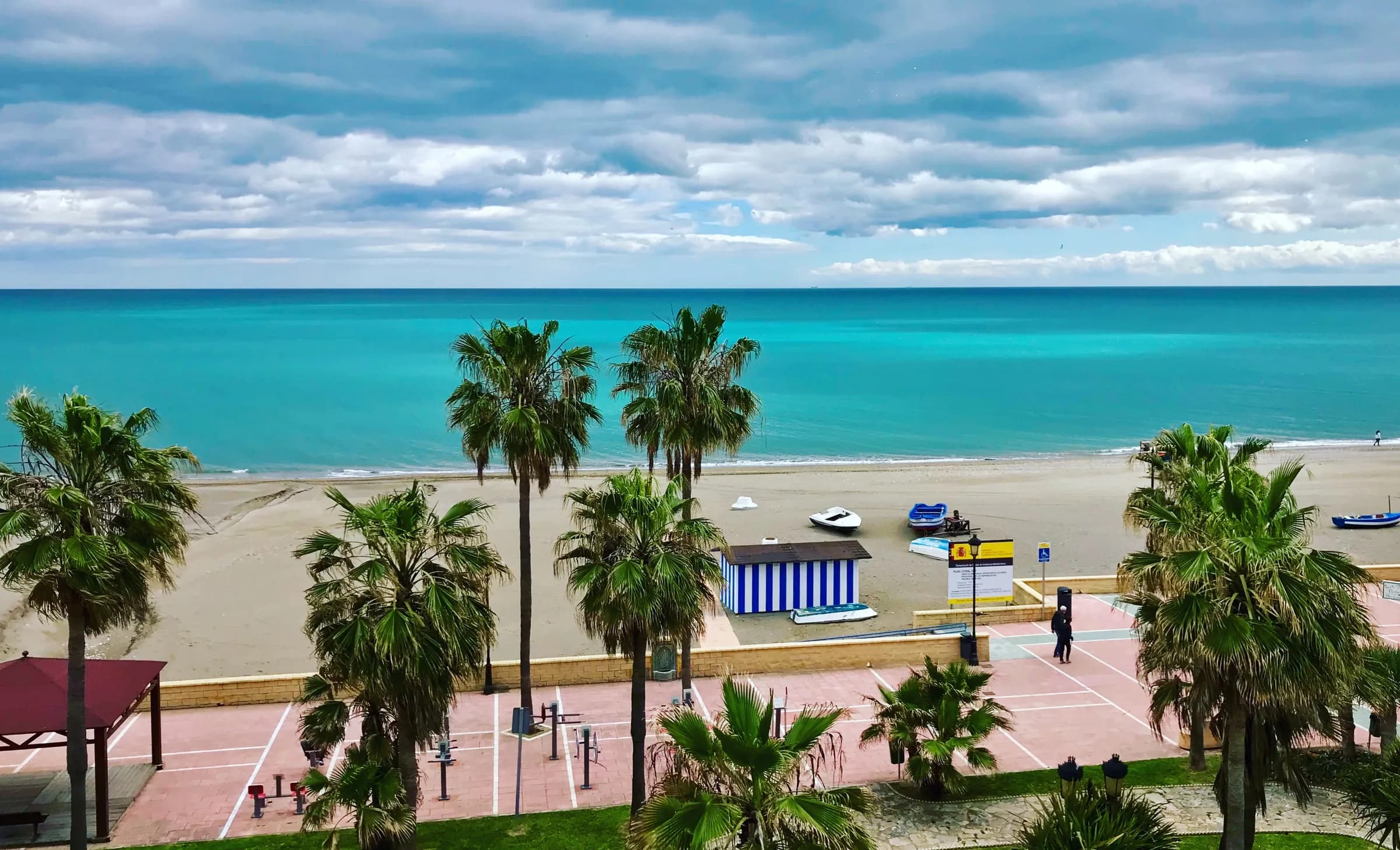
Stay Right on the Beach
The sand is 30 seconds from the door, and the balcony looks straight out at it. Book direct and save up to 20%.
- 3 Bedrooms
- 6 Guests
- 96 m²
Frequently Asked Questions
Related Articles

Quiet Beach Towns on the Costa del Sol (Not Marbella)
Tired of the Marbella crowds? These quiet beach towns on the Costa del Sol (Sabinillas, Manilva, La Duquesa and more) still feel like real Spain.

Best Time to Visit the Costa del Sol: When to Go
Working out the best time to visit the Costa del Sol? A local's month-by-month verdict on the best season for beaches, day trips, low prices and fewer crowds.

Sabinillas: The Complete Guide to This Costa del Sol Town
A local's complete guide to Sabinillas: the beach, restaurants, markets, fiestas, day trips and practical tips for this quiet western Costa del Sol town.
The Local's Costa del Sol, Monthly
One email a month: what's on in Sabinillas, the best local finds, and first pick of apartment dates. Free welcome gift: our Sabinillas Insider Guide.
We respect your privacy. Unsubscribe at any time.
Comments
No comments yetHave a tip, a question or a correction? Every comment is read and approved by hand before it appears, usually within a day.
No comments yet. Be the first to share a tip or ask a question.