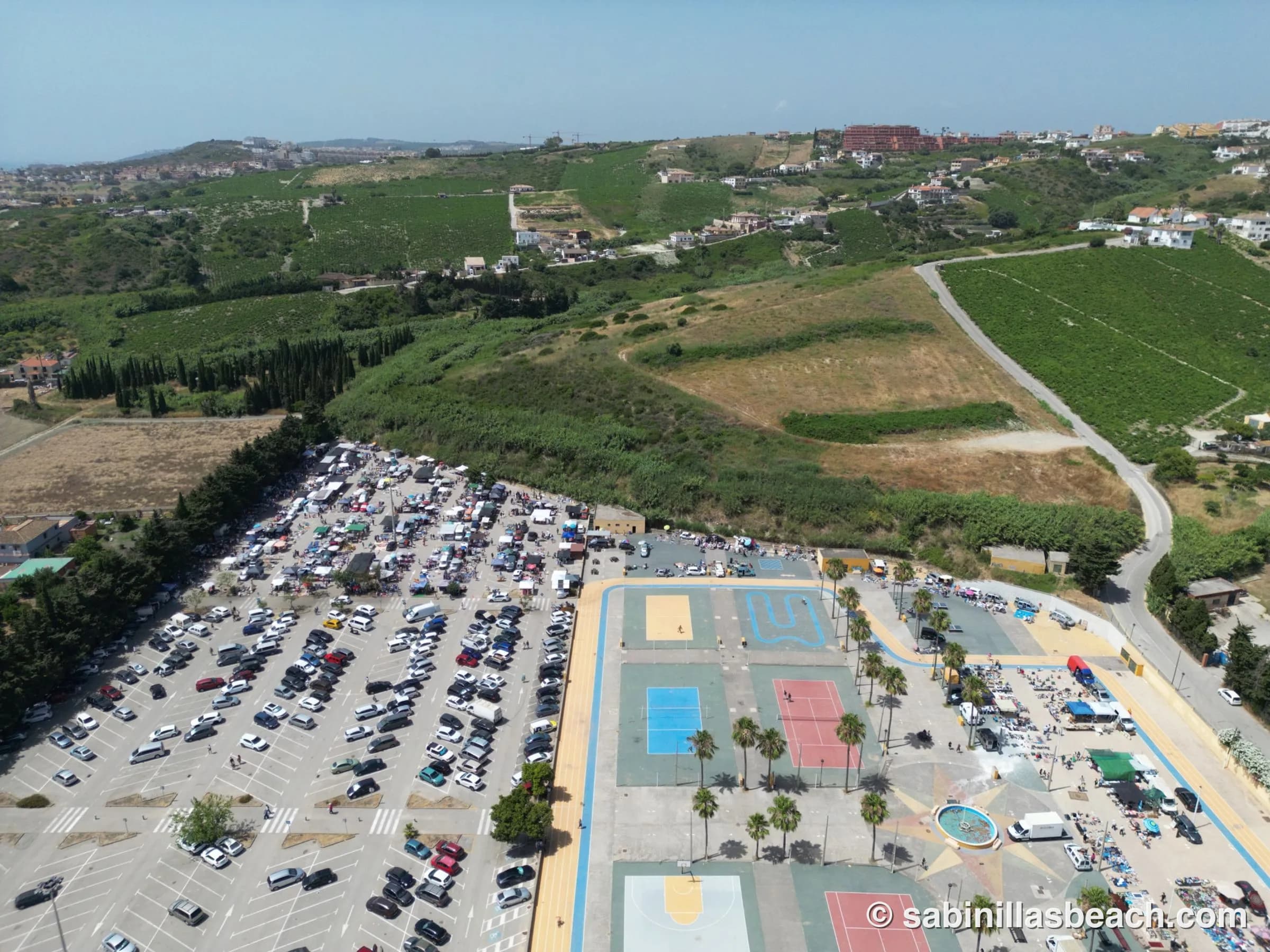
Every Sunday morning, the edge of Sabinillas fills up. Cars nose into the dusty fairground, awnings go up, and by nine o'clock the Rastro de Sabinillas, the town's Sunday market, is in full swing: well over 100 stalls of vintage finds, antiques, clothing, household bits, crafts and Mediterranean produce. If you're staying with us at the beachfront apartment, it's a proper slice of local Sunday life, and most holidaymakers never find it.
This is not a polished craft fair or a manufactured tourist market. It's where Andalusian families come to dig for bargains, haggle good-naturedly, and catch up over a café con leche. That's the word for it in Spain (a rastro, a flea market), and the treasure-hunting is the whole point.
What Makes the Sunday Market (Mercadillo) in Sabinillas Worth It
The Sunday market in Sabinillas is one of the largest Sunday rastros on the western Costa del Sol. Other towns have their mercadillos (Estepona's Wednesday morning market is the regional giant), but none match the Sunday treasure-hunt feel of the Sabinillas rastro. It's the go-to weekly market for the whole Manilva area, and it has done for years.
What sets it apart is that it's genuinely unpretentious. There's tourist tat, sure, but it's mixed in with goods locals buy. The clothing stalls carry stock Spanish families wear, and many craft vendors are the makers themselves.
The crowd tells you everything. Retirees work the stalls they check every Sunday. Young families hunt school uniforms and seasonal kit. Tradespeople buy tools, gardeners grab seedlings and seeds. It's democratic and thoroughly real, and that's exactly why it's worth an hour of your holiday. It's also number eight on our list of 21 things to do in Sabinillas.
When & Where
The market runs every Sunday morning, roughly 09:00 to 14:00, at the Recinto Ferial de San Luis de Sabinillas, the fairground just off the main road through town. Stalls start packing down from about 13:30, so don't leave it until the last minute. The market runs through the winter too, in a thinner off-season version; if you're here for the long weekend in early December, our December puente guide covers what else is open.
Finding it: the Recinto Ferial sits up the Camino de los Baños de la Hedionda, the Río Manilva road that heads inland from the town. Head up that road and follow the signs for "Mercadillo" or "Rastro." There's free parking right next to the market grounds, though it fills up fast mid-morning.
| Detail | Info |
|---|---|
| Days & hours | Every Sunday, approx. 09:00-14:00 |
| Location | Recinto Ferial de San Luis de Sabinillas (Camino de los Baños de la Hedionda) |
| Distance from Sabinillas centre | ~2 km (5-minute drive, or a €6-8 taxi) |
| Parking | Free, on-site, fills 10:00-13:00 |
| Best arrival time | 09:00-10:30 for the freshest selection |
| Payment | Mostly cash; some stalls take card |
| Facilities | Basic: bring cash; no luggage storage |
| Time needed | 1-2 hours depending on how much you rummage |
From our apartment it's roughly a 15-minute walk up to the fairground. A quick taxi (€6-8) is the smarter call, though: you can carry far more shopping home without the trudge back in the sun.
What You'll Find
With more than 100 stalls, the rastro sprawls across a big open fairground. Goods are loosely grouped into zones, though it's deliberately informal; half the fun is wandering until something catches your eye.
Antiques & vintage. This is the heart of the rastro and its real identity: second-hand furniture, vinyl records, old toys, books, period decorative pieces, genuine rummage territory. If you love a flea-market dig, this is why you come.
Fresh produce. A smaller but worthwhile corner. Vegetable sellers build pyramids of Mediterranean tomatoes, courgettes, peppers in every colour, aubergines, lettuce, onions and braids of garlic. Fruit stalls run with the seasons: strawberries in spring, cherries and stone fruit in early summer, grapes and melons later, citrus through winter. Prices typically beat the supermarket by 30-50%: around €2-4 a kilo for tomatoes, €1-2 for oranges.
Clothing & shoes. Next to the produce: everyday clothing, jeans, t-shirts, shoes, winter coats in season. Quality is all over the place: some is branded end-of-season stock, plenty is generic. Reckon on €5 for a t-shirt up to €25-40 for shoes.
Household & kitchen goods. Pots, utensils, cleaning supplies, bedding, towels, basic electrics. Handy if you're here long-term or need to replace something in a hurry.
Crafts & artisan items. Leather wallets, belts and bags (some genuinely handmade), woodwork, jewellery, the odd bit of art. Quality is good here because many stalls are the makers themselves; expect €15-50 for a decent leather belt.
Food stalls. Churros, empanadas, fresh bakery bread, roasted almonds, prepared bits and pieces. A plate of churros with thick hot chocolate runs about €3-5 and is the correct way to power a morning's browsing.
What's in Season: A Rough Produce Calendar
Half the joy of a Spanish rastro is buying fruit and veg at its peak rather than whatever's been flown in. Here's roughly what to look for and when on the western Costa del Sol. Treat it as a guide, not gospel; seasons shift a few weeks year to year.
| Season | Best buys |
|---|---|
| Spring (Mar-May) | Strawberries, broad beans, artichokes, the first tomatoes, oranges still going strong |
| Summer (Jun-Aug) | Cherries, peaches, apricots, melon, watermelon, peppers, aubergines, tomatoes at their best |
| Autumn (Sep-Nov) | Grapes (this is wine country), figs, custard apples (chirimoya), avocados, late tomatoes |
| Winter (Dec-Feb) | Oranges, lemons, mandarins, cauliflower, chard, hearty greens |
Avocados and custard apples are a tropical-coast speciality grown just up the road around the Axarquía, worth a try if you've never had a properly ripe chirimoya.
The Food Stalls: What to Buy
If you're here for a week and cooking a few meals in the apartment, the food stalls are where the rastro really earns its keep.
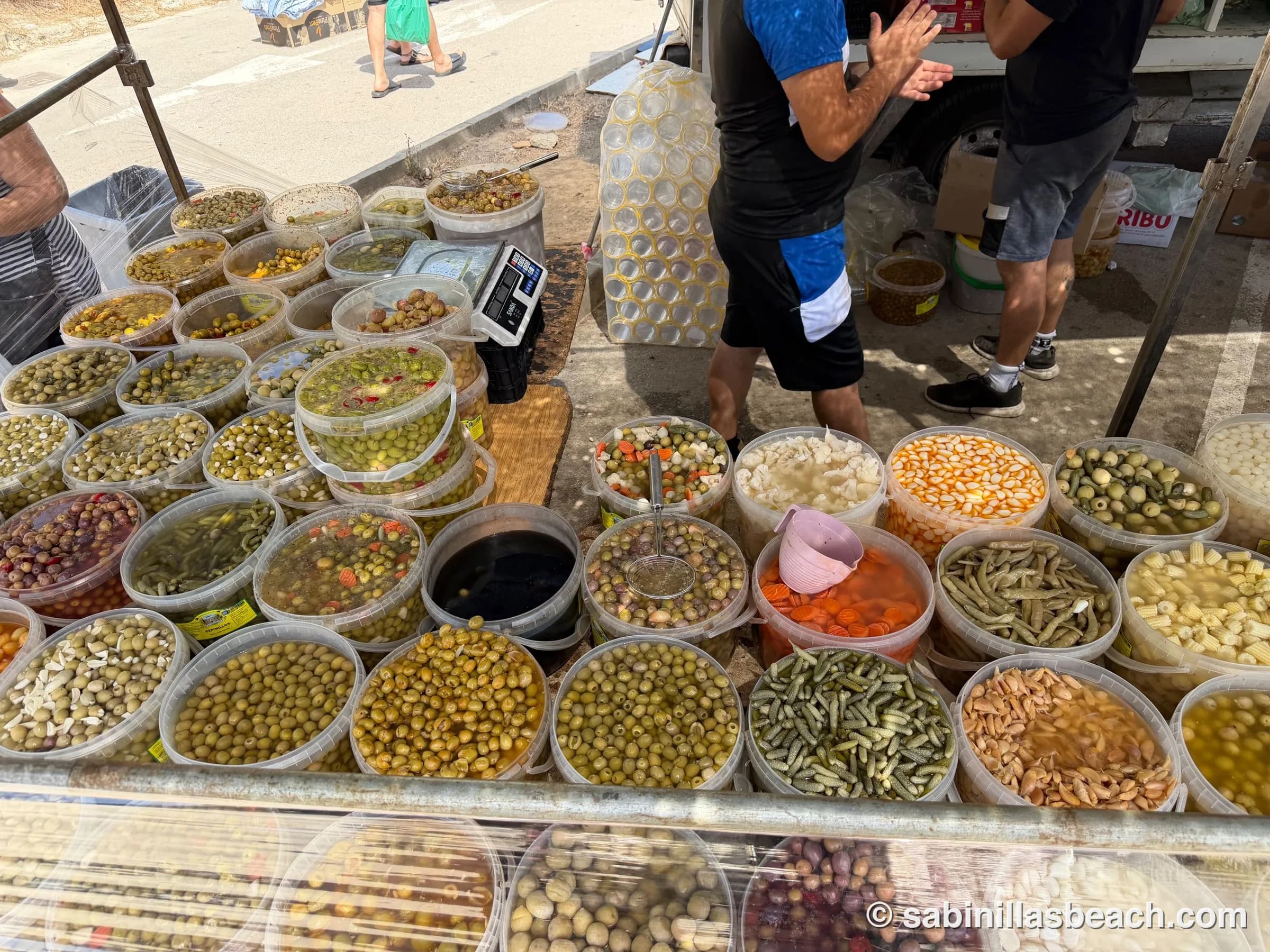
Olives. Spanish olives by the tub: plain and briny, or stuffed with anchovy, pepper or cheese. A kilo for €3-5 is a week of tapas sorted. Some sellers also bring fresh-pressed olive oil from nearby mills, roughly €8-15 a litre and in another league from supermarket bottles.
Cheese. Look for queso de cabra malagueño, the local goat's cheese the province is known for: fresh, semi-cured or cured. There's usually Manchego from inland Castilla too if you want the familiar one. Around €12-20 a kilo depending on age.
Bread. The bread stalls are where Spanish grandmothers do their Sunday shop. Thick, crusty pan de pueblo at €1.50-3 a loaf keeps for days and tastes nothing like sliced supermarket bread. Watch for pan con semillas (seeded) too.
Honey. Buy straight from the beekeepers selling in bulk jars: miel de azahar (orange-blossom), miel de romero (rosemary), and darker miel silvestre (wildflower), roughly €6-12 a jar. Pure, unblended, and far better than anything off a shelf.
Jamón & cured meats. Some stalls slice jamón, chorizo and panceta fresh to order. Budget €15-25 a kilo for a decent jamón serrano; proper jamón ibérico costs a good deal more, so treat any bargain "ibérico" with healthy suspicion.
No fresh fish, though. This trips people up: the street markets have no fish stalls. For the day's catch you want the town's pescaderías: Dieguichi on Calle Fuengirola, or Andalucía on Calle Miguel Delibes. The full story is in our fish markets guide.
Pro tip: bring a backpack and a couple of reusable bags. Loads of stalls won't give you one, and you want your hands free to dig through produce. Comfortable shoes too; it's a lot of standing and shuffling.
The Friday Market: A Different Vibe
Can't make Sunday? Sabinillas also has a Friday market on the Paseo Marítimo (the seafront promenade, right along the beach), running roughly 09:00 to 14:00.
The Friday market is smaller and leans towards fresh produce, flowers and clothing. It sets up by the old waterfront building near the La Noria apartments, and it's a much more casual affair: locals nipping in before lunch. Better if you want a quick shop without the sprawl, or simply a quieter mooch with the sea right there.
The two complement each other neatly. Friday is for a fast produce run; Sunday is for serious hunting and taking your time. If groceries are genuinely the mission, the Friday promenade market is arguably the better shop: it's closer, calmer and produce-led.
Summer Evenings: the Mercado del Mar
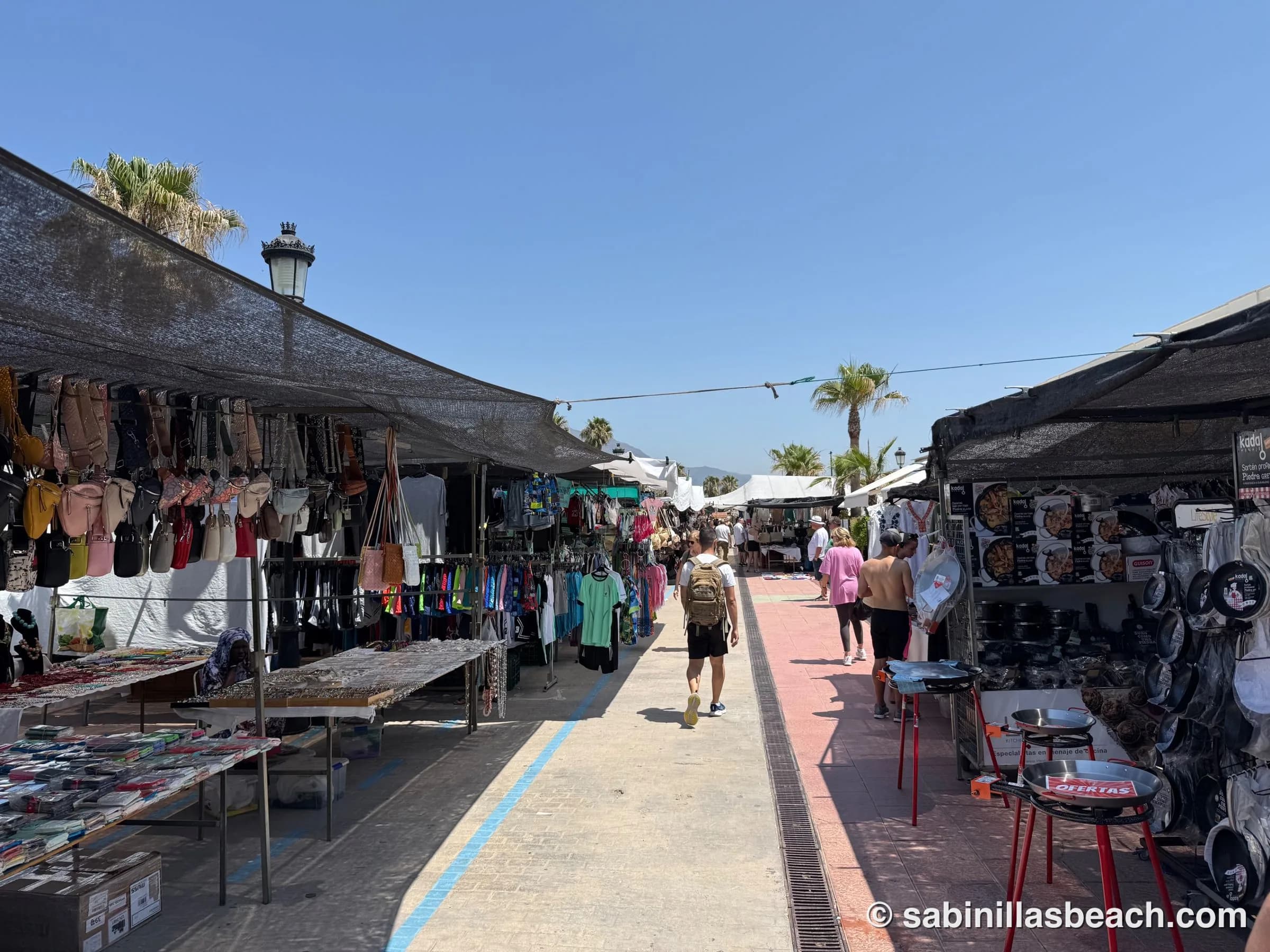
In July and August (exact dates shift each year; check the Ayuntamiento de Manilva's Mercado del Mar page), the mood changes completely. The Mercado del Mar ("market by the sea") takes over the Paseo Marítimo on Friday, Saturday and Sunday evenings, typically around 18:00 to 23:00 once the heat has dropped. For the wider summer fiesta calendar (San Juan, the Virgen del Carmen and more), see all upcoming Sabinillas events and dates.
This is nothing like the daytime markets. Forget vegetables and bargain bins: you get craft stalls, artisan jewellery, handmade leather, street food, churro stands, little rides for the kids, and a proper holiday buzz. It's less a shop than an evening out: families stroll, teenagers meet up, couples wander, everyone grabs something to eat.
If you're here in summer and want a genuinely local evening that isn't built around a restaurant, this is the one. The crafts are a cut above the usual beach tat, the food is good, and the whole thing is relaxed and family-friendly. Pair it with an early sundowner on the promenade and you've got the perfect low-key Costa del Sol evening; more ideas in our complete guide to Sabinillas.
A Step Back in Time: the Mercado Medieval
For one long weekend in mid-July (15-20 July in 2026), the seafront swaps churros for crossbows and candle-makers. The Mercado Medieval de Sabinillas, the medieval market, takes over the Paseo Marítimo between Plaza de los Maestros and the Colonia, and the whole promenade dresses for the part: hessian awnings, costumed traders, woodsmoke and grilling meat, and the clank of a blacksmith at the anvil.
It's a different beast from the rastro and the Mercado del Mar. The stalls lean hard into the theme (hand-forged ironwork, leather, soaps and candles, herbs and spices, sweets, honey and wooden toys), and there's usually street entertainment to match: falconry, fire shows, roaming musicians and theatre that keep children (and everyone else) busy well into the evening. Entry is free; you only pay for what you eat, drink and carry home.
It's busiest after dark, once the heat drops and the torches go on, and it's an easy win if you're here in July: a five-minute stroll along the front from our apartment, a bite of themed street food, and a browse through stalls you won't see at any other time of year. Dates move by a few days each summer, so check the Ayuntamiento de Manilva programme when you arrive.
Your Market-Morning Plan
Here's how we'd do a Sunday, if you want a ready-made rhythm rather than wandering in cold:
- 09:15, arrive. Beat the mid-morning crush and get first crack at the vintage and second-hand stalls while the good stuff's still there.
- 09:30, do the rastro. Work the antiques and crafts end first; that's where early arrival pays off and where light haggling works.
- 10:30, churros break. Plate of churros and a hot chocolate from a food stall, €3-5. Regroup, plan the food shop.
- 10:45, stock the kitchen. Olives, cheese, bread, honey, a bag of tomatoes and citrus. Everything for tapas back at the apartment.
- 11:30, out before the squeeze. It's busiest and hottest from late morning. Taxi home (€6-8) so you're not lugging bags in the sun.
Tips for Market Shopping
Arrive early. Be there by 09:30 at the latest for the best of the vintage stalls and produce. By noon the popular stuff is gone and the aisles get tight.
Bring cash. More stalls take card via mobile terminals than they used to, but most are still cash-only. Bring €50-100 and hit an ATM beforehand; there are several near the town centre.
Bags and a backpack. Plenty of stalls won't provide a bag. Come prepared, and keep your hands free for sorting produce and trying things on.
Haggle politely. On bigger or multiple buys, light haggling is normal and often works: stay friendly, smile, and you'll do better than with a hard sell. It's for the clothing, craft and antique stalls; produce is fixed-price.
Squeeze before you buy. Pick up the fruit and veg, give it a sniff, ask the seller about ripeness. That's normal market behaviour here and vendors expect it.
Mind the peak. Busiest 10:00-12:30 on Sundays. Crowd-averse? Go early (09:00-10:00) or late (13:00-14:00).
Small change. Carry €5 and €10 notes plus coins. Some sellers can't break a €50, especially first thing.
Practical Information
| Aspect | Details |
|---|---|
| Best season | Year-round; produce is most abundant March-October |
| What to wear | Comfortable shoes, hat in summer; layers in winter (mornings can be cool) |
| Budget | €20-40 for a week's produce; €50+ if you're buying clothes, crafts or antiques |
| Language | Spanish throughout; a little English at some stalls, so learn your numbers and food words |
| Getting there | Drive (2 km from centre), taxi (€6-8), or walk (~15 min) |
| Facilities | Basic only; withdraw cash in the town centre before you go |
| Accessibility | Mostly flat fairground, but uneven underfoot and crowded mid-morning |
Planning Your Visit
Staying at our beachfront apartment in Sabinillas? The Sunday rastro is a brilliant add to your week. Get there early, rummage the vintage stalls, grab coffee and churros, and just soak up a Sunday morning that's purely Spanish. You might wander back with a vinyl record, a leather belt, a tub of olives and a loaf of pan de pueblo; that exact mix is the point.
If the real goal is a proper grocery shop, the Friday market on the promenade is the better produce run, and either one pairs perfectly with cooking in the apartment's full kitchen. Or come purely for the experience and the people-watching you simply won't get in the tourist strips.
Prefer not to lug it all yourself? We can arrange a grocery stocking service so a few fresh essentials are in the fridge before you arrive, handy if you're landing late or just want to drop your bags and head for the beach.
The Sunday market is a big part of why locals love Sabinillas: genuine, unfussy, thoroughly local. For the full picture of the town, read our complete guide to Sabinillas; if you're a food lover, our restaurant guide covers where to eat what you've just bought; and for the sand back in town, see our Sabinillas beach guide.
Ready to see it for yourself? Book your stay and plan your week around a Sunday morning at the rastro.
Stay Right on the Beach
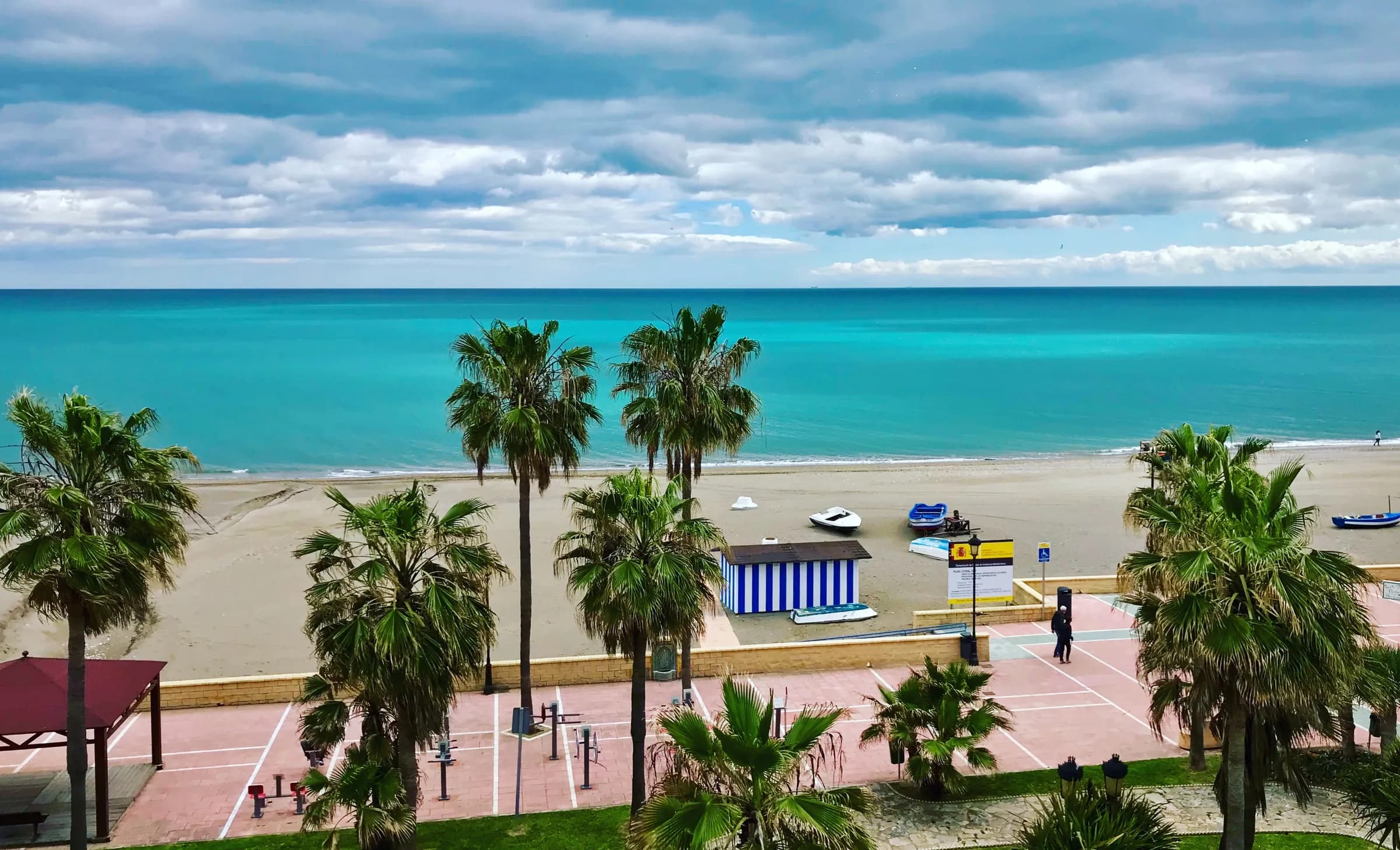
The sand is 30 seconds from the door, and the balcony looks straight out at it. Book direct and save up to 20%.
- 3 Bedrooms
- 6 Guests
- 96 m²
Frequently Asked Questions
Related Articles
Fish Market Málaga & Buying Fresh Fish on the Costa del Sol
Where to buy fresh fish near Sabinillas: the local pescaderías, Estepona's working fish auction, and the famous fish market in Málaga.
Restaurants in Sabinillas: Where Locals Eat
A local guide to restaurants in Sabinillas and Manilva: the best chiringuitos, tapas bars and seafood spots, with prices and walking distances.

Sabinillas: The Complete Guide to This Costa del Sol Town
A local's complete guide to Sabinillas: the beach, restaurants, markets, fiestas, day trips and practical tips for this quiet western Costa del Sol town.
The Local's Costa del Sol, Monthly
One email a month: what's on in Sabinillas, the best local finds, and first pick of apartment dates. Free welcome gift: our Sabinillas Insider Guide.
We respect your privacy. Unsubscribe at any time.
Comments
No comments yetHave a tip, a question or a correction? Every comment is read and approved by hand before it appears, usually within a day.
No comments yet. Be the first to share a tip or ask a question.