On the morning of 16 July, the fishing boats of Sabinillas don't go to work. They sit on the sand by the fishermen's quarter being dressed (flowers, ribbons, flags) because tonight the Virgen del Carmen goes to sea, and the whole town goes with her.
What Is the Virgen del Carmen?
The Virgen del Carmen, the Virgin of Carmen, is the patron saint of fishermen and sailors all along Spain's coasts. She is "Stella Maris", the Star of the Sea: divine protection for everyone who makes a living on the water. Tradition holds that the Virgin Mary appeared to Saint Simon Stock in 1251 and promised her protection to all who wore the Carmelite scapular, a promise seafarers have honoured ever since.
Devotion spread through the Spanish Navy in the 18th century under Admiral Antonio Barceló, and she was officially proclaimed Patroness of the Spanish Navy by Royal Order of 19 April 1901. For a fishing village like Sabinillas she is more than a religious figure. She is the spiritual protector of the community's livelihood. Every 16 July that bond comes alive on the beach.
This is not a fiesta invented to fill hotel rooms. It exists because the boats really do go out, and people really do pray for them to come back.
When Is the Virgen del Carmen in 2026?
It's a fixed feast: 16 July, every year. In 2026 that falls on a Thursday, and Sabinillas celebrates on the day itself (some towns move their processions to the nearest weekend; Sabinillas doesn't). The day runs to a clear rhythm: midday Mass at 12:00, the Coronation of the queens at 13:00, and the sea procession in the evening, setting out at 20:00 in 2026.
The Virgen del Carmen Celebration in Sabinillas
Sabinillas' fiesta for the Virgen del Carmen is one of the most moving days in the western Costa del Sol calendar. This is a working fishing village, where the sea still feeds local families. The day is rooted in genuine community tradition rather than performed for visitors.
It begins with a Holy Mass at noon at Plaza Costa del Sol, where locals gather to honour the Virgin. Then comes the Coronation of the Queens: young women and children from the community are crowned as the fiesta's queens and their courts of damas, a tradition run by the local brotherhood, the Hermandad de la Virgen del Carmen y de San Luis. It sounds formal. In practice it is genuinely touching to watch local children in their best clothes take centre stage in their own town's celebration. The same brotherhood organises the town's other patronal day five weeks later, when San Luis is carried through these same streets on 25 August.
The afternoon falls quiet. This is peak July heat and Sabinillas takes its siesta. Things start again in the evening, and this is the most communal moment of all: from 20:00 the statue is carried in procession through the streets of Sabinillas, led by residents, the community band, and people holding candles and flowers, down to Sabinillas beach, where she is placed aboard a decorated fishing boat for the maritime procession along the coast. The mood is reverent and joyful at once. It is not a carnival. It is a celebration of faith and belonging.
When the boats return, the image is carried back up the sand to applause, and the night shifts from devotion to celebration.
What to Expect on the Day
In 2026, 16 July falls on a Thursday. The Ayuntamiento's published programme keeps the Mass at 12:00 and the Coronation at 13:00, but the maritime procession sets out at 20:00 and the concerts (Latidos, Compás Flamenco and DJ Pájaro) begin around 22:30.
If you're in Sabinillas on 16 July, the day follows a clear rhythm, and knowing it helps you be in the right place for the moments that matter. The times below follow the pattern of recent official municipal programmes; the Ayuntamiento de Manilva publishes the exact schedule each July, so check it once you've arrived.
| Time | Event | Location |
|---|---|---|
| 12:00 | Holy Mass | Plaza Costa del Sol |
| 13:00 | Coronation of the Queens ceremony | Plaza area |
| Afternoon | Siesta pause; the town rests through the hottest hours | |
| 20:00 | Street procession, then embarkation | Sabinillas town centre → the beach |
| ~20:30-22:00 | Maritime procession with the decorated flotilla | The whole Manilva shoreline, shared with the El Castillo image |
| ~22:00 | Return and disembarkation | Sabinillas beach |
| 22:30 | Live music, dancing, celebrations (Latidos, Compás Flamenco, DJ Pájaro in 2026) | Plaza Costa del Sol |
Come to the plaza for noon, take the afternoon slowly, and be back near the beach by 19:30 for a good vantage point. The procession is unhurried; it moves at the pace of prayer, so everyone can take part. The evening flotilla sets out in golden-hour light, which makes it the most photogenic moment of the day by a distance. Bring shade and water. July in Sabinillas is hot, and there is little cover on the seafront.
The Sea Procession: The Heart of It
The sea procession is the moment people remember. In the early evening, once the statue has been carried shoulder-high across the sand to the water's edge, it is placed aboard a large, elaborately decorated fishing boat, one of the village's own boats, dressed for the occasion.
That boat becomes a floating altar. Fishermen and volunteers spend the morning dressing it with fresh flowers, ribbons and wreaths. Flags fly from the mast. The effect is both solemn and festive: an ordinary working boat turned into a sacred vessel for one evening.
As it leaves the shore it is joined by a flotilla of fishing boats, pleasure craft, yachts and dinghies, all decked with flowers and flags. Families wave from the decks. The flotilla parades the municipality's entire shore, from the Torre de la Sal at the Casares end to Punta Chullera by the Cádiz border, with the El Castillo image sharing the water, before each Virgin is landed back home. From the promenade you watch the whole convoy cross the water in low evening sun.
One caveat: if a strong levante is blowing and the sea is up, the Sabinillas Virgin is paraded along the beach instead of afloat, and El Castillo's stays in the port.
It is a sight that stays with you: generations of maritime faith and community belonging folded into a single image: the Virgin out on the water, protecting the people who work it, as she has for centuries.
Good to know: The sea procession is a spiritual event, not a show. Families stand on the beach, some holding candles and flowers; fishermen on the boats offer prayers and blessings. If you go, keep your distance respectful and your phone low-key; it's a window into how this community honours its own.
Sabinillas and El Castillo: Two Linked Celebrations
One thing that catches visitors out: there are effectively two Virgen del Carmen celebrations a short stretch of coast apart. The Sabinillas fiesta centres on the town beach and Plaza Costa del Sol. Just along the coast, El Castillo de la Duquesa, beside the marina, holds its own celebration on the same day, in mirrored order. Where Sabinillas embarks first and then processes the streets, El Castillo processes first, from the Parroquia de Nuestra Señora del Carmen, the Virgin's own parish church, and embarks later at Puerto de la Duquesa. Both images share the same flotilla out on the water. El Castillo's fiesta also spreads across several days, with a small mini-feria.
Sabinillas is far from the only place doing this. Up to thirty Virgen del Carmen processions take place along the Costa del Sol between 16 and 26 July; Estepona, La Carihuela in Torremolinos and Málaga city run big, crowded ones. Sabinillas is the intimate, working-village version, which is exactly its appeal. See all upcoming Sabinillas fiestas and dates.
Where to Watch, and Photograph, the Procession
For the maritime procession, position matters. A few pointers:
- The stretch of promenade by the fishermen's quarter, where the boats sit drawn up on the sand, is the best spot for the embarkation; you see the statue carried out and the boat decorated up close.
- The open beach gives you the cleanest line of sight as the flotilla sets off into the sunset; arrive by about 18:00 in peak season to claim a place.
- The promenade is ideal for the return and the start of the street procession, with cafés and bars right behind you.
For photography, the embarkation and the flotilla silhouetted against the low sun are the keepers. Shoot into golden hour rather than fighting harsh midday glare. A small zoom helps for the boats once they're out on the water. And do put the camera down for the embarkation itself; it's worth simply being there.
Evening Celebrations
Once the boats are back and the statue is carried home to its place of honour, the mood shifts from reverent to celebratory. From around 22:00 (22:30 in 2026), Plaza Costa del Sol fills with live music, dancing, food and drink; recent official programmes have featured flamenco groups, local bands and a DJ. Neighbouring El Castillo and La Duquesa run their own connected celebrations across the same days. If you'd rather sit down for a proper meal first, our guide to restaurants in Sabinillas covers the best local tables before the party starts.
This is when the fiesta becomes a proper community party. Locals and visitors mingle around outdoor bars, food stalls and music stages. Bands play flamenco, rumba and popular Spanish songs. The breeze carries woodsmoke and grilled sardines. Children run barefoot on the promenade. Adults dance and laugh well past midnight.
It's one of the few nights a year when Sabinillas' two populations, permanent residents and visiting families, fully merge into one celebration. You'll feel welcome: not a spectator, but someone who happened to be here for something that matters to the town.
Getting to Sabinillas for 16 July
Sabinillas (officially San Luis de Sabinillas, in the municipality of Manilva) sits on the western Costa del Sol, near the Cádiz border. Getting here is straightforward.
| From | Distance / time | How |
|---|---|---|
| Málaga Airport (AGP) | ~95 km, around 75 min | Car via the AP-7 (toll) or coastal A-7 |
| Gibraltar Airport (GIB) | ~35 km, around 35-40 min | Car along the A-7 |
| Estepona | ~15 km, around 20 min | Car, or the Avanza M-240 coastal bus |
| Marbella | ~45 km, around 40-50 min | Car, or Avanza bus with a change at Estepona (L-79 → M-240) |
| Within Sabinillas | doorstep | On foot; the whole fiesta is on the seafront |
The short version: if you're already staying in Sabinillas, you need nothing but a pair of comfortable shoes. The mass, the beach, the flotilla and the evening party all happen within a few hundred metres. Driving in for the day from further along the coast is doable, but parking near the seafront gets tight in the evening, so come early. For more on airport routes, see our Málaga Airport transfer guide.
Practical Information
| Detail | Info |
|---|---|
| Date | 16 July every year (fixed) |
| Main location | Plaza Costa del Sol and Sabinillas beach |
| Secondary location | El Castillo / La Duquesa marina |
| Midday events | Mass 12:00, Coronation of the Queens ~13:00 (Plaza Costa del Sol) |
| Street procession | From 20:00, through Sabinillas down to the beach |
| Sea procession departure | After the embarkation, ~20:30, from Sabinillas beach |
| Evening celebrations | From 22:30 at Plaza Costa del Sol |
| Entry cost | Free; it's a community celebration |
| What to bring | Sun hat, sunscreen, water bottle, comfortable walking shoes |
| Best vantage point | The Paseo Marítimo by the fishermen's boats on the sand, or Plaza Costa del Sol |
| Weather | Hot; typically 28-32°C, with intense midday sun |
| Crowds | Busy with locals and visiting families, but not overwhelming like the big inland ferias |
Getting There from Our Apartment
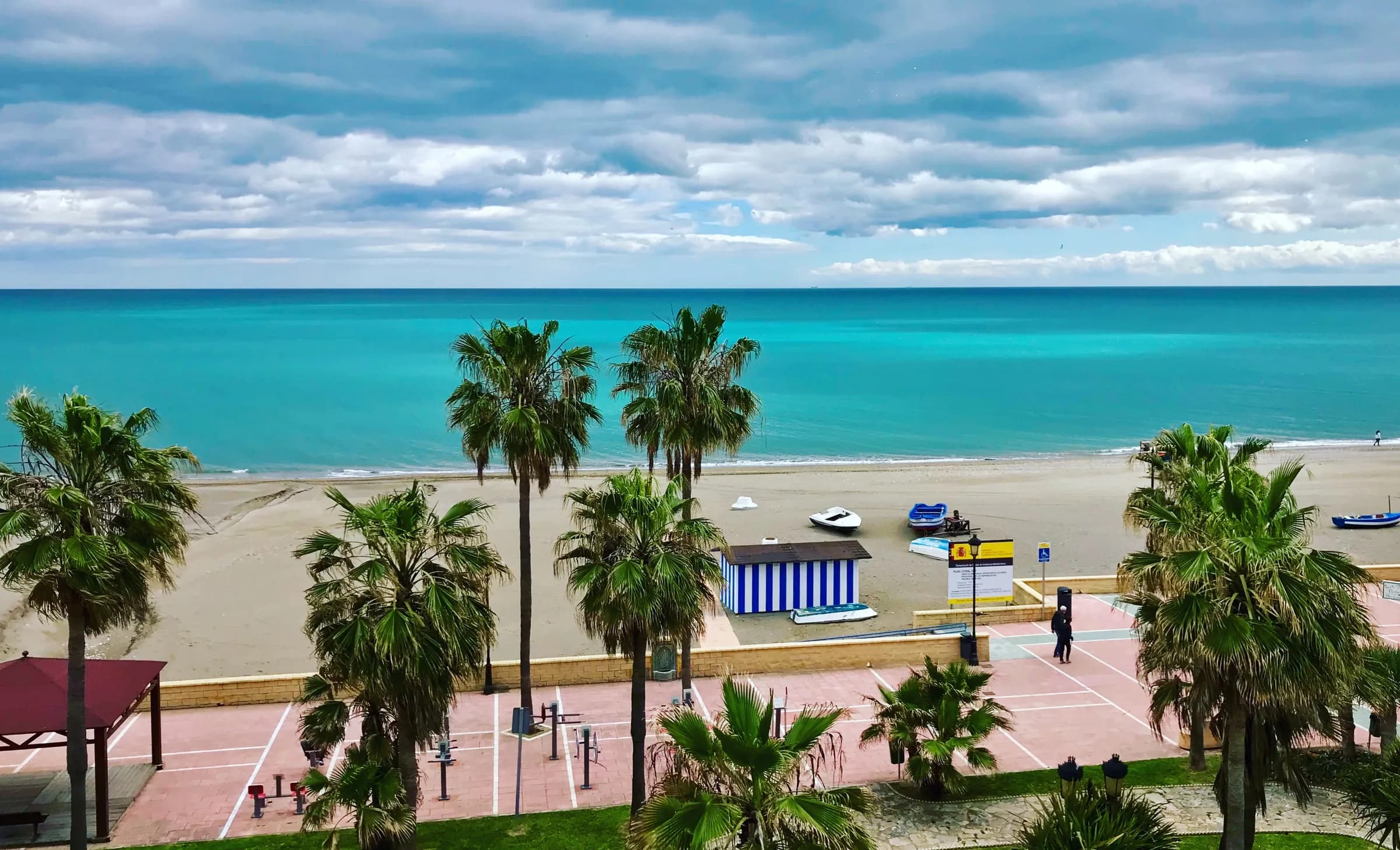
From our beachfront apartment in Sabinillas, the celebration is on your doorstep. It's about 30 seconds down to the promenade where the boats are dressed, and a minute more to the plaza for the mass. Stay as long as you like, retreat for a siesta through the worst of the heat, and wander back out for the evening.
This is one of those rare days where you don't need a car or a plan. You step outside and you're part of it.
Pro tip: Pack a beach towel, sunscreen and a refillable water bottle: the essentials for hours on the sand and promenade under the July sun. Want the fridge stocked with cold drinks for the fiesta evening? You can add our drinks selection or pre-arrival grocery stocking when you book.
Planning Your Stay Around the Virgen del Carmen
Timing a Sabinillas holiday to overlap with 16 July is one of the most rewarding things you can do here. You'll see a real community celebration with roots going back centuries: not a manufactured tourist event, but a true moment in the life of the village.
Book a stay around 16 July and you'll experience something most Costa del Sol visitors never do. You wake in a beachfront apartment, step onto the balcony over the Mediterranean, and within minutes find yourself among a procession, a flotilla of flower-strewn boats and a town in celebration.
If you can be flexible, the fiesta spills across two days: arrive on 15 July to feel the build-up, and stay through the evening of 16 July for the music and dancing on the promenade. That's how locals do it: not as a day trip, but as part of the year. For more on choosing your dates, see our month-by-month Costa del Sol guide.
For more on the village and its traditions, read our complete guide to Sabinillas. And for the other great seafront fiesta a few weeks earlier (bonfires on the beach for the summer solstice), see our guide to San Juan on the Costa del Sol, and the Full Moon Festival dresses the same beach in white at the end of July.
Ready to plan your July stay? Check availability and book your beachfront apartment now.
Stay Right on the Beach
The sand is 30 seconds from the door, and the balcony looks straight out at it. Book direct and save up to 20%.
- 3 Bedrooms
- 6 Guests
- 96 m²
Frequently Asked Questions
Related Articles
Full Moon Festival Sabinillas 2026: A Beach in White
Each July, Sabinillas beach becomes a sea of white for the Full Moon Festival: candles, fire shows and moonlight. The 2026 timing, dress code and how to do it.
San Juan in Spain: Beach Bonfires & Midnight Swims
San Juan in Spain is the night the Costa del Sol lights up: beach bonfires, a midnight swim and burning wishes on 23 June. How to do it right in Sabinillas.
Puerto de la Duquesa: Restaurants, Boats & Golf
Your local guide to Puerto de la Duquesa near Sabinillas: the best marina restaurants, dolphin-watching boat trips, Duquesa golf, the beach and sunsets.
The Local's Costa del Sol, Monthly
One email a month: what's on in Sabinillas, the best local finds, and first pick of apartment dates. Free welcome gift: our Sabinillas Insider Guide.
We respect your privacy. Unsubscribe at any time.
Comments
No comments yetHave a tip, a question or a correction? Every comment is read and approved by hand before it appears, usually within a day.
No comments yet. Be the first to share a tip or ask a question.