Why Is Ronda Worth the Drive From Sabinillas?
A 90 km, 1.5-to-2-hour drive buys you a town split by a 120-metre gorge, crossed by a bridge that took 34 years to build, and anchored by a bullring with the widest ring in Spain, all in one clifftop setting.
Ernest Hemingway agreed. He wrote that Ronda is the place to go "if you ever go to Spain on a honeymoon or ... bolt with anyone" (Death in the Afternoon, 1932). Orson Welles loved it so much his ashes were scattered there. Rainer Maria Rilke called it a dream city.
They were not wrong.
Ronda is one of those places that stops you in your tracks. A town split in two by a gorge around 120 metres deep, connected by an 18th-century stone bridge that seems to defy gravity. White houses perch on clifftops above eagles circling below. Ancient Arab baths, one of Spain's oldest bullrings, and narrow streets that have barely changed in centuries.
At about 90 km from Sabinillas, 1.5 to 2 hours through spectacular mountain scenery, Ronda is the single most popular day trip from the western Costa del Sol. And for very good reason.
How Do You Get to Ronda from Sabinillas?
By car, in 1.5 to 2 hours. It's the only realistic option if you only have a day. Public transport exists but takes 2.5 to 3 hours each way with limited departures, and there's no direct train from the coast.
How Long Does the Drive Take?
1.5 hours via the faster coastal route, or 2 hours via the scenic inland road. Both cover roughly 90 km, so the extra half hour buys you mountain scenery instead of motorway. The drive itself is half the adventure, and which route you pick comes down to speed versus scenery.
The scenic inland route (about 2 hours): Take the A-377 north from Manilva past Casares, then join the A-369 at Gaucín, a mountain road that climbs through cork oak forests and white villages all the way to Ronda. It is one of the most beautiful drives in Andalucía. It also twists and climbs constantly, so it takes longer than the 90 km suggests.
The faster route (about 1.5 hours): Head up the coast on the A-7/AP-7 to San Pedro de Alcántara, then take the A-397 over the mountains into Ronda. Still a proper mountain road with switchbacks, but wider and quicker.
Scenic route breakdown:
- Sabinillas → Casares junction (A-377): 15 minutes, 17 km
- Casares junction → Gaucín (A-369): 30 minutes, 25 km (the prettiest stretch)
- Gaucín → Ronda (A-369 continuing): around 1 hour, 48 km
- Total: roughly 90 km, about 2 hours once you allow for the bends
Both routes are paved and well-maintained, but they are mountain roads with curves and steady climbs. The scenery along the A-369 is some of the most dramatic in Andalucía: deep valleys, cork oak forests, villages clinging to hillsides, and on clear days, views towards North Africa.
Driving tips:
- Leave by 9:00-9:30 to arrive before the tour bus crowds descend (typically 11:00-15:00)
- Fill up with fuel in Sabinillas before departing
- The road has no toll charges
- Watch for slower traffic on curves: tractors and local drivers are common
- Use the pullover areas for photos and to break up the journey
- If you get carsick, sit in the front and focus on the horizon
Pro tip: The morning light on the drive up is beautiful, but even better is the light on the return journey in late afternoon. Driving back around 17:00 gives you the golden hour over the mountains.
Optional Gaucín Stop
If you have an extra 30-45 minutes, stop at the village of Gaucín on the way (about halfway). This white village perches on a mountain peak with a ruined Moorish castle, panoramic views stretching towards Africa, and several excellent small restaurants. It's photogenic and worth at least a 20-minute stroll and a coffee stop.
Is There Public Transport from Sabinillas to Ronda?
Yes, but it's slow, so a day trip is far easier with a car. By bus, Avanza runs coaches to Ronda from Estepona (with a connection), taking roughly 2.5 to 3 hours each way. It's workable if you set off early and check the return times before you leave.
Coming from Málaga to Ronda by train, there is no direct line: you change at Antequera-Santa Ana, and the fastest connection is around 2 hours, with only about four departures a day. The final climb through the Serranía is lovely, but the thin timetable makes a self-driven day trip from the coast much more flexible. If you're staying with us and would rather not tackle the mountain roads yourself, just ask. We'll point you to the operators who run Ronda day trips with transport and a guide included.
Self-Drive vs Guided Tour vs Public Bus
Driving yourself is fastest and most flexible; a guided tour is easiest if you'd rather not tackle mountain roads; the bus is the budget option if you have a full day to spare.
| Option | Time (one-way) | Cost | Flexibility |
|---|---|---|---|
| Self-drive | 1.5-2 hours | Fuel only, no tolls | Full control: stop anywhere, set your own pace |
| Guided day tour | ≈1.5-2 hours by coach | From around €90/person | Fixed schedule, but zero driving on mountain roads |
| Public bus (Avanza via Estepona) | 2.5-3 hours | Low bus fare | Least flexible: limited departures, fixed return times |
What Are the Best Things to See in Ronda?
Five sights anchor a Ronda day trip: the Puente Nuevo bridge over the 120-metre El Tajo gorge, the 1785 Plaza de Toros bullring, the Moorish old town of La Ciudad, the 13th-14th-century Arab Baths, and the cliff-edge Alameda del Tajo gardens. Here's what each one offers.
Puente Nuevo: The Famous Bridge
The centrepiece of Ronda. Despite being called "new," the Puente Nuevo was completed in 1793 after 34 years of construction. It replaced an earlier single-arch bridge that collapsed in 1741 (six years after it opened, not during construction), killing around 50 people; the current three-arch bridge has stood ever since. It spans the El Tajo gorge at a height of 98 metres above the gorge floor (the gorge itself runs about 120 metres deep at this point), connecting the old Moorish town (La Ciudad) with the newer El Mercadillo district.
Walk across the bridge (it takes about five minutes) and stop at the viewpoints on both sides. The bridge is free to cross. Inside the bridge is a small interpretation centre (€2-3 entry) with exhibits on the construction history. There's also a €5 fee if you want to descend into the gorge below via the Camino del Desfiladero del Tajo path.
For the classic postcard view of the bridge itself (rather than from the bridge), walk down to the Jardines de Cuenca or take the path below the bridge on the gorge's south side.
Best light for photographs: Morning or late afternoon. Midday is harsh and washes out the colour.
Plaza de Toros: One of Spain's Oldest Bullrings
Ronda's Real Maestranza de Caballería is one of Spain's oldest bullrings, completed in 1785 after six years of construction, and the oldest built entirely of stone (Seville's Real Maestranza broke ground earlier but is Spain's oldest overall). Even if you have zero interest in bullfighting, the architecture is extraordinary: a 66-metre diameter ring, the widest bullring in Spain and 6 metres wider than Madrid's Las Ventas, seating around 5,000 and surrounded by double tiers of stone columns and graceful arches.
The attached museum covers the history of bullfighting in Ronda, featuring original posters, costumes, and equipment. Ronda is considered the birthplace of modern bullfighting, where Francisco Romero first established the on-foot fighting style in the 18th century, moving away from the mounted style. The town's September feria carries the name of the most famous of the Romeros, Pedro Romero (1754-1839), and for that one week Ronda dresses in Goya-period costume; our Feria de Pedro Romero guide has the dates and the Corrida Goyesca.
Entry: €10 (€12 with the audioguide). Hours: April-September 10:00-20:00, March & October 10:00-19:00, November-February 10:00-18:00, open daily. Duration: 45 minutes to 1 hour.
The Real Maestranza has had structural consolidation work under way since 2024; visits have stayed open throughout, but parts of the site can be screened off, so it's worth checking rmcr.org before you plan the day around it.
La Ciudad: The Old Town
Cross the Puente Nuevo into La Ciudad (The City), the ancient Moorish quarter. This is a place for getting pleasantly lost in a good way. Narrow lanes, whitewashed walls, iron balconies overflowing with red and purple geraniums, and unexpected plazas open up around every corner. The air smells of jasmine in spring.
Key spots to find in the old town:
- Palacio de Mondragón: A 14th-century Moorish palace with beautiful courtyards perched on the cliff edge. Now houses the municipal museum with exhibits on Ronda's history. €3 entry (free on Wednesdays for EU citizens).
- Iglesia de Santa María la Mayor: A church built on the site of Ronda's main mosque. The minaret was converted into a bell tower. A visible layer of history in stone.
- Puerta de Almocábar: The old Moorish gate through the city walls. Walk through and imagine the armies that passed here in medieval times.
Baños Árabes: Arab Baths
One of the best-preserved Arab baths in Spain, dating from the 13th-14th century. Located in the San Miguel quarter near the old Arab bridge at the bottom of the gorge, these baths retain their star-shaped ceiling vents (for light and ventilation), horseshoe arches, and the sophisticated water heating system that still amazes modern engineers.
It's a small site but beautifully restored. The audioguide (included in admission) does a good job of bringing medieval daily life to life.
Entry: €4.50 (€3 reduced; free for under-14s). Hours: Tuesday-Friday 09:30-20:00, Monday & Saturday 10:00-14:00 and 15:00-18:00 (closed for an hour at midday), Sunday 10:00-15:00. Duration: 30-40 minutes.
Alameda del Tajo: Cliff-Edge Gardens
These formal gardens on the cliff edge at the north end of town offer sweeping views over the Serranía de Ronda mountains. Shaded paths with old trees, benches, and a stone balcony lookout create a perfect spot for a rest and a think. You might spot eagles circling the gorge from here.
Entry: Free. Best time: Early morning or late afternoon when the light is golden and the crowds have gone.
Mirador de Aldehuela: The Gorge View
A viewing platform near the Puente Nuevo with dramatic views down into the gorge. Less famous than the bridge itself, so usually quieter. The best spot for vertigo-inducing photos and for watching the light change across the stone walls.
Entry: Free.
Where Should You Eat in Ronda?
For a sit-down meal, book Restaurante Almocábar or Bodega San Francisco for rabo de toro, Ronda's signature oxtail stew; for something quicker and cheaper, graze the tapas bars on Calle Nueva. Budget €15-25 per person for tapas, or €40-80 for two at a full restaurant.
Restaurant Comparison Table
| Restaurant | Cuisine | Price (2 people) | Specialty | Atmosphere |
|---|---|---|---|---|
| Restaurante Almocábar | Modern Andalusian | €50-80 | Slow-cooked pork cheeks, local goat cheese | Cosy interior, reservation needed |
| Bodega San Francisco | Traditional Spanish | €40-60 | Rabo de toro (oxtail stew), generous portions | Terrace, local crowd, casual |
| Don Miguel Restaurante | Mediterranean | €30-50 | Coffee & cake, decent mains | Gorge-edge terrace, spectacular views |
| Calle Nueva Tapas Bars | Spanish Tapas | €15-25 | Mixed tapas, local wines | Bustling, authentic, standing room |
Specific Recommendations
Restaurante Almocábar: Inside the old town near the Puerta de Almocábar. Modern Andalusian cuisine using local ingredients and seasonal produce. The slow-cooked pork cheeks are excellent (rabo de toro is the regional signature). Mains €14-20. Reservations recommended, especially at weekends. This is the place to book if you want proper sit-down dining in a charming room.
Bodega San Francisco: A classic no-frills Ronda restaurant with a terrace and generous portions. Popular with Spanish locals, which is always a reliable sign. The rabo de toro (oxtail braised in red wine) here is excellent, and this is the heartland of that dish. Mains €10-16. No reservations needed; casual and relaxed.
Don Miguel Restaurante (at Hotel Don Miguel): Perched right on the edge of the gorge beside the Puente Nuevo. The food is decent rather than outstanding (it's riding on the view), but the terrace view is one of the most spectacular dining locations in Spain. Coffee and cake here at minimum. Drinks €3-6, mains €12-18. Reserve in advance during peak season.
Tapas Bars on Calle Nueva: The street connecting the new town to the bridge is lined with small tapas bars. Just pop into any that looks busy (always a good sign). A few tapas and a glass of local wine will cost under €15 for one person. This is the most authentic way to eat in Ronda.
What to Eat in Ronda
Ronda's cuisine is mountain food, hearty, meat-heavy, and deeply satisfying:
- Rabo de toro: Slow-braised oxtail in red wine sauce. The signature dish of the region. Every restaurant has a version.
- Conejo a la rondeña: rabbit Ronda-style, slow-cooked with herbs and local wine; a true dish of the serranía.
- Sopa cortijera: A hearty bread soup from the local farms (cortijos), with garlic, bread, eggs, peppers, and pork for pure comfort.
- Chestnut and almond desserts: The Serranía de Ronda is known for both. Try local turrón (nougat) and pastries from the bakeries.
- Local wines: The Ronda wine region has exploded in quality over the past two decades. A glass of local red at a restaurant is typically €3-5.
Save money: Skip the gorge-side cafés and eat where the Spanish eat: the tapas bars on Calle Nueva. You'll spend half as much and have a much more authentic experience.
Wine & Ronda: A Bodega Afternoon
The Ronda wine denomination (Sierras de Málaga DO, created in 2001) has gained serious recognition since. The altitude (700m+), dramatic temperature swings between day and night, and limestone soils produce distinctive, characterful wines that are finally getting the international attention they deserve.
Several bodegas offer tours and tastings, usually by appointment (call ahead):
- Bodega Descalzos Viejos: In a beautifully restored 16th-century monastery just outside town. Atmospheric setting with powerful red wines (Syrah, Garnacha). Tastings from €15-45 per person, including tapas.
- Bodega F. Schatz: A biodynamic pioneer founded in 1982 by Friedrich Schatz. Known for unique grape varieties like Lemberger. Tours available in multiple languages.
- Bodega Joaquín Fernández: Small family winery with organic wines made in traditional style, and panoramic vineyard views. Tours from around €30 per person (check current rates).
If wine is your thing, consider making an afternoon of it after morning sightseeing. Most bodegas are within 10-15 minutes of the town centre, and a leisurely 2-3 hour bodega visit with tastings and local cheese is a perfect way to slow down mid-day.
For guests staying with us: If you fancy a wine-focused day in Ronda, tell us. We'll point you to the operators that combine transport with bodega visits, and to the bodegas worth booking directly.
What's a Good One-Day Itinerary for Ronda?
A full day works best: leave Sabinillas by 09:00, spend 5-6 hours sightseeing and lunch in Ronda, and be back on the coast by around 18:30 for a sunset swim. This itinerary assumes you drive yourself; times are flexible: adjust based on your interests and pace.
| Time | Activity |
|---|---|
| 09:00 | Depart Sabinillas. Fuel up and grab a coffee to go. |
| 09:30 | Drive via A-369 (scenic mountain route). |
| 10:30 | Arrive Ronda. Park near Paseo de Blas Infante (near bullring). |
| 10:45-11:45 | Visit the Plaza de Toros bullring and museum. |
| 11:45-12:15 | Walk across Puente Nuevo. Stop at viewpoints on both sides. |
| 12:15-13:00 | Explore La Ciudad old town. Find Palacio de Mondragón, Iglesia de Santa María, Puerta de Almocábar. Wander narrow streets. |
| 13:00-13:40 | Visit Baños Árabes (Arab Baths). |
| 13:45-14:15 | Stroll through Alameda del Tajo gardens. Rest and enjoy the views. |
| 14:15-15:45 | Lunch. Choose: Restaurante Almocábar (book ahead), Bodega San Francisco (casual), or tapas on Calle Nueva. |
| 15:45-16:00 | Coffee at the Don Miguel gorge-side terrace (or skip if you need time). |
| 16:00-16:45 | Browse the shops along Calle de la Bola and Carrera Espinel. Find local ceramics, wine, and artisan goods. |
| 16:45-17:00 | Final views from Mirador de Aldehuela. Last photos of the gorge. |
| 17:00 | Drive back to Sabinillas (1.5 hours). Arrive around 18:30. |
| 18:30-20:00 | Evening swim at the beach back in Sabinillas. Sunset tapas on the promenade. |
Alternative: Wine-Focused Day
If you're interested in wine, replace the 14:15-15:45 lunch and shopping section with a 2-3 hour bodega visit at one of the bodegas (lunch included). Leave Ronda around 17:00 instead, arriving home around 18:30.
Practical Information
| Detail | Info |
|---|---|
| Distance from Sabinillas | ≈90 km. Allow 1.5-2 hours (A-397 via San Pedro is faster; A-377/A-369 via Gaucín is prettier) |
| Parking | Paid car parks near the bullring/Alameda (Poeta Rilke open-air; Plaza del Socorro underground), around €2-2.50/hr. No metered street zone; free on-street spaces are limited. |
| Bullring entry | €10 (€12 with audioguide). Apr-Sep 10:00-20:00, shorter in winter. |
| Arab Baths entry | €4.50. Hours: Tue-Fri 09:30-20:00, Mon/Sat 10:00-14:00 & 15:00-18:00, Sun 10:00-15:00. |
| Palacio de Mondragón | €3 entry (free Wednesdays for EU citizens). |
| Puente Nuevo museum | €2-3. Free to walk the bridge itself. |
| Best time to visit | Spring (April-May) or autumn (Sept-Oct). Avoid 11:00-15:00 when tour buses crowd the town. |
| Recommended duration | Full day, 5-6 hours minimum sightseeing. |
| Temperature note | Ronda is 5-8°C cooler than the coast. Bring a light jacket in winter. |
| What to bring | Comfortable walking shoes (old town is cobblestones), water, sun protection, camera. |
| Cash | Plentiful ATMs on Carrera Espinel. Some small tapas bars are cash-only. |
Top Practical Tips
- Arrive early. Tour buses typically fill the town between 11:00 and 15:00. Arriving before 10:30 means you'll see Ronda at its most authentic.
- Comfortable shoes essential. The old town has steep cobblestone paths. Leave the flip-flops at the beach.
- Weekdays are quieter. If possible, visit Tuesday-Thursday rather than weekends.
- Water and sun protection. Despite the altitude, the sun is strong. Carry water, especially in summer.
- Photography timing. The gorge faces roughly east-west. Morning light illuminates the bridge from the east, afternoon light from the west. Both are beautiful, but mornings are less crowded.
- Reserve restaurants in advance. Almocábar especially needs booking, particularly at weekends.
Good to know: Nobody is going to rush you to leave a restaurant in Spain. If you order lunch, you can stay 2-3 hours without pressure. This is not slow service. It is hospitality.
Back in Sabinillas
After a day of mountain air, Moorish history, and Andalusian wine, the drive back down to the coast is like coming home. The temperature rises, the landscape shifts from mountains to Mediterranean, and the sea appears on the horizon.
There is something perfect about spending the morning in a clifftop mountain town around 720 metres above sea level and the evening swimming in the sea 30 seconds from your apartment. That contrast, mountains and sea in the same day, is one of the great pleasures of staying on the western Costa del Sol.
Our beachfront apartment makes this day trip effortless. Wake up to the sea, drive to Ronda, explore all day, and be back in time for a sunset swim and tapas on the promenade. That is a very good day. If you'd like help planning your day trip, or recommendations for guided tours with transport, just ask; we know which operators are worth your money.
For more on visiting white villages near Sabinillas, read our guide to the pueblos blancos of Andalucía. And if you're exploring the wider region, don't miss our complete guide to Sabinillas to understand the area better, or plan your coastal stay with a visit to nearby Gibraltar.
Ready to book your trip to the Costa del Sol? Check availability at our beachfront apartment and plan your Ronda day trip from there.
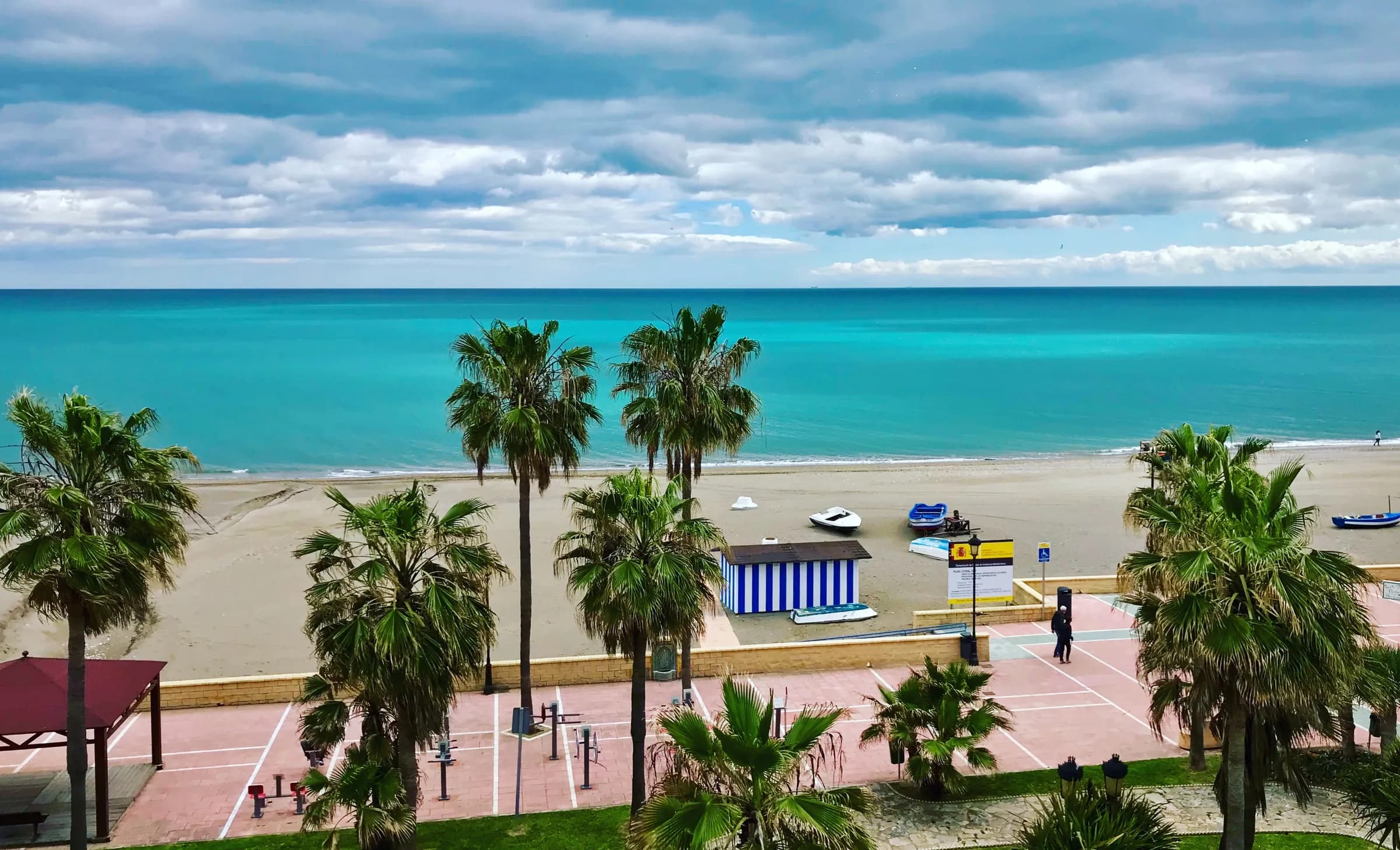
Stay Right on the Beach
The sand is 30 seconds from the door, and the balcony looks straight out at it. Book direct and save up to 20%.
- 3 Bedrooms
- 6 Guests
- 96 m²
Frequently Asked Questions
Related Articles
Feria de Pedro Romero 2026: Ronda's Great September Feria
Ronda's Feria de Pedro Romero runs 1-6 September 2026: Goya-era costume, horse parades and a town in period dress. Dates, what happens and how to visit.

Ronda Wine: Best Bodegas to Visit at Altitude
Ronda wine, explained: the high-altitude reds, which bodegas to visit, what tastings cost, and how to plan a wine day trip from the Costa del Sol.
Pueblos Blancos: White Villages Drive from Sabinillas
The pueblos blancos within an hour of Sabinillas: Casares, Gaucín, Júzcar and Andalucía's white villages, with a driving route and road notes.
The Local's Costa del Sol, Monthly
One email a month: what's on in Sabinillas, the best local finds, and first pick of apartment dates. Free welcome gift: our Sabinillas Insider Guide.
We respect your privacy. Unsubscribe at any time.
Comments
No comments yetHave a tip, a question or a correction? Every comment is read and approved by hand before it appears, usually within a day.
No comments yet. Be the first to share a tip or ask a question.