Why a Few Basic Spanish Phrases Go a Long Way
We've hosted guests at our beachfront apartment in Sabinillas for over a year, and the pattern is always the same. Visitors who learn even three or four words of Spanish get a warmer welcome than those who don't. Every time.
You don't need to be fluent. You don't even need to be right. What counts is the effort. A simple "Hola" before you reach the bar, or "Gracias" said like you mean it instead of a hurried nod: small things, but they shift the whole tone. Suddenly you're not a transaction. You're a visitor someone wants to help.
This guide is built for the things you'll do on a Costa del Sol holiday: ordering food, shopping at the market, hiring a sunlounger, asking the way, and decoding what locals are saying around you. Skip the grammar. Learn the lines. We've grouped them by situation so you can glance at one table before you walk into a café or a local restaurant.
A note on the accent: this corner of the coast is deep Andalusia, and people here speak fast and drop letters. We cover that near the end so you know what you're hearing.
The Five Phrases to Learn First
If you only memorise five things before you fly, make it these. They cover roughly 80% of everyday holiday situations.
| Spanish | Pronunciation | English |
|---|---|---|
| Hola | OH-lah | Hello |
| Por favor | por fah-VOR | Please |
| Gracias | GRAH-thee-ahs | Thank you |
| ¿Cuánto cuesta? | KWAN-toh KWES-tah | How much is it? |
| ¿Habla inglés? | AH-blah een-GLEHS | Do you speak English? |
That last one is the polite escape hatch. Open with Spanish, and if it goes over your head, "¿Habla inglés?" almost always gets a smile and a switch to English in tourist areas. Leading in Spanish first is the whole trick: it reads as respect rather than assumption.
Essential Greetings & Polite Phrases
Start every interaction with a greeting. In Spain it isn't optional: it's the bedrock of being civil. Walk into a small shop silent and you'll feel the chill. The time of day matters too, so here's the full set:
| Spanish | Pronunciation | English | When to Use |
|---|---|---|---|
| Hola | OH-lah | Hello | Any time |
| Buenos días | BWEH-nos DEE-ahs | Good morning | Before midday |
| Buenas tardes | BWEH-nahs TAR-dehs | Good afternoon | Midday to dusk |
| Buenas noches | BWEH-nahs NOH-ches | Good evening / night | After dark |
| ¿Cómo estás? (tú) | KOH-moh ehs-TAHS | How are you? (informal) | Friends, young people |
| ¿Cómo está? (usted) | KOH-moh ehs-TAH | How are you? (formal) | Strangers, older people |
| Estoy bien, gracias | ehs-TOY bee-EHN, GRAH-thee-ahs | I'm well, thanks | Reply to the above |
| Por favor | por fah-VOR | Please | Use it constantly |
| Gracias / Muchas gracias | GRAH-thee-ahs | Thank you / Thanks a lot | After any service |
| De nada | deh NAH-dah | You're welcome | When thanked |
| Perdón / Disculpe | per-DOHN / dees-KOOL-peh | Sorry / Excuse me | To get attention politely |
| Adiós / Hasta luego | ah-dee-OHS / AHS-tah loo-EH-goh | Goodbye / See you later | On leaving |
Tú or usted? Tú is the casual "you" for friends and people your own age. Usted is the formal, respectful one for strangers, older people, and anyone behind a counter or a desk. When in doubt, use usted: being slightly too formal never offends. A waiter your own age may well wave away the formality, and that's fine.
One small habit: pair the greeting with eye contact and a smile. Andalusian hospitality runs on the personal, not the efficient. The extra second of acknowledgement is the point.
Numbers, Days & Telling the Time
This is the gap most phrasebooks leave open, and it's the one you'll hit at every till and bus stop. Get to ten and you can mostly muddle through prices, quantities and times.
Numbers 0-20
| Number | Spanish | Pronunciation |
|---|---|---|
| 0 | cero | THEH-roh |
| 1 | uno | OO-noh |
| 2 | dos | dohs |
| 3 | tres | trehs |
| 4 | cuatro | KWAH-troh |
| 5 | cinco | THEEN-koh |
| 6 | seis | seys |
| 7 | siete | see-EH-teh |
| 8 | ocho | OH-choh |
| 9 | nueve | noo-EH-beh |
| 10 | diez | dee-EHTH |
| 11 | once | OHN-theh |
| 12 | doce | DOH-theh |
| 15 | quince | KEEN-theh |
| 20 | veinte | BAYN-teh |
Handy bigger ones: treinta (30, TRAYN-tah), cincuenta (50, theen-KWEN-tah), cien (100, thee-EHN). Prices come fast at a market. If you lose the number, just ask them to write it: "¿Me lo escribe?" (meh loh ehs-KREE-beh, could you write it down?).
Days & Useful Time Words
| Spanish | Pronunciation | English |
|---|---|---|
| lunes | LOO-nehs | Monday |
| martes | MAR-tehs | Tuesday |
| miércoles | mee-EHR-koh-lehs | Wednesday |
| jueves | hoo-EH-behs | Thursday |
| viernes | bee-EHR-nehs | Friday |
| sábado | SAH-bah-doh | Saturday |
| domingo | doh-MEEN-goh | Sunday |
| hoy / mañana / ayer | oy / mah-NYAH-nah / ah-YEHR | today / tomorrow / yesterday |
| ¿Qué hora es? | keh OH-rah ehs | What time is it? |
| ¿A qué hora abren? | ah keh OH-rah AH-brehn | What time do you open? |
| ¿A qué hora cierran? | ah keh OH-rah thee-EH-rahn | What time do you close? |
That last pair earns its keep on the Costa del Sol, because the working day isn't the British one. Many smaller shops shut for a long midday break, roughly 14:00 to 17:00, and the evening is when the town comes back to life. Restaurants rarely serve dinner before 20:00, and locals don't sit down until 21:00 or later. If a place looks dead at 19:30, it isn't shut: it's Spanish.
At the Restaurant
The dining table is where Spanish first clicks for most visitors, from a beach chiringuito with sand under your feet to a three-hour Sunday lunch. These lines carry you through.
Arriving & Ordering
Greet the staff as you walk in ("Buenas tardes") and wait to be seated rather than grabbing a table yourself.
| Spanish | Pronunciation | English |
|---|---|---|
| Una mesa para dos, por favor | OO-nah MEH-sah PAH-rah dohs, por fah-VOR | A table for two, please |
| ¿Tienen carta en inglés? | tee-EH-nehn KAR-tah ehn een-GLEHS | Do you have an English menu? |
| ¿Qué me recomienda? | keh meh reh-koh-mee-EHN-dah | What do you recommend? |
| ¿Cuál es el plato del día? | kwal ehs ehl PLAH-toh dehl DEE-ah | What's the dish of the day? |
| Para mí... | PAH-rah mee | For me... |
| ¿Me puede traer...? | meh PWEH-deh trah-EHR | Can you bring me...? |
| El mismo para mí | ehl MEES-moh PAH-rah mee | The same for me |
| Sin cebolla, por favor | seen theh-BOH-yah, por fah-VOR | Without onion, please |
| Sin picante | seen pee-KAHN-teh | Not spicy |
| ¿Qué bebidas tienen? | keh beh-BEE-dahs tee-EH-nehn | What drinks do you have? |
| Otra ronda, por favor | OH-trah ROHN-dah, por fah-VOR | Another round, please |
| La cuenta, por favor | lah KWEN-tah, por fah-VOR | The bill, please |
When your plates land, the waiter will almost always say "¡Que aproveche!" (roughly "enjoy your meal"). You just reply "Gracias" and tuck in. And don't wait for the bill to appear on its own: in Spain it's considered rude to rush you, so it only comes when you ask.
Drinks Worth Knowing
A few orders that mark you out as someone who's been here before:
| Spanish | Pronunciation | What you get |
|---|---|---|
| Una caña | OO-nah KAH-nyah | A small draught beer (the local default) |
| Un tinto de verano | oon TEEN-toh deh beh-RAH-noh | Red wine with lemon soda: the everyday summer drink |
| Una clara | OO-nah KLAH-rah | Beer with lemonade (a shandy) |
| Un café con leche | oon kah-FEH kohn LEH-cheh | Coffee with hot milk |
| Un café solo | oon kah-FEH SOH-loh | An espresso |
| Agua del grifo | AH-gwah dehl GREE-foh | Tap water (free; politely given) |
Order a "caña" rather than a pint and a "tinto de verano" rather than sangría and you'll be drinking what the locals drink, and paying local prices for it. Sangría is largely a tourist order on this coast.
Talking About the Food
A little enthusiasm goes down well. Spaniards love to talk about what's on the plate:
| Spanish | Pronunciation | English |
|---|---|---|
| ¡Está buenísimo! | ehs-TAH bweh-NEE-see-moh | It's absolutely delicious! |
| Muy sabroso | moo-ee sah-BROH-soh | Very tasty |
| Está muy fresco | ehs-TAH moo-ee FREHS-koh | It's very fresh |
| ¿Es casero? | ehs kah-SEH-roh | Is it homemade? |
| Mi favorito | mee fah-boh-REE-toh | My favourite |
Allergies & Dietary Needs
Worth getting right: say these clearly and, for a serious allergy, don't be shy about repeating yourself.
| Spanish | Pronunciation | English |
|---|---|---|
| Soy vegetariano/a | soy beh-heh-tah-ree-AH-noh/ah | I'm vegetarian |
| Soy vegano/a | soy beh-GAH-noh/ah | I'm vegan |
| Soy alérgico/a a... | soy ah-LEHR-hee-koh ah | I'm allergic to... |
| ...los frutos secos | lohs FROO-tohs SEH-kohs | ...nuts |
| ...el marisco | ehl mah-REES-koh | ...shellfish |
| ...el gluten | ehl GLOO-tehn | ...gluten |
| ...el huevo / la leche | ehl WEH-boh / lah LEH-cheh | ...egg / milk |
| ¿Lleva...? | YEH-bah | Does it contain...? |
At the Beach & Pool
You're on the Costa del Sol, so half your Spanish will happen with sand on your feet. These cover renting a lounger, the chiringuito, and the bits of kit you forgot to pack.
| Spanish | Pronunciation | English |
|---|---|---|
| ¿Cuánto cuesta una hamaca? | KWAN-toh KWES-tah OO-nah ah-MAH-kah | How much is a sunlounger? |
| ¿Por todo el día? | por TOH-doh ehl DEE-ah | For the whole day? |
| una sombrilla | OO-nah sohm-BREE-yah | a parasol |
| ¿Hay socorrista? | eye soh-koh-REES-tah | Is there a lifeguard? |
| ¿Se puede nadar hoy? | seh PWEH-deh nah-DAR oy | Is it safe to swim today? |
| crema solar / protector solar | KREH-mah soh-LAR | suncream |
| ¿Dónde están las duchas? | DOHN-deh ehs-TAHN lahs DOO-chahs | Where are the showers? |
| ¡Qué calor! | keh kah-LOR | It's so hot! |
Flag check before you swim: green means go, yellow means caution, and red means stay out: the lifeguards mean it. If you fancy more than splashing about, our guide to things to do in and around Sabinillas runs through paddleboarding, boat trips and the rest.
At the Market
The Sunday mercadillo and the Friday market in Sabinillas are worth planning a morning around: cheap, fresh, and properly local. Our Sunday market guide covers what to look for. Most stallholders speak little English, so this is where your Spanish earns its keep.
Basic Shopping
| Spanish | Pronunciation | English |
|---|---|---|
| ¿Cuánto cuesta? | KWAN-toh KWES-tah | How much is it? |
| ¿A cuánto el kilo? | ah KWAN-toh ehl KEE-loh | How much per kilo? |
| Medio kilo, por favor | MEH-dee-oh KEE-loh, por fah-VOR | Half a kilo, please |
| Deme dos, por favor | DEH-meh dohs, por fah-VOR | Give me two, please |
| Un poco más / menos | oon POH-koh mahs / MEH-nohs | A bit more / less |
| Nada más, gracias | NAH-dah mahs, GRAH-thee-ahs | Nothing else, thanks |
| ¿Puedo pagar con tarjeta? | PWEH-doh pah-GAR kohn tar-HEH-tah | Can I pay by card? |
| Solo tengo efectivo | SOH-loh TEHN-goh eh-fehk-TEE-boh | I only have cash |
A heads-up: most market stalls are cash only, so bring small notes and coins. Pointing works fine, but "deme dos" with a smile works better.
Bargaining: Where It's Fine and Where It Isn't
At food and produce stalls, prices are effectively fixed; don't haggle over tomatoes. At the second-hand, clothing and craft stalls it's a different story, and a little back-and-forth is part of the fun, especially for several items or late in the morning when sellers want to pack up.
| Spanish | Pronunciation | English |
|---|---|---|
| ¿Cuál es el mejor precio? | kwal ehs ehl meh-HOR PREH-thee-oh | What's your best price? |
| ¿Me hace un descuento? | meh AH-theh oon dehs-KWEN-toh | Could you give me a discount? |
| Si compro dos, ¿me lo deja mejor? | see KOHM-proh dohs, meh loh DEH-hah meh-HOR | If I buy two, will you do a better price? |
| Es un poco caro | ehs oon POH-koh KAH-roh | It's a bit expensive |
| Me lo llevo | meh loh YEH-boh | I'll take it |
For families: get there early, around 09:00, when it's freshest and calmer. By midday the locals have arrived and it's busy and brilliant. Cash, comfy shoes, and a tote bag are all you need.
Getting Around & Asking Directions
Sabinillas is small and flat (most things are within a 20-minute walk) but these work anywhere on the western Costa del Sol, from Estepona to Manilva.
| Spanish | Pronunciation | English |
|---|---|---|
| ¿Dónde está...? | DOHN-deh ehs-TAH | Where is...? |
| ...la playa? | lah PLAH-yah | ...the beach? |
| ...el baño / el aseo? | ehl BAH-nyoh / ehl ah-SEH-oh | ...the toilet? |
| ...la parada de autobús? | lah pah-RAH-dah deh ow-toh-BOOS | ...the bus stop? |
| ...una farmacia? | OO-nah far-MAH-thee-ah | ...a chemist? |
| ...un cajero? | oon kah-HEH-roh | ...a cash machine? |
| ¿Está cerca o lejos? | ehs-TAH THEHR-kah oh LEH-hohs | Is it near or far? |
| ¿Cuánto se tarda a pie? | KWAN-toh seh TAR-dah ah pee-EH | How long does it take on foot? |
| Todo recto / a la derecha / a la izquierda | TOH-doh REHK-toh / ah lah deh-REH-chah / ees-kee-EHR-dah | Straight on / right / left |
| Estoy perdido/a | ehs-TOY pehr-DEE-doh/ah | I'm lost |
Tip: when you ask the way, follow up with "¿Me lo puede escribir?" (could you write it down?) or "¿Me hace un mapa?" (could you draw me a map?). People here happily sketch directions on a napkin: it's practical, and it's how half our guests have found their favourite tapas bar.
Emergencies & Health
You hope never to need this section. Learn the first line anyway. 112 is the all-purpose emergency number across Spain (police, ambulance and fire) and operators usually speak English.
| Spanish | Pronunciation | English |
|---|---|---|
| ¡Ayuda! / ¡Socorro! | ah-YOO-dah / soh-KOH-roh | Help! |
| Llame a una ambulancia | YAH-meh ah OO-nah ahm-boo-LAHN-thee-ah | Call an ambulance |
| Llame a la policía | YAH-meh ah lah poh-lee-THEE-ah | Call the police |
| Necesito un médico | neh-theh-SEE-toh oon MEH-dee-koh | I need a doctor |
| ¿Dónde está el hospital? | DOHN-deh ehs-TAH ehl ohs-pee-TAHL | Where is the hospital? |
| Me duele aquí | meh DWEH-leh ah-KEE | It hurts here |
| Me he hecho daño | meh eh EH-choh DAH-nyoh | I've hurt myself |
| Soy diabético/a | soy dee-ah-BEH-tee-koh/ah | I'm diabetic |
| ¿Tiene algo para...? | tee-EH-neh AHL-goh PAH-rah | Do you have something for...? |
| ...el dolor de cabeza | ehl doh-LOR deh kah-BEH-thah | ...a headache |
| ...las quemaduras del sol | lahs keh-mah-DOO-rahs dehl sohl | ...sunburn |
Spanish pharmacies (look for the green cross) are excellent for minor ailments and the pharmacist can advise on a lot before you ever need a doctor. For sunburn and upset stomachs, the farmacia is your first stop, not A&E. Carry your EHIC or GHIC card if you're a UK visitor: it covers state healthcare on the same terms as a local.
Local Expressions You'll Hear in Sabinillas
You won't be speaking Andalusian. But you'll be hearing it everywhere, and knowing these makes the language feel like communication rather than code.
| Spanish | Meaning | In the wild |
|---|---|---|
| Vale | OK, alright, got it | "Nos vemos a las dos, ¿vale?" "Vale." You'll hear it a hundred times a day. |
| Tío / Tía | Mate / love (literally uncle/aunt) | Casual address between friends. "¿Qué pasa, tío?" Totally normal. |
| ¿Qué tal? | How's it going? | A breezier hello than "¿Cómo estás?" |
| Joder | Bloody hell / blimey | Mild, everywhere. "¡Joder, qué calor!" (Blimey, it's hot.) |
| Mira | Look / listen | Opening a sentence: "Mira, ese sitio es muy bueno." |
| Venga | Come on / right then | All-purpose. Ends phone calls, hurries people along, agrees to things. |
| Que te vaya bien | Take care / have a good one | A warm goodbye, often shortened to "que vaya bien." |
| No pasa nada | No worries / it's fine | The most Spanish phrase there is. Spilled a drink? "No pasa nada." |
The Andalusian Accent, Decoded
Here's why Spanish down here sounds different from the textbook:
The dropped "s". The final "s" tends to vanish. "Los espetos" becomes "lo espeto"; "dos cervezas" comes out as "dó cerveza". This is why you can't always tell singular from plural by ear: context fills the gap.
Seseo and ceceo. Andalusians merge "z", "c" (before e/i) and "s" into a single sound. In the big cities that's usually "s" (seseo), but along this western strip of Málaga and into neighbouring Cádiz province, many people, older ones especially, use "th" for all three (ceceo). It's why we've written "THEEN-koh" for cinco above. Either way, casa and caza sound the same here.
Run-on speech. Words blur into each other and middle letters drop out, so "para" can sound like "pa" and "está" like "tá". Don't panic when you can't catch every syllable: it's still ordinary Spanish underneath.
The volume. Conversation is loud, fast and full of hand gestures. It isn't an argument. It's enthusiasm, and you'll soon find it infectious.
Good to know: locals are genuinely pleased when visitors try, accent and all. Fumble a word and you'll usually get a gentle correction and a grin. Never apologise for your Spanish: just keep going. That cheerful persistence is exactly the Andalusian way.
Pronunciation Made Simple for English Speakers
The good news: Spanish is far more consistent than English. Learn a handful of rules and they hold almost everywhere: what you see is what you say.
- Vowels are pure and short. A = "ah", E = "eh", I = "ee", O = "oh", U = "oo". No sliding, no diphthong drift. Say each one cleanly and you're most of the way there.
- "J" and "G" before e/i are a throaty "h". Jamón = "hah-MOHN", Gibraltar = "hee-bral-TAR".
- "Ñ" is "ny", as in niño = "NEE-nyoh".
- "LL" and "Y" both sound like "y". Paella = "pah-EH-yah", playa = "PLAH-yah".
- "H" is silent. Always. Hola = "OH-lah", hotel = "oh-TEHL".
- "V" sounds like a soft "b". Vino lands closer to "BEE-noh". This trips up every English speaker at first.
- The rolled "R". A double "rr" or an "r" starting a word is trilled: Ronda, perro. A single "r" between vowels is a light tap, like the middle of "butter" in American English. Pero (but) versus perro (dog): tap versus trill, and yes, the difference matters.
- Stress. If there's a written accent, hit that syllable: teléfono = "teh-LEH-foh-noh". No accent? Stress the second-to-last syllable. Getting the stress right does more for being understood than getting every sound perfect.
Our Take
Learning Spanish for a holiday isn't about getting it right. It's about showing the place and its people that you cared enough to try. We've welcomed guests from all over the world, and without fail the ones who pick up a few phrases come home with the better stories: the seller who threw in an extra peach, the waiter who steered them off the menu to the good stuff.
Start small. Greetings, "please" and "thank you". Add restaurant and market lines as you go. By the time you're at the Friday market on the paseo, haggling cheerfully with the vegetable stall over half a kilo of tomatoes, you'll wonder why you were ever nervous.
And if you're staying with us and you get stuck mid-sentence, just WhatsApp us. We're usually around, happy to translate a menu, point you at the right chemist, or tell you exactly which chiringuito does the best espetos.
The warmth you'll get back for trying is well worth the risk of sounding a bit silly.
Planning Your Stay
If you'd like to experience Sabinillas the local way (the markets, the cafés, the long unhurried lunches), we'd love to have you. Our beachfront apartment is a perfect base, and we're always glad to point you to exactly where to put your new Spanish to use.
Or read our complete guide to Sabinillas to plan your days here, and browse our other practical guides for the Costa del Sol for everything from airport transfers to the best time to visit.
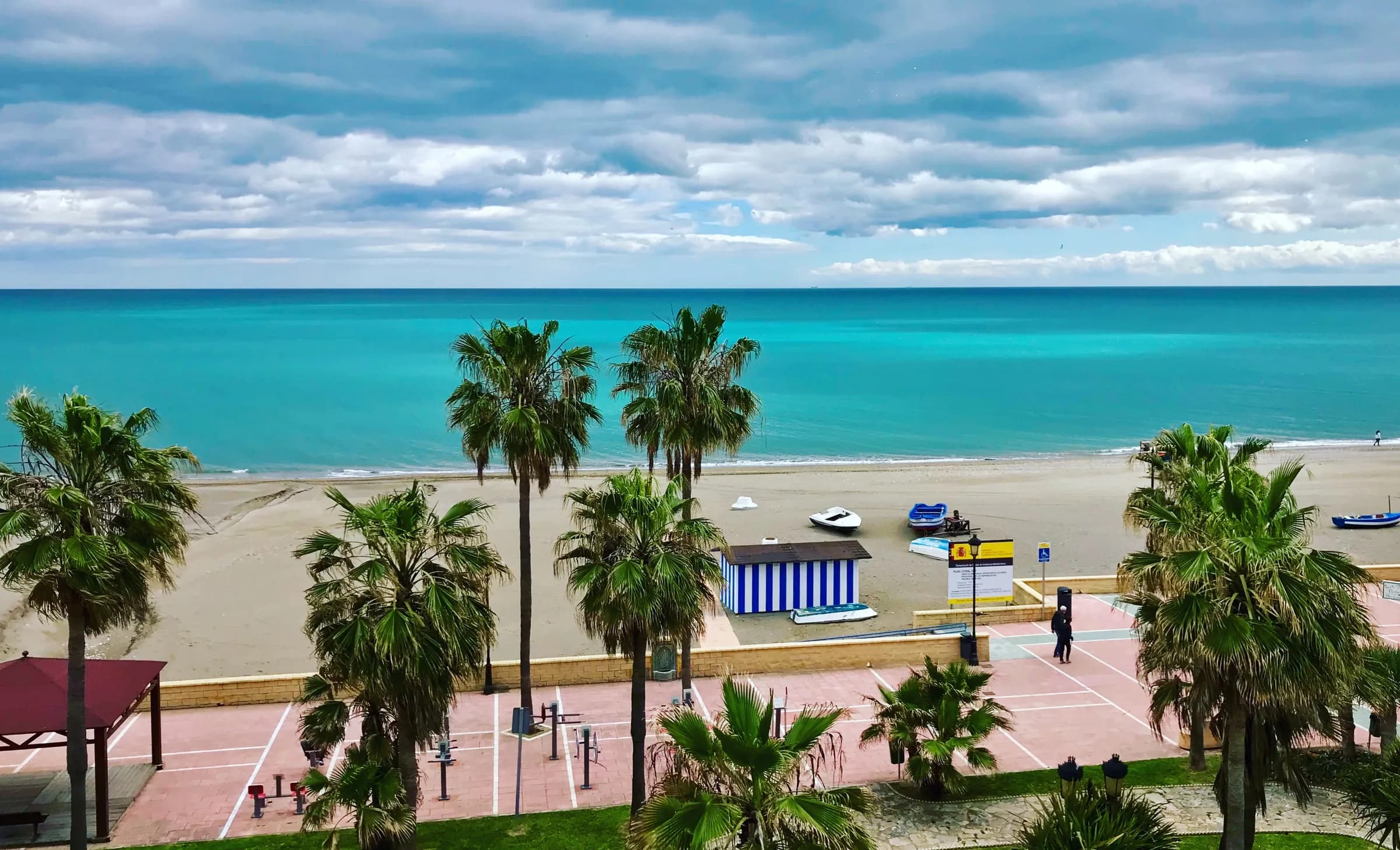
Stay Right on the Beach
The sand is 30 seconds from the door, and the balcony looks straight out at it. Book direct and save up to 20%.
- 3 Bedrooms
- 6 Guests
- 96 m²
Frequently Asked Questions
Related Articles
Sabinillas Sunday Market: What to Buy & When to Go
The Sunday market in Sabinillas (the Rastro) is the western Costa del Sol's best Sunday-morning rummage: what to buy, when to go and how to get there.
Restaurants in Sabinillas: Where Locals Eat
A local guide to restaurants in Sabinillas and Manilva: the best chiringuitos, tapas bars and seafood spots, with prices and walking distances.
Sabinillas: The Complete Guide to This Costa del Sol Town
A local's complete guide to Sabinillas: the beach, restaurants, markets, fiestas, day trips and practical tips for this quiet western Costa del Sol town.
The Local's Costa del Sol, Monthly
One email a month: what's on in Sabinillas, the best local finds, and first pick of apartment dates. Free welcome gift: our Sabinillas Insider Guide.
We respect your privacy. Unsubscribe at any time.
Comments
No comments yetHave a tip, a question or a correction? Every comment is read and approved by hand before it appears, usually within a day.
No comments yet. Be the first to share a tip or ask a question.