Most first-time guests come to Sabinillas for the beach and leave talking about what they found underneath it. Walk ten minutes to the rocky end of the sand, pull on a mask, and put your face in the water: a trumpetfish hanging nose-down by a rock, a moray eel's head poking from a crevice, an octopus you nearly missed because it was doing a very good impression of the seabed. No boat, no queue, and often nobody else in the water at all.
This stretch of coast sits right where the Atlantic pushes into the Mediterranean through the Strait of Gibraltar, and that mixing of two seas makes for livelier, more varied marine life than the average calm Med cove. Below is where to go, what you'll see, and, for anyone who fancies going further, the sunken-wreck reef waiting across the border in Gibraltar, half an hour away.
What the Water's Like on This Stretch of Coast
Snorkelling here is a different proposition to the sandy, gently shelving beach itself. Sabinillas beach is glorious for swimming, but sand doesn't give fish much to hide behind, so the interesting life clusters around rock: headlands, coves and the rubble at the base of any exposed point. That holds true all along the western Costa del Sol, and it's why every good spot below is rocky rather than sandy.
Visibility swings with the wind more than anything else. Calm mornings, before any breeze has had a chance to stir the top few metres, routinely give you 5-10 metres of clarity; by mid-afternoon, especially after any wind, that can drop to two or three. The Strait's mixing of Atlantic and Mediterranean water also means temperature and clarity here shift a little faster than guests expect from a "typical Mediterranean" coastline, part of what makes the marine life more varied than the postcard version of this sea. For the fuller picture of water sports along this coast, including diving and kayaking, see our water sports guide.
Best Snorkelling Spots, Nearest First
| Spot | Distance from the apartment | What it's like |
|---|---|---|
| Rocky east end, Sabinillas beach | Walkable, no car needed | The easy first taster |
| Punta Chullera / Manilva reserve | About 10 minutes' drive west | The richest patch nearby |
| Cala Sardina | 10-15 minutes' drive | Small, rocky, usually quiet |
| Estepona coves (incl. Playa del Cristo) | 15-20 minutes' drive | Further out, good clarity |
| Gibraltar's Camp Bay wrecks | About 30 minutes' drive | Scuba upgrade; see below |
The Rocky East End of Sabinillas Beach
Don't even get in the car. Walk to where the sand runs out and the rock takes over (covered in our Sabinillas beach guide) and you're already in decent snorkelling territory. It's the obvious first go, or the answer for anyone without transport.
Punta Chullera and the Manilva Ecological Reserve
About a 10-minute drive west, the headland at Punta Chullera marks the edge of the Reserva Ecológica Playas de Manilva: the Manilva Beaches Ecological Reserve, a protected run of coastline stretching towards the Cádiz border. The reserve's official protections lean towards the rare dune plants clinging to the point, but the sea here tells its own story: an undeveloped, rocky shoreline that local divers and snorkellers describe as holding patches of long-established artificial reef alongside the natural rock. Either way, it's the richest and most reliable patch of water within easy reach of the apartment, and worth the short drive.
Cala Sardina
A smaller rocky cove a little further along the same stretch, usually quieter again than Punta Chullera, and a sensible back-up if there's any swell running on the more exposed headland.
Estepona's Coves and Playa del Cristo
Roughly 15-20 minutes' drive towards Estepona, the sheltered cove of Playa del Cristo and the rockier spots in our hidden beaches guide give you more coves, and on the right day better clarity than the busier central beaches. Worth the extra distance if Punta Chullera is crowded or the conditions are off there.
Go early wherever you choose (see timing notes below) and you'll likely have most of these coves close to yourself.
What You'll See: A Spotter's Card
This isn't the Red Sea, and nobody should promise you turtles. What you will find, reliably, on a calm day over rock:
- Trumpetfish: long, thin and oddly patient, often hanging almost vertically near gorgonians and rocks. Easy to miss until it moves.
- Moray eels: the classic "is that a snake?" moment. Tucked into crevices by day, mouth open; that's just how they breathe, not a threat.
- Wrasse: the coast's most colourful regulars, several species darting around the rocks in small, curious groups.
- Sea bream (sargo, dorada): silvery and banded, often moving in loose schools over the sandy patches between rocks.
- Octopus: masters of camouflage. Look for a texture that doesn't quite match the rock around it, or a single curious eye watching you back.
- Stingrays: occasional rather than guaranteed, gliding low over sand in the shallows. Give them room and they'll return the favour.
- Bonus finds: scorpionfish (look, don't touch; the spines carry a painful, venomous sting), cuttlefish, and, thanks to the Strait's mixing waters, the odd larger visitor passing through that you wouldn't expect further into the Mediterranean.
The Gibraltar Wrecks: An Upgrade for Divers
About 30 minutes down the coast, Gibraltar hides one of Europe's earliest artificial reefs. Camp Bay, on the Rock's western shore, has around eleven wrecks deliberately sunk from the 1970s onwards (a Royal Navy barge among them, and by several accounts a scuttled Italian midget submarine too), put there specifically to build new marine habitat on what was otherwise a steep, fairly barren seabed. (A separate and rather more famous wreck, a Bristol Bombay bomber that ditched in 1941, lies off Gibraltar's South Mole, considerably deeper; a different site, though the two get lumped together in the retelling.)
This isn't snorkelling territory in the strict sense, and we won't pretend otherwise. Most of the Camp Bay wrecks sit at 12-22 metres, with the shallowest around 8: within reach of a strong, confident free-diver on a flat, clear day, but really a job for scuba kit. If anyone in your group dives, though, it's a short trip for a genuinely unusual outing: sponges and gorgonians colonising a submarine's hull, fish moving in and out of a barge's hold, decades of marine growth over deliberately sunken metal.
Ask a local PADI centre (see our water sports guide for who's currently operating nearby) whether they run trips across the border, or book directly with a Gibraltar-based dive operator once you're there. For everything else worth doing on the Rock that day, our Gibraltar day trip guide covers the rest, so non-divers in your group have a full day sorted too.
Gear, Safety and Timing
Gear. A mask, snorkel and fins are all you need. Add reef shoes for the rockier entry points (these coves are pebbly underfoot, not sandy) and a rash vest if you'll be out for a while, since the Andalusian sun shows no mercy on an exposed back. If you'd rather not pack your own, a snorkel set is a bookable extra at the apartment for €8 a day, one less thing to fit in the suitcase.
Timing. Go early. Mornings are calmer almost everywhere on this coast, before the afternoon breeze gets going and stirs the surface into a chop that kills visibility. May to October is the reliable window: the sea is swimmable without a wetsuit from around June, and by August it's practically bath-warm. Outside that window the water is often gin-clear but genuinely cold.
Safety. Simple rules, seriously applied. Only go in on calm days; if there's any real swell or a stiff breeze, wait for a better morning. Check which way the wind is blowing before you get in: an offshore wind, blowing from the land out to sea, can push a swimmer or snorkeller out faster than they can swim back, and it's the single biggest risk on an otherwise gentle coastline like this. Never snorkel alone, stay within your ability and depth, and take a tow float if you're heading any distance from the shore. None of this is exotic advice; it's exactly what keeps a calm, beautiful coastline calm and beautiful.
Pro tip: Snorkel in the first two hours after sunrise, before the wind picks up and before any boat traffic starts. You'll likely have Punta Chullera's rocks to yourself, and the low morning light makes camouflaged fish and octopus far easier to spot against the stone.
None of this requires a boat, a wetsuit, or any real skill beyond basic swimming and a bit of curiosity. Pack a mask, walk to the rocky end of Sabinillas beach, and see what's there before breakfast. If the sea hooks you the way it hooks most of our guests, pencil in the Gibraltar day trip for later in the week and take it further underwater.
Planning a snorkelling trip? Reserve your dates at our beachfront apartment in Sabinillas: Punta Chullera ten minutes down the coast, Gibraltar's wrecks thirty minutes further, and the sea 30 seconds from the door. Add a snorkel set from the extras menu when you book, or ask us on arrival for the current best spots and conditions.
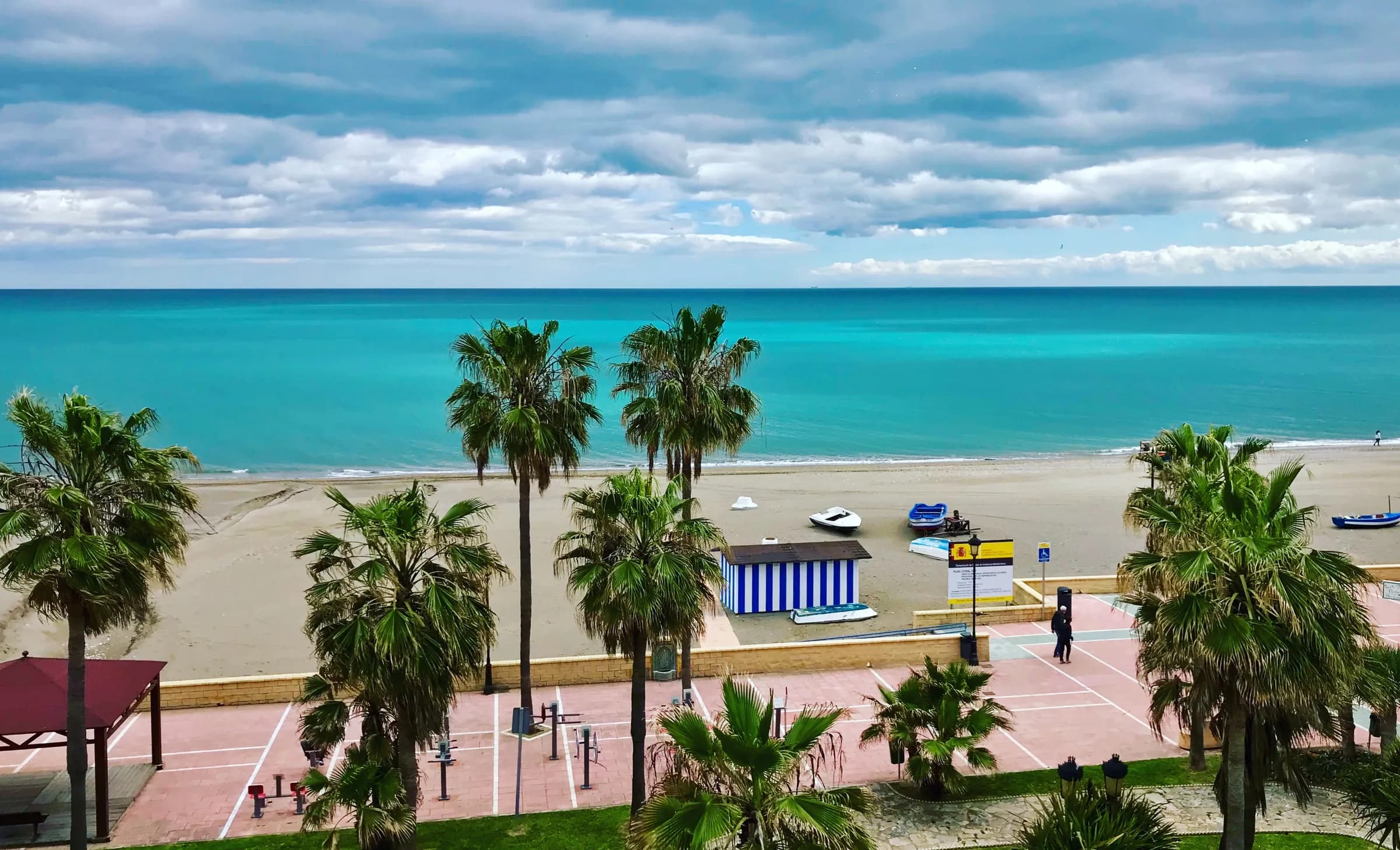
Stay Right on the Beach
The sand is 30 seconds from the door, and the balcony looks straight out at it. Book direct and save up to 20%.
- 3 Bedrooms
- 6 Guests
- 96 m²
Frequently Asked Questions
Related Articles

Water Sports Costa del Sol: SUP, Kayak, Jet Ski & Diving
A local guide to water sports on the Costa del Sol near Sabinillas: SUP, kayaking, jet skiing, snorkelling and boat trips, with costs and best months.

Things to Do in Gibraltar: A Day Trip from Sabinillas
The best things to do in Gibraltar on a day trip from Sabinillas: the Rock, the wild monkeys, St Michael's Cave, the border and duty-free, 30 minutes away.
Sabinillas Beach: Blue Flag Guide to the Quiet Costa del Sol
A local's guide to Sabinillas beach: Blue Flag sand, the best chiringuitos, water sports, sun loungers and the calm side of the Costa del Sol.
The Local's Costa del Sol, Monthly
One email a month: what's on in Sabinillas, the best local finds, and first pick of apartment dates. Free welcome gift: our Sabinillas Insider Guide.
We respect your privacy. Unsubscribe at any time.
Comments
No comments yetHave a tip, a question or a correction? Every comment is read and approved by hand before it appears, usually within a day.
No comments yet. Be the first to share a tip or ask a question.