Everyone tells you the Costa del Sol is one long wall of concrete. They're half right. Drive west of Marbella, past Estepona, and the coast loosens its tie. The high-rises thin out. The road bends inland around headlands the developers never reached. And tucked between those headlands sit the beaches we use: the ones we send our own guests to when the main beach is full.
This is a local's guide, not a brochure. We'll tell you where these coves are, how to reach them, and, just as important, how "hidden" they really are.
How Hidden Are the Hidden Beaches on the Costa del Sol, Really?
These beaches are quiet, not secret. Nobody is keeping them off the map, and we're not promising a deserted island. What they don't have is a resort behind them, a beach club thumping out house music, or a row of sunbeds you have to pay to lie on. On a Tuesday in late May you can genuinely have a cove largely to yourself; by lunchtime on a Saturday in August, the same cove fills with Spanish families and local expats who know these five spots as well as we do.
That trade-off is worth spelling out before we start, because the internet is full of "secret beach" articles that promise a deserted paradise and deliver a busy car park.
So calibrate your expectations. "Hidden" on this coast means:
- No development. Scrubland and cliffs behind you, not apartment blocks.
- Few or no facilities. Maybe a chiringuito nearby, often nothing at all.
- Effort. A 15 to 40-minute walk from the nearest parking depending which beach, a roadside lay-by, local knowledge to find the turn.
- Space. Even in summer you can find your own patch of sand.
If that's the trade you want (peace and wildness in exchange for sunbeds and snack bars), read on. If you want showers, lifeguards and a cold beer ten paces away, our Sabinillas beach guide covers the main blue-flag sand instead. And for the whole of Manilva's coastline on one page, from the town beach to Punta Chullera, see our guide to the beaches of Manilva.
Why Does the Western Costa del Sol Stay So Quiet?
Three reasons: rockier terrain with fewer access roads, local protection from overdevelopment, and guidebooks that stop at Estepona and the Marbella corridor. The western Costa del Sol, roughly from Estepona west towards Manilva and into Casares, remains refreshingly undeveloped. Whilst the central coast has given itself over to high-rises and package tourism, this stretch has held firm. No major resort infrastructure. No sprawling beach clubs. Just long stretches of sand, low cliffs, and rocky coves that most visitors simply never find; the five we cover below all sit within about 5 km of Sabinillas.
The coast here is genuinely rockier, with fewer developed access roads than the resort towns. Local governments have protected these areas from overdevelopment. And tourists follow the guidebooks, which tend to focus on Estepona's main beaches and the Marbella corridor; the quieter spots get a paragraph at best.
We've lived here long enough to know these stretches intimately. On summer weekends when the main beaches are shoulder-to-shoulder with families and sun umbrellas, we slip away to these quieter spots. You can hear the waves.
What Are the Best Hidden Beaches on the Western Costa del Sol?
Five spots, all within roughly 5 km of Sabinillas, each with its own character. Here's how they compare before we get into the detail; pick the one that suits your day.
| Beach | Best for | Sand or rock | Facilities | Crowds in August |
|---|---|---|---|---|
| Playa Chica | Snorkelling, early-morning peace | Mostly rock, little sand | Beach club nearby, summer lifeguard | Low-medium |
| Playa Ancha (Casares) | Families, calm water | Sand | Showers, summer lifeguard, chiringuitos, Blue Flag | Medium |
| Playa de la Sal | Wild scenery, photography | Sand and shingle | Basic; summer lifeguard | Low-medium |
| Playa de las Arenas | Serious snorkelling, solitude | Rock and gravel coves | Almost none | Low |
| Playa de los Toros | Space, picnics, no crowds | Stones with sandy patches | Parking, seasonal kiosk and sunshade hire; no lifeguard | Low-medium |
Want family swimming with the safety net of a lifeguard? Go to Playa Ancha. Chasing octopus with a snorkel? Playa de las Arenas. After a wide, empty stretch for a picnic? Playa de los Toros. The write-ups below explain each in full.
Playa de la Sal: The Wild Casares Coast
Playa de la Sal sits tucked between two rocky headlands in Casares, near the historic Torre de la Sal watchtower. This is the beach for those who want raw, unpolished beauty. It's smaller (roughly 300 metres of sand and rock) and genuinely quiet even in August.
The landscape is authentic wildness: rough scrubland backs the beach, cliffs flank both sides, and the water runs deep and clear. The beach itself is mixed sand and shingle, with rocky outcrops at both ends. A handful of chiringuitos exist nearby (notably Chiringuito Beach-Bar La Sal, right on the sand), but they're mercifully low-key. No sunbed monopoly. No constant vendor traffic.
Access & Parking: From Sabinillas, it's just 3-4 km and 5-8 minutes northeast: cross the Río Manilva and take the first coastal exit for Casares Costa; the beach sits by the Torre de la Sal watchtower. Parking is limited but adequate: a small car park near the beach and roadside spaces. Low tide is best for exploring the full stretch; high tide narrows it considerably.
Lifeguards & Facilities: Lifeguards are present during peak season (June-September). Showers and basic facilities exist. The beach is cleaned in summer but less intensively than urban beaches, so you'll encounter more driftwood and natural debris, which is part of its authentic charm.
Best For: Swimmers seeking quiet, photographers wanting dramatic coastline, snorkellers exploring rocky areas, and anyone who genuinely wants to escape crowds.
Playa Ancha: History Meets Seclusion
Playa Ancha sits in Casares Costa, beside the Torre de la Sal watchtower and the boundary with Playa de la Sal. It's a generous 1.3 kilometres of sand, around 50 metres deep, with a low-key boardwalk, showers, and summer lifeguards. The name literally means "wide beach," and it delivers: this is a properly spacious stretch with genuine elbow room even in peak season, while staying far quieter than the resort beaches.
The water here is calm and sheltered, with a gentle slope perfect for families and nervous swimmers. Rocky areas at both ends are excellent for snorkelling: wrasse, octopus, and small crabs inhabit the shallows. The beach has a strong historical presence: the watchtower dates to the 16th century, a stark reminder of when this coast needed defending against Barbary pirates.
The tower has one night a year of its own. In mid-August the Noche de Luna y Sal rings it with more than 5,000 candles for a concert on the rocks: grand piano, string trio, dance and a fire show, from 22:00. In 2026 it falls on Friday 14 August, the third edition. Entry is free but capacity is limited, and tickets have to be collected in person beforehand from Casares town hall or the Tenencias de Alcaldía at Secadero or Casares Costa. The parking note above applies double that night.
Access & Parking: From Sabinillas, it's just 2-3 km northeast (about 5 minutes by car, or a flat walk along the coast). Take the first Casares Costa exit after the Río Manilva. Parking is available but can be tight in high summer; arrive before 11:00 or after 17:00 to ensure a space.
Facilities: Showers, some bins, and lifeguards during peak season. Playa Ancha is also the only one of these five holding Spain's official Blue Flag, again in 2026; Manilva's own two flags fly over the main Sabinillas beach and Las Gaviotas, not out here. Casares' mayor, Juan Luis Villalón, calls the award recognition for "the effort we make all year to look after our coastline", though he's quick to add the town's wilder beaches earn the same care, just without the flag. A couple of low-key chiringuitos nearby offer food and drink if you don't bring a picnic. The beach is quieter than Sabinillas but sees more visitors than Playa de la Sal.
Best For: Families seeking calm water without summer crowds, snorkellers, photographers of coastal fortifications, and anyone wanting a medium ground between total seclusion and some amenities.
Playa de las Arenas: Rocky Coves & Marine Life
Playa de las Arenas (Las Arenas - El Gobernador in the provincial council's beach guide) lies well beyond La Duquesa marina, roughly 5 km south-west of Sabinillas: past El Castillo and Los Toros, inside the Reserva Ecológica Playas de Manilva, running for some 850 metres towards the Cala de la Sardina and Punta Chullera. This isn't one continuous beach; it's a series of rocky coves and small sandy stretches backed by steep headland. The rocks are the real story here.
Between the marina and Castillo village, the coastline turns into a sheltered bay dotted with rocks perfect for snorkelling. The water is clear and surprisingly biodiverse: bass, wrasse, octopus, crabs, and anemones inhabit the rocky outcrops. Even in summer, when Sabinillas beach is packed, you'll find stretches here with just a handful of swimmers.
The beach runs about a kilometre long but only ~20 metres deep, with a gentle slope. Some sections have sand, others are mainly gravel and shingle. Driftwood is common, the price of natural beaches. The headland rises with little development, which keeps the place feeling remote despite being just a few kilometres away.
Access & Parking: From Sabinillas, follow the coastal road southwest past La Duquesa marina and El Castillo (about 5 km, around 10 minutes). There's a lay-by on the headland offering splendid views and parking, with steps and paths down to the beach. Keen walkers can continue along the coast from the marina; allow 45-50 minutes on foot.
Facilities: Very limited. No lifeguards on the rocky sections, though the marina area has basic services. Bring your own water and snacks. The reward is genuine solitude and outstanding snorkelling.
Best For: Serious snorkellers, swimmers seeking calm rocky-cove water, photographers, and those comfortable with minimal facilities.
Playa de los Toros: Wide, Wild & Underrated
Playa de los Toros runs for about 1,300 metres along Manilva's coast and is some 50 metres wide, one of the widest and least developed beaches in the western area. The name comes from the Cañada Real de los Barrios, a historic livestock drove route: cattle were herded along this coast to Estepona. It's proper wild-looking country despite being only 3-4 km south-west of Sabinillas: the beach starts just past El Castillo at the Arroyo del Indiano, where the Reserva Ecológica Playas de Manilva begins.
This beach attracts locals and expats far more than tourists. The facilities are limited, the atmosphere is genuinely relaxed, and even in August the occupancy remains medium at worst. The shore is mostly medium and small stones with some sandy patches. The water is deep and clear. Free parking is available. It feels remote, though it's genuinely close to Sabinillas.
Access & Parking: From Sabinillas, drive south-west on the A-7 past La Duquesa to El Castillo (3-4 km, under 10 minutes), or walk the seafront in roughly 50 minutes. The provincial council's beach guide lists parking at the beach, but map pins disagree: some apps, and the town hall's own beach page, put Los Toros further west towards Punta Chullera and the Cádiz border, so head for El Castillo rather than trusting a pin. The beach access is straightforward from the car park.
Facilities: Very minimal. No lifeguards, no showers, no beach bars on the sand itself. You'll find some chiringuitos in nearby towns, but this beach is for self-catering visitors. In summer the beach is cleaned daily, but less intensively than urban beaches.
Best For: Families seeking a genuine beach day without crowds or noise, swimmers wanting wide-open space, picnickers, and anyone escaping the resort atmosphere entirely.
Playa Chica & Sabinillas' Quieter Stretches
Whilst Playa de Sabinillas (the main urban beach) has become increasingly busy, Playa Chica, the small cove just before you reach Sabinillas from Casares, remains genuinely peaceful. It's barely 2 km away from our apartment, but most visitors never find it.
Playa Chica is tiny (roughly 300 metres), tucked against rocky headlands. It has more rocks than sand, which makes it less appealing to sunbathing crowds but perfect for snorkelling and exploring tidal pools. The water is always calm here, protected by the surrounding cliffs. Arrive early on a summer morning and, if you're lucky, you might have it largely to yourself before the day warms up.
Access & Parking: From Sabinillas, head northeast along the coast towards Casares Costa (approximately 2 km, 5 minutes). Look for roadside parking near the Playa Chica Beach Club. Walking from central Sabinillas takes about 15 minutes along the promenade. It's easy to miss if you're not looking for it; the access is modest.
Facilities: The Playa Chica Beach Club sits on the headland with a small restaurant and bar. The beach itself has minimal facilities. Lifeguards during summer.
Best For: Day-trippers from Sabinillas, snorkellers, early risers seeking peace, and anyone wanting the convenience of Sabinillas proximity without the crowds.
Pro tip: Visit Playa Chica early in the morning (before 09:00) for the best chance of a quiet beach; afternoons tend to be busier. The water is calmest at dawn, making snorkelling exceptional.
What Should You Bring to a Hidden Beach With No Facilities?
Pack as if there's nothing there, because usually there isn't: water, sun protection, swim shoes and cash, plus your own snorkel gear if you have it. Unlike main beaches with chiringuitos, sunbed rentals, and shops, these hidden stretches require preparation.
- Water & snacks: Bring more than you think you'll need. Most sites have no food vendors.
- Sunscreen & sunhat: Shade is virtually non-existent. SPF 50+ is essential, and reapply every hour if swimming.
- Swim shoes: Rocky access and rocky seabeds make proper footwear essential. Flip-flops are inadequate.
- Towel as shelter: Use it as a makeshift sunshade if you lack an umbrella.
- Snorkel gear: If you have it, bring it. Renting from beach shops in Sabinillas works too.
- Rash guard: Minimises sun exposure and provides underwater temperature regulation.
- Valuables: Lock your car and avoid leaving expensive items unattended, though theft is rare.
- Cash: Some remote chiringuitos don't accept cards.
How to Find These Beaches: Directions from Sabinillas
| Beach | Distance from Sabinillas | Driving Time | GPS / How to Reach | Parking | Difficulty |
|---|---|---|---|---|---|
| Playa Chica | 2 km northeast | 5 min | Coast road towards Casares Costa; look for Playa Chica Beach Club sign. Or walk promenade 15 min. | Roadside, usually available | Easy (good signage) |
| Playa Ancha (Casares) | 2-3 km northeast | ~5 min | First Casares Costa exit after the Río Manilva. Signposted. | Small car park, can fill in summer | Easy (marked car park) |
| Playa de la Sal | 3-4 km northeast | 5-8 min | Casares Costa exit, by the Torre de la Sal watchtower. | Limited but adequate small car park | Moderate (some walking) |
| Playa de los Toros | 3-4 km southwest | under 10 min | A-7 south-west past La Duquesa to El Castillo; the beach starts at the Arroyo del Indiano. Map pins vary. | Parking listed by the provincial beach guide | Easy (straightforward access) |
| Playa de las Arenas | about 5 km southwest | about 10 min | A-7 past La Duquesa and El Castillo towards Punta Chullera; lay-by on headland, paths down. | Roadside lay-by | Moderate (headland walk required) |
Pro tip: Use Google Maps offline download for the western coast area before visiting. Mobile signal can be patchy, and you don't want to be searching for directions on a remote headland.
When Is the Best Time to Visit These Hidden Beaches?
Best months: May, June, September, and October. Water is warm (18-24°C), weather is stable, and crowds are lower than July-August. See our month-by-month guide for detailed seasonal planning.
Peak season (July-August): Busier than spring/autumn but still far quieter than main beaches. Arrive very early (before 10:00) or late (after 17:00) for peace.
Winter (November-March): Water is cold (12-16°C) and Atlantic swells can make rocky beaches dangerous. Safe for swimming only on calm days with proper conditions.
Spring (March-May): Wildflowers bloom on clifftops, weather is warming, and water reaches 16-18°C. Excellent for walking and photography.
Autumn (September-October): Warmest water of the year, stable weather, and reduced families-with-school-holidays crowds.
Good to know: Summer siesta hours (14:00-17:00) are quiet even at busy spots. Locals retreat indoors; tourists rest at their hotels. This is often a good time to find space at Playa de los Toros.
What Can You Do at These Hidden Beaches?
Snorkelling, picnicking, photography and shore fishing are the main draws; the rocky coves at Playa de las Arenas and Playa Chica hold the richest marine life for snorkellers. Here's what suits each interest:
Snorkelling: Playa de las Arenas (rocky life), Playa Chica (tidal pools and rocks), Playa de la Sal (clear water and shallow rocks). Morning visits offer best visibility and calmest water.
Picnicking: Bring food from Sabinillas. All beaches have enough space to settle for the day without feeling crowded. Playa de los Toros offers the most space for family picnics.
Photography: Golden hour (early morning or late afternoon) is exceptional at all locations. Playa Ancha and Playa de la Sal offer dramatic clifftop backgrounds. Rocky sections at Playa de las Arenas create striking compositions.
Fishing: Legal with a Junta de Andalucía recreational shore-fishing licence, cheap rather than free at €5.92 for three years (free only for over-65s and IMV recipients); popular at Playa de los Toros and Playa de la Sal. Early morning or evening produces best catches.
Rock pooling & beachcombing: Playa Chica and Playa de la Sal have extensive rocky areas with small pools and shells. Ideal for children and naturalists.
Getting to the Quiet Beaches Without a Car
A car makes all of this easy; every cove here is within about 15 minutes' drive of Sabinillas. But you can reach the closest two on foot, and the coastal bus covers the gaps if you're patient.
On foot from Sabinillas. Playa Chica is a 15-minute walk northeast along the promenade towards Casares Costa. Playa Ancha is a flat 30-minute coastal stroll in the same direction: a pleasant walk in the cool of the morning, less so in the August midday heat. Both are doable with a beach bag and good footwear; neither is realistic with a pushchair and a full picnic for six.
By bus. The Avanza coastal service between Estepona and La Línea de la Concepción stops in Sabinillas and runs along the coast road several times a day in each direction. It's cheap (a few euros), but it won't drop you at the cove itself, so you'll walk the last stretch from the main road. Check current timetables on the Avanza or Consorcio de Transporte Metropolitano del Campo de Gibraltar website before you set off; the service is sparser at weekends and on public holidays. For the further beaches like Playa de los Toros, the bus saves little time over walking from the nearest stop, so it's really only worth it for Playa Chica or Playa Ancha.
By car. This is how the locals do it. From Sabinillas, the A-7 coast road gets you to Playa de los Toros and Punta Chullera to the southwest, or the Casares Costa exits to the northeast for Playa Ancha and Playa de la Sal. Picking up car hire on the Costa del Sol for even a couple of days opens up not just these beaches but Casares, Estepona and Gibraltar too. From our beachfront apartment in Sabinillas, you can reach any of these five beaches in under 20 minutes, and we'll point you to the easiest parking on the day.
If you're driving and want to see several coves in one day, the logical pairings are Playa de la Sal and Playa Ancha together (both Casares Costa; about 30 minutes of driving combined) or Playa de los Toros and Playa de las Arenas (both south-west in the ecological reserve, Los Toros first; roughly 45 minutes combined). Playa Chica is a quick detour from anywhere.
How Much Do These Hidden Beaches Cost to Visit?
Free to almost free. There's no sunbed to rent, no €20 entry, no beach club minimum spend; most of what you'll spend goes on petrol and a supermarket picnic. Plan it right and a day out comes to almost nothing:
- Parking is free at most roadside lay-bys. The Casares beaches have small car parks that are free or cheap.
- Bring your own everything. Stock up at the Mercadona or Lidl in Sabinillas (bread, jamón, fruit, a cool bag of drinks) and you've a beach picnic for a fraction of chiringuito prices.
- The bus is a couple of euros if you'd rather not hire a car for the closer beaches.
- Snorkelling is the cheapest entertainment going. A €15 mask-and-snorkel set from a Sabinillas beach shop pays for itself in one morning over the rocks at Playa de las Arenas.
The only real cost is the petrol or the hire car, and split between a family or a group that's pennies a head.
Is It Safe to Swim at Beaches With No Lifeguard?
Yes, if you're sensible about it. Most of these coves have no lifeguard for most of the year, so a little common sense goes a long way; three things matter most.
The sea. This is the corner of the Mediterranean closest to the Atlantic, and on windy days, especially in winter and early spring when the water is down to 12-16°C, swells push round the headland and surge over the rocky entries. If the water looks churned up or the waves are breaking hard on the rocks, don't get in. Calm summer mornings are a different world: flat, clear and gentle.
The rocks. Several entries are over rock or shingle rather than soft sand. Swim shoes save bruised feet and slips. Watch for sea urchins in the shallows around the outcrops; their spines are painful and a nuisance to remove.
Yourself. Swim with someone, stay within your depth, and tell another person where you're going if you're heading to a remote cove like Playa de las Arenas. In high summer there are usually other swimmers about, but never plan on a rescue being to hand. None of this is meant to frighten; it's the same caution any sensible swimmer takes. Pick a calm day and these are some of the safest, most peaceful waters on the coast.
Are the Hidden Beaches Good for a Day Out With Kids?
Yes: quiet beaches and children go together better than you'd think. The calm, shallow water at Playa Ancha is ideal for paddling, and the rock pools at Playa Chica and Playa de la Sal will keep small naturalists busy for hours hunting crabs and tiny fish. Bring a cheap net and a bucket and you've sorted the afternoon.
A few caveats. There are no kiosks for forgotten sun hats, no toilets at the smaller coves, and the rocky entries need watching with toddlers. Pack a change of clothes, a fully stocked snack bag and plenty of water. For families wanting more facilities and gentler logistics, our guide to the Costa del Sol with kids covers the family-friendly options up and down the coast.
Planning Your Visit
These beaches are perfect for escaping crowds, but they require a bit more planning than main beaches. You can't assume facilities, lifeguards, or food vendors. The reward is authenticity and peace.
If you're looking for more developed beaches in the area, our guide to quiet beach towns on the Costa del Sol covers ten alternatives. If you're staying in Sabinillas for a week or more, dedicate one day to exploring the quieter stretches. Bring a picnic, swim gear, and plenty of water. Start early (before 09:00) for the best chance of an empty cove and the clearest snorkelling light. Swim only if conditions are calm and you're a confident swimmer.
Consider combining hidden beach visits with nearby attractions: Playa Ancha and Playa de la Sal are near Casares village (worth an afternoon exploring the white village architecture). Playa de los Toros is roughly 30 minutes from Estepona's old town. From Playa de las Arenas, La Duquesa marina is a short drive back up the coast; grab lunch there afterwards.
Our favourite pattern: a morning at Playa Chica (5-minute drive from our apartment) or Playa de los Toros (under 10 minutes' drive), followed by afternoon exploring the village, followed by early evening tapas and wine back in Sabinillas. The beaches deliver peace; the villages deliver culture and food.
Book direct with us here at our beachfront apartment and we'll tailor the recommendation to you: snorkelling, family swimming, solitude or photography, just tell us what you're after. We've spent enough mornings at these beaches to know exactly which stretch suits which day, and when to go for the most peace.
For more on Sabinillas itself and what makes our corner of the coast special, read our complete guide to Sabinillas. And if you want to explore the broader western coastline, our guide to the best beaches near Estepona covers the full stretch and how to navigate it.
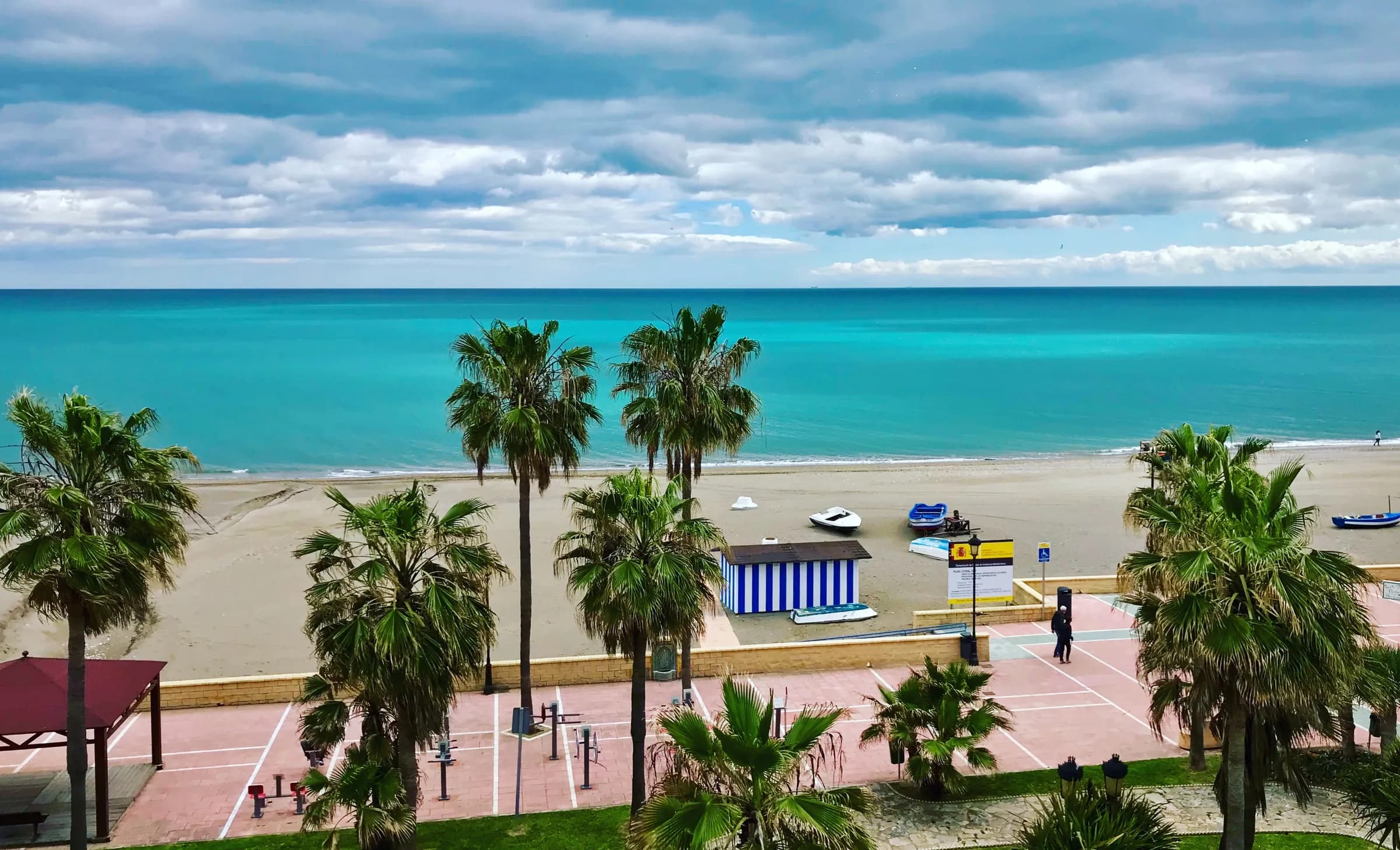
Stay Right on the Beach
The sand is 30 seconds from the door, and the balcony looks straight out at it. Book direct and save up to 20%.
- 3 Bedrooms
- 6 Guests
- 96 m²
Frequently Asked Questions
Related Articles
Quiet Beach Towns on the Costa del Sol (Not Marbella)
Tired of the Marbella crowds? These quiet beach towns on the Costa del Sol (Sabinillas, Manilva, La Duquesa and more) still feel like real Spain.

Estepona Beach Guide: The Best Beaches Nearby
A local guide to the best Estepona beach options: calm Playa del Cristo, the long town beach La Rada, plus quieter sands west towards Sabinillas.
Sabinillas Beach: Blue Flag Guide to the Quiet Costa del Sol
A local's guide to Sabinillas beach: Blue Flag sand, the best chiringuitos, water sports, sun loungers and the calm side of the Costa del Sol.
The Local's Costa del Sol, Monthly
One email a month: what's on in Sabinillas, the best local finds, and first pick of apartment dates. Free welcome gift: our Sabinillas Insider Guide.
We respect your privacy. Unsubscribe at any time.
Comments
No comments yetHave a tip, a question or a correction? Every comment is read and approved by hand before it appears, usually within a day.
No comments yet. Be the first to share a tip or ask a question.