Every year on 22 December (Tuesday 22 December in 2026), Spain stops. Schools pause, offices give up any pretence of working, bars turn every television to the same channel, and for three hours, two children sing numbers to a country holding its breath. This is El Gordo, the Sorteo Extraordinario de Navidad: the world's biggest lottery draw, Spain's oldest shared ritual, and one of the most charming things you can witness if you spend December anywhere in this country, including our stretch of the Costa del Sol. The 2026 tickets went on sale in early July; five and a half months of anticipation is part of the design.
The Oldest Lottery in the World, and the Biggest Draw
The Spanish Christmas lottery has run every single year since 1812, through wars, dictatorship and pandemic, without missing a draw. Measured by total prize money it is the biggest lottery event on earth, and 2026 sets a new record: €2,870 million in prizes, €98 million more than last year, distributed across thousands of prizes rather than one absurd jackpot.
That structure is the first thing outsiders misunderstand. The famous El Gordo, "the Fat One", pays €4 million per full ticket. By EuroMillions standards that is almost modest. But the Christmas lottery is not designed to make one person obscenely rich; it is designed to make thousands of people meaningfully richer at the same time, ideally people who know each other. Which is exactly what happens, every single year.
Where It All Began: Cádiz, 1812
The lottery was born in the middle of a war. In 1812, with Napoleon's armies occupying most of Spain, the country's besieged government in Cádiz needed money, and a public lottery was an elegant way to raise it without raising taxes. The first draw was held on 18 December 1812, and it has been held every year since, no exceptions: not for the Civil War (in 1938 the divided country famously held two rival draws, one on each side), not for dictatorship, not for a pandemic. It only became officially tied to Christmas later in the 19th century, when the December date and the name Sorteo de Navidad stuck, but the essential theatre grew up with it, above all the San Ildefonso schoolchildren, pupils of a Madrid institution founded as an orphanage, who have been singing out the winning numbers for more than 150 years. "El Gordo", the fat one, began as street slang for the top prize and simply became its name. Two centuries on, the war-financing measure has turned into the most beloved fixture of the Spanish calendar: proof, as Spaniards like to say, that nothing here is as permanent as the provisional.
How It Works: 100,000 Numbers, 205 Series
The mechanics confuse every newcomer, so here it is plainly:
- There are exactly 100,000 numbers, from 00000 to 99999. Your ticket carries one of them.
- Every number is printed many times over, in identical series. For 2026 there are 205 series, seven more than last year, meaning each five-digit number exists 205 times. Total emission: €4,100 million in tickets, of which 70% is returned as prize money; that is where the €2,870 million comes from.
- A billete (€200) is one number in one series; a décimo (€20) is a tenth of it. When a number wins, it wins in every series at once, so El Gordo does not crown one winner but up to 205 full-ticket winners and over 2,000 décimo winners, which is precisely how a single number can shower a whole town.
And the prize tiers, per series (divide by ten for your décimo):
| Prize | Per billete | Per décimo |
|---|---|---|
| El Gordo (1st) | €4,000,000 | €400,000 |
| Second prize | €1,250,000 | €125,000 |
| Third prize | €500,000 | €50,000 |
| Two fourth prizes | €200,000 | €20,000 |
| Eight fifth prizes | €60,000 | €6,000 |
| 1,794 pedrea prizes | €1,000 | €100 |
Dozens of smaller categories sit on top of those: approximations for the numbers either side of the big winners, prizes for matching the first or last digits, and the beloved reintegro (last digit matches El Gordo's, your stake comes back).
Décimos: How Spain Plays
Since €200 for a full billete is serious money, the €20 décimo is the unit of Spanish Christmas life. You buy one at an administración de lotería, the dedicated lottery shops you will find in every Spanish town, including ours. Although the 2026 tickets have been on sale since July, it is from about October onwards that the queues outside the famous administraciones (Madrid's Doña Manolita, above all) wrap around the block.
Then the sharing starts, and this is the heart of the whole thing:
- The office plays a number. Someone collects €20 from everyone; refusing feels reckless: imagine being the one colleague who didn't play the year the office number hit.
- The bar sells participaciones: €2 or €5 slips of its décimo, photocopied and rubber-stamped, pinned behind the counter.
- The family plays the same number it has played for forty years, bought from the same administración, and would sooner skip the turrón than skip the ticket.
The consequence: when a number wins big, it usually wins geographically. One administración sold that number, one town bought it. In 2025, a single town, La Bañeza in León, shared roughly €468 million: 117 series of the winning number had been sold there. Spanish television every 23 December is mayors being sprayed with cava in the rain, and it is wonderful.
The Draw: Children, Drums and Three Hours of Singing
The draw itself is pure theatre, held at Madrid's Teatro Real from 9am (for 2026, Loterías has announced that every ball in both drums will be new). Two giant golden drums spin: one holding 100,000 wooden number balls, one holding the prize balls. And here is the detail that makes El Gordo unlike any other lottery on earth: the winning numbers are sung, in pairs, by schoolchildren from San Ildefonso, a Madrid school that was once an orphanage. One child chants the number, the other chants the prize, in a melody that has not changed in living memory.
When a child pulls El Gordo itself, they hold the ball up and sing it three times over while the hall erupts. Spaniards who cannot tell you a single other lottery result can hum the San Ildefonso chant from memory. It is the official soundtrack of Spanish Christmas; many people here will tell you the holidays begin at the exact moment they hear it.
The Superstitions and the Small Print
The folklore runs deep. Numbers ending in 5 sell out because El Gordo "likes" them; the number matching a famous date (a royal wedding, a football triumph, even a disaster) sells out within days; some buyers drive hours to purchase from an administración that sold a winner once, decades ago. Statistically it is all nonsense, and knowing that changes nothing.
A few practical details worth understanding:
- Roughly one ticket in six wins something. Beyond the big prizes sits the pedrea, the "stone shower" of thousands of small prizes sung in a rapid-fire chant, and the reintegro: if your number's last digit matches El Gordo's, you get your €20 back. Getting your stake back feels, in the moment, like a win. That is the trick of the whole design.
- It is still a lottery. The expected return is about 70% of the stake: generous for a lottery, still a loss on average. Spaniards mostly treat the décimo as a Christmas decoration that might explode into money: €20 for a month of "what if" conversations at the dinner table. Play it that way. (And if you do play: 18+, and only ever with money you can cheerfully lose.)
- Big prizes are taxed at source. Spain's tax agency takes 20% of whatever a décimo wins above €40,000, and the prize is paid out net, to residents and visitors alike. A winning El Gordo décimo is €400,000 on paper and €328,000 in your hand; the pedrea and the reintegro are untouched. (Non-residents may be able to reclaim part of it under their country's tax treaty with Spain.)
- A participación is only as good as whoever sold it. Bar and club slips are legal and half the fun, but the prize is paid on the décimos behind them. In 2025 the fiesta committee of Villamanín, a village in León that shared in El Gordo, turned out to have sold participaciones for ten more décimos than it held, leaving about €4 million unbacked for its own winners to sort out.
- Nobody will email you to say you won. Messages claiming you have won El Gordo and asking for a fee or your bank details are a long-running scam that Loterías y Apuestas del Estado and Spain's cybersecurity agency INCIBE both warn about. Real prizes are checked against the official results and collected with the décimo itself.
How to Take Part
If you are in Spain (and December on the western Costa del Sol is a lovely time to be here), do it the proper way: walk into an administración de lotería, pick a décimo from the window display (€20), and keep it somewhere safe until the 22nd. Anyone can buy one, resident or not. Our local administración in Sabinillas gets its own modest December queue, and standing in it with the neighbours is more authentically Spanish than any flamenco show. Luck has called here before: in 2024 a Sabinillas administración sold two décimos of the third prize, 11840, worth €50,000 each. Buy only at an official administración or an authorised Loterías point of sale, where a décimo costs its €20 face value.
And if the 22nd leaves you empty-handed, Spain's second big draw, El Niño, follows on 6 January, Three Kings' Day, with décimos from the same administraciones.
If you are following from home, several international operators offer betting on the El Gordo result, for example Lottoland's Spanish Christmas lottery page, where you can bet on the outcome of the draw from the UK. Note that this is betting on the result with a bookmaker (Lottoland is licensed by the UK Gambling Commission) rather than holding an official Spanish ticket; check the rules that apply in your country, and as ever: 18+, play responsibly. Free, confidential support is available at BeGambleAware.org.
Watch It Happen From Here
If you are staying with us in late December, put the draw on while you have breakfast on the 22nd (La 1, the state channel, shows it live all morning), then walk to the bakery and listen to the town discuss its numbers. And if this is the year a Sabinillas administración sells El Gordo itself, not just a slice of the third prize, you will be able to say you were here for it. December on this coast is sunshine, empty beaches, and a country quietly humming the same two-note song. We would not miss it.
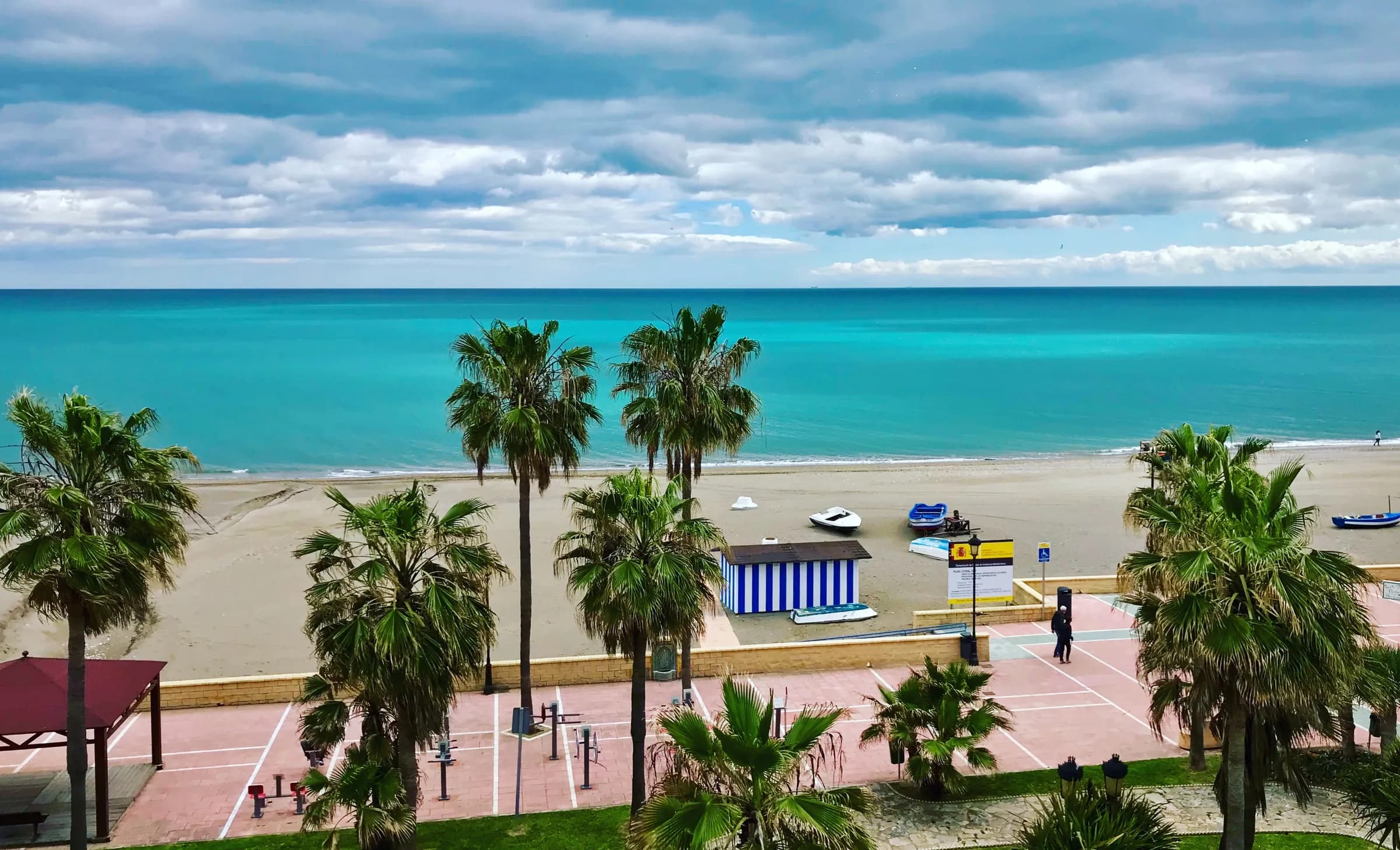
Stay Right on the Beach
The sand is 30 seconds from the door, and the balcony looks straight out at it. Book direct and save up to 20%.
- 3 Bedrooms
- 6 Guests
- 96 m²
Frequently Asked Questions
Related Articles
Feria de Manilva 2026: The Town's Own August Fair
Feria de Manilva 2026 runs 4-9 August: rides, casetas, flamenco and a float parade through Sabinillas. Dates, programme and tips from locals.

Winter Sun on the Costa del Sol: A Long-Stay Guide
Winter sun on the Costa del Sol: a long-stay guide to weather, costs, what's open in Sabinillas, and daily life here from November to March.
San Juan in Spain: Beach Bonfires & Midnight Swims
San Juan in Spain is the night the Costa del Sol lights up: beach bonfires, a midnight swim and burning wishes on 23 June. How to do it right in Sabinillas.
The Local's Costa del Sol, Monthly
One email a month: what's on in Sabinillas, the best local finds, and first pick of apartment dates. Free welcome gift: our Sabinillas Insider Guide.
We respect your privacy. Unsubscribe at any time.
Comments
No comments yetHave a tip, a question or a correction? Every comment is read and approved by hand before it appears, usually within a day.
No comments yet. Be the first to share a tip or ask a question.