Ask a Spanish child when the presents arrive and the answer is not 25 December. It is the morning of 6 January, Día de Reyes, after the Three Kings have ridden through town the evening before on floats, thrown a small mountain of sweets at everyone under the age of ten, and made their deliveries overnight. The cabalgata de Reyes on 5 January is the biggest street event of the Spanish winter, every town has one, and if you are on the coast for New Year you should stay for it. This is how it works here, from our own street in Sabinillas to Estepona's big one and Málaga's, and what happens on the 6th when the whole country shuts.
What Three Kings Day is
The feast of the Epiphany, 6 January, marks the Magi reaching Bethlehem with gold, frankincense and myrrh. Spain kept the Epiphany as its gift day long after most of Europe moved presents to Christmas, so Melchor, Gaspar and Baltasar are the gift-bringers, and Father Christmas is a recent, imported extra that many families now add rather than replace.
The build-up runs through December. Children write letters to the Kings and hand them to a cartero real, a royal postman who sets up in the town square in the days before the parade; Estepona's does. Behaviour is negotiated against the threat of carbón dulce, sweet black rock candy "coal" that badly behaved children supposedly receive, and which every child ends up eating anyway. On the night of 5 January shoes go out by the door, one per family member, with a glass of something for the Kings and water or bread for the camels. In the morning the shoes have presents beside them.
The cabalgata: what happens on the evening of 5 January
A procession of floats, usually one per King plus a handful more, rolls slowly through the main streets with bands, dancers and costumed pages. The Kings and their helpers throw caramelos, boiled sweets, by the handful into the crowd, and the crowd catches them. The quantities are serious: Estepona announced 16,000 kilos for its 2026 parade. Locals bring a bag, and the veterans bring an umbrella and hold it open upside down as a net. Children ride on shoulders, and the whole town turns out, three and four deep on the pavements.
Timing is the one variable. Most towns start between 17:00 and 19:00, so the parade runs into the dark and the floats are lit. The route and the start time are announced by each ayuntamiento in mid-December; the pattern rarely changes from year to year, but check the week before you go.
Sabinillas and Manilva: the parade that passes our door
Manilva is one municipality with three villages, and its cabalgata covers all of them in a single afternoon. In 2026 it set off from the Castillo de la Duquesa at 16:00, reached San Luis de Sabinillas at 17:00 and finished in Manilva village from 18:30. The Sabinillas leg runs from Calle José Cadalso along Calle Duquesa de Arcos, the apartment's own street, then Aurora de Albornoz and Avenida Andalucía to the Edificio de Usos Múltiples on Calle Miguel Delibes. You can watch it from the balcony, or from the pavement below with a bag. It is the small, friendly version of the event: local families, the school bands, children who know the King on the float because he is someone's uncle.
Manilva publishes the route and times on RTV Manilva in the first days of January; the 2026 pattern above is the one to expect for 2027 until it does. Because Sabinillas and Estepona both run at about 17:00, you choose one. Our advice: Sabinillas with small children, Estepona for the spectacle, Málaga only if you want the biggest of all.
Estepona's Gran Cabalgata
Estepona's is the big parade on this stretch of coast. In 2026 it left the Ayuntamiento at 17:00, ran along Avenida Juan Carlos I, Avenida Andalucía, Avenida España and Calle Terraza, and ended at the Parque Botánico Orquidario at around 20:00, with 12 floats, five walking groups, costumed characters, bands and the 16,000 kilos of sweets. The days beforehand bring the royal postman to the centre and a full programme of Christmas events, which the ayuntamiento publishes as one document in December.
Practical notes from experience: park on the edge of the centre and walk in, because the route streets close from mid-afternoon; pick a spot on Avenida España or Calle Terraza for the best light and the most sweets; and go early enough to see the floats set off, then walk ahead of them towards the Orquidario for a second pass. Our Estepona old town guide has the parking and the streets.
Málaga's parade
Málaga's cabalgata is the province's grandest, leaving the Ayuntamiento at 18:00 on 5 January and looping the centre while the Christmas lights on Calle Larios are still on. Grandstand seats along the route are sold each year, and the free pavements fill early. It is a full evening: leave the coast by 15:00, park as our Málaga Christmas lights guide suggests, and expect to be home after midnight. It is the better choice if you want spectacle over intimacy; Estepona is the better choice with small children.
Roscón de Reyes
Breakfast on 6 January is roscón de Reyes, a ring of sweet brioche scented with orange-flower water, topped with candied fruit and sugar, and often filled with cream or chocolate. Baked inside are a small figurine and a dried bean, the haba. Find the figurine and you are king or queen for the day and wear the paper crown that comes with the cake; find the bean and you pay for next year's roscón. Every bakery and supermarket on the coast sells them from late December; the bakery versions are better and worth ordering the day before, and the small ones feed four.
The 6th: everything shuts
Día de Reyes is a national public holiday. Shops, supermarkets, banks and offices close, most restaurants either close or serve one long family lunch, and the roads are empty until the evening. Pharmacies work the guardia rota and petrol stations stay open. It is a day to be at home with the presents, or, if you are a visitor without presents, to walk an empty beach and eat the roscón on the balcony. On 7 January everything reopens, the rebajas, the January sales, traditionally begin, and the Christmas lights come down.
For the wider season, this is the last act: El Gordo on 22 December, Nochevieja and the twelve grapes on the 31st, then Reyes. Our guide to opening hours and public holidays has the full calendar.
Planning a Reyes stay
The week from New Year to Reyes is quiet on the coast, sunny more often than not, and the one part of the Christmas season where the apartment is easy to book. Winter here means air conditioning in every room that doubles as heating, a balcony that catches the low sun, and the parade route a short walk away. Our winter sun guide covers what January is like, and Costa del Sol weather in January has the month's figures; check dates for the first week of January if you want to be here for the sweets.
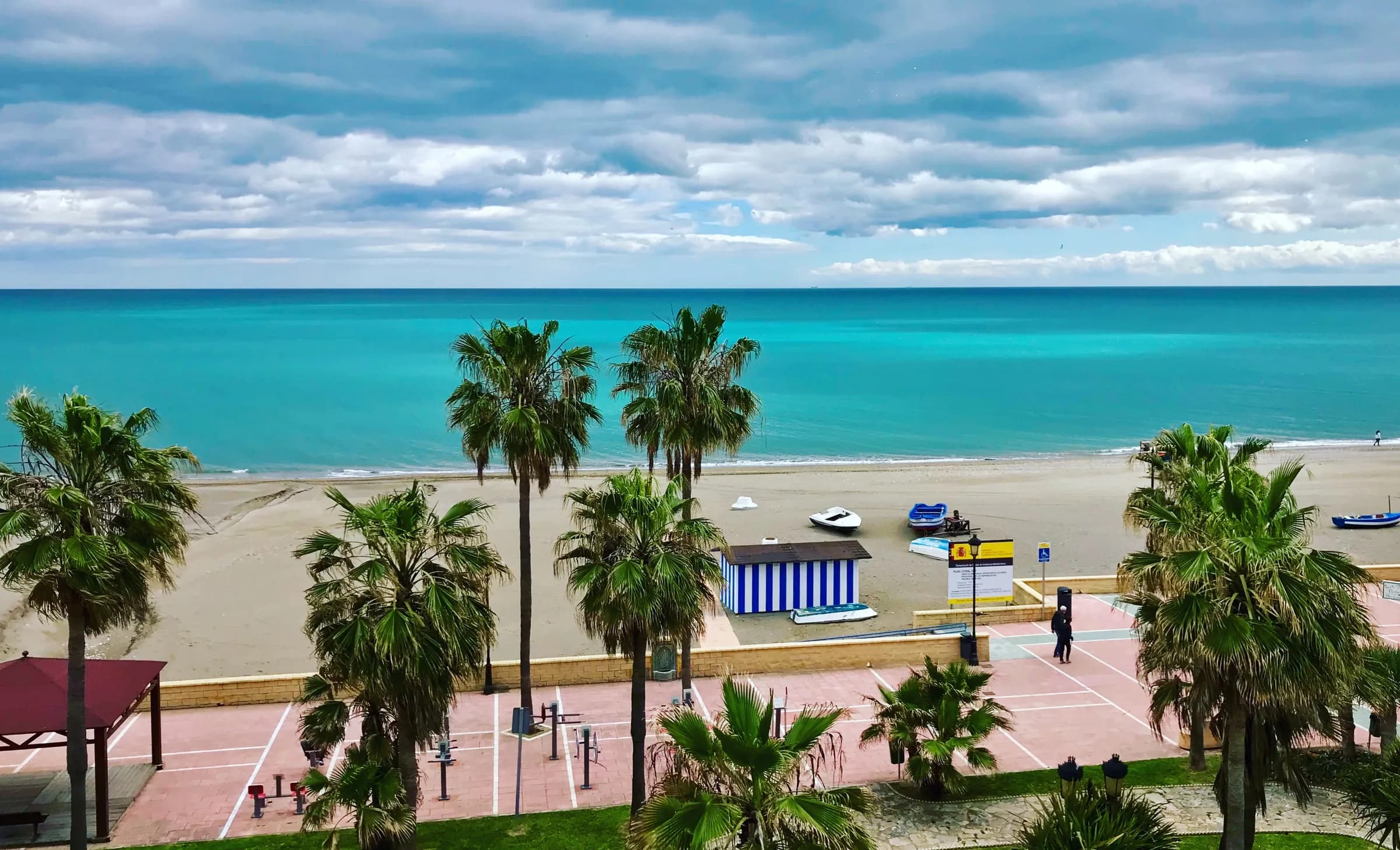
Stay Right on the Beach
The sand is 30 seconds from the door, and the balcony looks straight out at it. Book direct and save up to 20%.
- 3 Bedrooms
- 6 Guests
- 96 m²
Frequently Asked Questions
Related Articles
Twelve Grapes at Midnight: New Year's Eve on the Costa del Sol
What Spain does at midnight on 31 December: the twelve grapes, the cena de Nochevieja, and where to celebrate on the western Costa del Sol.
What's Open When in Spain: Siesta, Sundays and Puentes
Shop hours, the midday close, Sunday trading rules and Andalucía's public holidays for 2026 and 2027, written for anyone self-catering on the coast.
Málaga Christmas Lights 2026: Dates, Times & the Day Trip
Málaga's Christmas lights 2026: switch-on expected Friday 27 November on Calle Larios, the free light show times, the markets and an evening from the coast.
The Local's Costa del Sol, Monthly
One email a month: what's on in Sabinillas, the best local finds, and first pick of apartment dates. Free welcome gift: our Sabinillas Insider Guide.
We respect your privacy. Unsubscribe at any time.
Comments
No comments yetHave a tip, a question or a correction? Every comment is read and approved by hand before it appears, usually within a day.
No comments yet. Be the first to share a tip or ask a question.