The first thing that catches people out here is not the language. It is the clock. You walk into town at half past two on a Wednesday to buy a phone charger and a beach towel, and the whole street has its shutters down. Or you plan the big supermarket shop for Sunday morning, the way you would at home, and find the car park empty and the doors locked. Neither is bad luck. Spain runs on a different daily and weekly rhythm, and it is written down in law rather than left to habit.
This guide is the version we give guests: when things open, why Sundays behave the way they do, what a puente is, and the specific dates that matter for the rest of 2026 and through 2027.
The Spanish Day: What Time Shops Open and Close
The pattern for independent shops across Andalucía is a morning block and an evening block, with the afternoon off. The regional tourist board publishes the hours itself: shops 10:00 to 14:00, then 17:00 to 20:00 or 21:00. Department stores and large retailers run 10:00 to 21:00 or 22:00 without a break.
Meals sit inside that same rhythm. Breakfast runs from about 08:00 to 10:30, lunch from 13:00 to 15:30, and dinner from 20:30 to 23:00. A kitchen that looks closed at seven in the evening is not closed, it is simply not open yet, and the terrace filling up at ten o'clock is normal rather than late. Our guide to eating in Sabinillas goes into which places keep which hours locally.
Three things do not follow the pattern, and they are the ones that save your afternoon:
- Big supermarkets trade straight through. Mercadona and Lidl in Manilva open in the morning and stay open into the evening with no midday gap.
- Bars and cafeterías mostly serve continuously, so coffee and a tapa are available when the shops are shut.
- Petrol stations, bakeries and small convenience shops are legally free to set their own hours and generally do.
The practical version: run small-shop errands before 14:00, treat 14:00 to 17:00 as beach or balcony time, and save the supermarket for the afternoon. That is not a compromise, it is how the day is designed.
Sundays: The Same Town, Two Different Rulebooks
Sunday rules are where most advice about Spain goes wrong, because they change with the season.
Spain's national law on trading hours sets a floor: regions must allow shops at least 90 hours of weekday trading and at least 16 Sundays or public holidays a year, and may never go below ten. Andalucía sets exactly 16, the minimum. On every other Sunday, a shop bigger than 300 m² that belongs to a chain must close.
Small shops escape this. An independent premises under 300 m² that is not part of a large distribution group can open any day it likes, as can convenience stores up to 500 m², bakeries, pastry shops, newsagents, florists, petrol stations, and shops inside museums, stations and hotels.
Then there is the seasonal exception, and this is the one worth understanding before you plan a shopping day. Andalucía can declare a municipality a Zona de Gran Afluencia Turística, which suspends the restrictions entirely. Manilva holds that declaration for its whole municipal area, and so do Estepona, Marbella, Málaga, Mijas, Fuengirola, Benalmádena, Nerja and Torremolinos.
The catch is the calendar. Every one of those declarations covers Semana Santa and 1 June to 30 September only. Not one municipality in Málaga province has a year-round declaration. From 1 October the free-for-all lapses across the entire coast and the standard rules return until the following June, with a single exception: Torremolinos regains free opening from 21 December to 7 January.
So a Sunday supermarket run that worked perfectly in August will not work in October, in the same town, at the same shop. If you find Sunday hours listed online, check when that listing was written.
Being allowed to open is also not the same as opening. In summer 2026 Mercadona ran Sunday and holiday mornings in thirteen Málaga municipalities including Manilva, but only from late June to the end of August, a shorter window than the law permits. The chains decide store by store, so the only reliable answer for a specific shop on a specific Sunday is that shop's own door.
The 16 Days: When Large Shops May Open
These are the authorised Sunday and public-holiday trading dates for Andalucía. Municipalities may swap up to two of them; for 2026 only Algeciras, Huelva, Dos Hermanas and Sevilla did, so the list below applies as written in Manilva, Estepona, Casares and Marbella.
| 2026 | 2027 |
|---|---|
| 4 Jan, 11 Jan | 3 Jan, 10 Jan |
| 28 Feb, 2 Apr | 1 Mar, 25 Mar |
| 3 May, 5 Jul | 2 May, 4 Jul |
| 26 Jul, 2 Aug, 15 Aug | 1 Aug, 8 Aug, 16 Aug |
| 12 Oct, 2 Nov | 1 Nov, 28 Nov |
| 29 Nov, 7 Dec | 6 Dec, 8 Dec |
| 13 Dec, 20 Dec, 27 Dec | 12 Dec, 19 Dec, 26 Dec |
Two details in that table are worth pulling out.
All three of autumn 2026's Monday holidays are authorised trading days. 12 October, 2 November and 7 December are on the list, so the big shops may open even though it is a public holiday. Many will, on reduced hours.
Tuesday 8 December 2026 is not on the list. It is a national holiday and it is not an authorised opening date, so large shops must close, one day after being allowed to open. In 2027 the same pair behaves differently: both 6 and 8 December are authorised. The list is remade every year and there is no rule of thumb that survives it.
Autumn 2026: One Monday Holiday a Month
Andalucía's holidays for 2026 come from Decreto 101/2025, published in BOJA 93 on 19 May 2025. Autumn gets an unusually good run of them, because two national holidays fell on a Sunday and Andalucía moved both to the following Monday.
| Date | Day | Holiday |
|---|---|---|
| 12 October | Monday | Fiesta Nacional de España |
| 2 November | Monday | Todos los Santos, moved from Sunday 1 November |
| 7 December | Monday | Día de la Constitución, moved from Sunday 6 December |
| 8 December | Tuesday | Inmaculada Concepción |
One Monday holiday in each of October, November and December, and then a Sunday-to-Tuesday block in December that Spanish papers rate as the best long weekend before Christmas. We have a separate guide to the December puente on the Costa del Sol, with what is open and what to do. What that means on the ground: busier roads and restaurants, full car parks at the popular day-trip sites, banks and offices shut, and independent shops closed while the supermarkets trade on reduced hours. If you are here for those dates, our day trips overview is worth reading in reverse, as a list of where not to go on the Monday.
For 1 and 2 November specifically, the holiday has its own character and its own food, and we cover that separately in our guide to Todos los Santos on the Costa del Sol.
What a Puente Is, and Why It Matters More Than the Holiday
A puente is the bridge day. When a public holiday lands on a Tuesday, the Monday in between becomes the obvious day to take off, and much of working Spain does. The holiday itself is one day; the puente turns it into four.
For a visitor this matters more than the holiday, because the effect is on crowds rather than closures. Ronda, the Caminito del Rey, Málaga's centre and the white villages all fill up. Restaurants want bookings. The AP-7 slows down. If you are already on the coast, a puente is the week to stay local, use the beach, and let everyone else queue.
Manilva's Two Local Holidays
On top of the twelve regional and national days, every Spanish municipality picks two local holidays, and these are the ones a guest is most likely to walk into without warning, because they appear on no national calendar.
For 2026, Manilva's are Friday 17 July and Monday 7 September.
Worth being clear about what is not on that list: the Feria de San Luis in late August and the Fiesta de la Luna Llena are genuine, excellent local fiestas, but neither is a formal public holiday. Shops keep normal hours; the town simply stays up much later. Our guides to the Feria de Manilva and the Full Moon Festival cover those properly. Manilva's 2027 local days are chosen by the town hall after the regional decree, so ask us nearer the time rather than assuming they repeat.
What Stays Open Regardless
On a normal Sunday or an unauthorised public holiday, this is what you can still count on in and around Sabinillas:
- Bakeries and pastry shops, generally in the morning
- Bars, cafés and restaurants, which are not covered by the shop rules at all
- Petrol stations, including their small shops in practice
- Small independent grocers and convenience stores
- Newsagents and florists
- Pharmacies, though on a different system. They are not covered by the shop rules at all; Andalusian pharmacies work to a health-service decree that sets a minimum forty hours a week plus a farmacia de guardia rota, with night duty running 22:00 to 09:30. Manilva's four pharmacies, two in Sabinillas, one in Puerto de la Duquesa and one in Manilva village, take the duty a week at a time. Whichever is on has the rota posted on the door, and so do the others.
The Weekly Rhythm: Markets and Fish
Two more patterns shape a self-catering week here.
The markets are fixed: the big Sunday rastro at the fairground and a smaller Friday market on the promenade, both roughly 09:00 to 14:00. Full detail in our Sabinillas Sunday market guide. Neither has fish stalls.
Fish follows the fleet rather than the shops, and the mechanism is more interesting than the folklore. The Junta publishes auction times for every lonja in Málaga province, and every one of them runs Monday to Friday only. There is no weekend auction anywhere in the province, and Friday has no evening session. So a fish counter on Monday morning is largely selling Friday's catch or imported stock, and Spanish-landed fish builds through the week, with Wednesday the reliable day.
What you will read elsewhere, that fishmongers close on Mondays, is not a rule and Spanish fishmongers themselves push back on it. It is also softer here than inland: Estepona's lonja auctions its small-boat and trawl catch at 17:30, Monday included, and we are fifteen minutes away. Monday afternoon is a different proposition from Monday morning. Our fish markets guide has the regional picture.
One more weekly habit worth knowing: a lot of Spanish restaurants take Monday as their día de descanso, partly for the same supply reason. It is a custom rather than a rule, it varies from place to place, and plenty of coastal kitchens now open seven days in season, so check the specific restaurant rather than writing Monday off.
Seasonal closures are a separate question from weekly ones. Some beach chiringuitos shut from November to spring while the town's own restaurants carry on; we cover that in the winter guide.
Planning Around It
None of this is an obstacle once you know it. It mostly rewards doing less: shop in the morning, eat late, keep the middle of the afternoon for the sea, and treat a puente Monday as a reason to stay in town rather than drive anywhere.
Having a kitchen makes the whole rhythm easier, which is the quiet advantage of staying in an apartment rather than a hotel room. Buy fish on a Wednesday, do the market on Sunday morning, and the one afternoon everything is shut becomes the afternoon you were going to spend on the balcony anyway.
Stay Right on the Beach
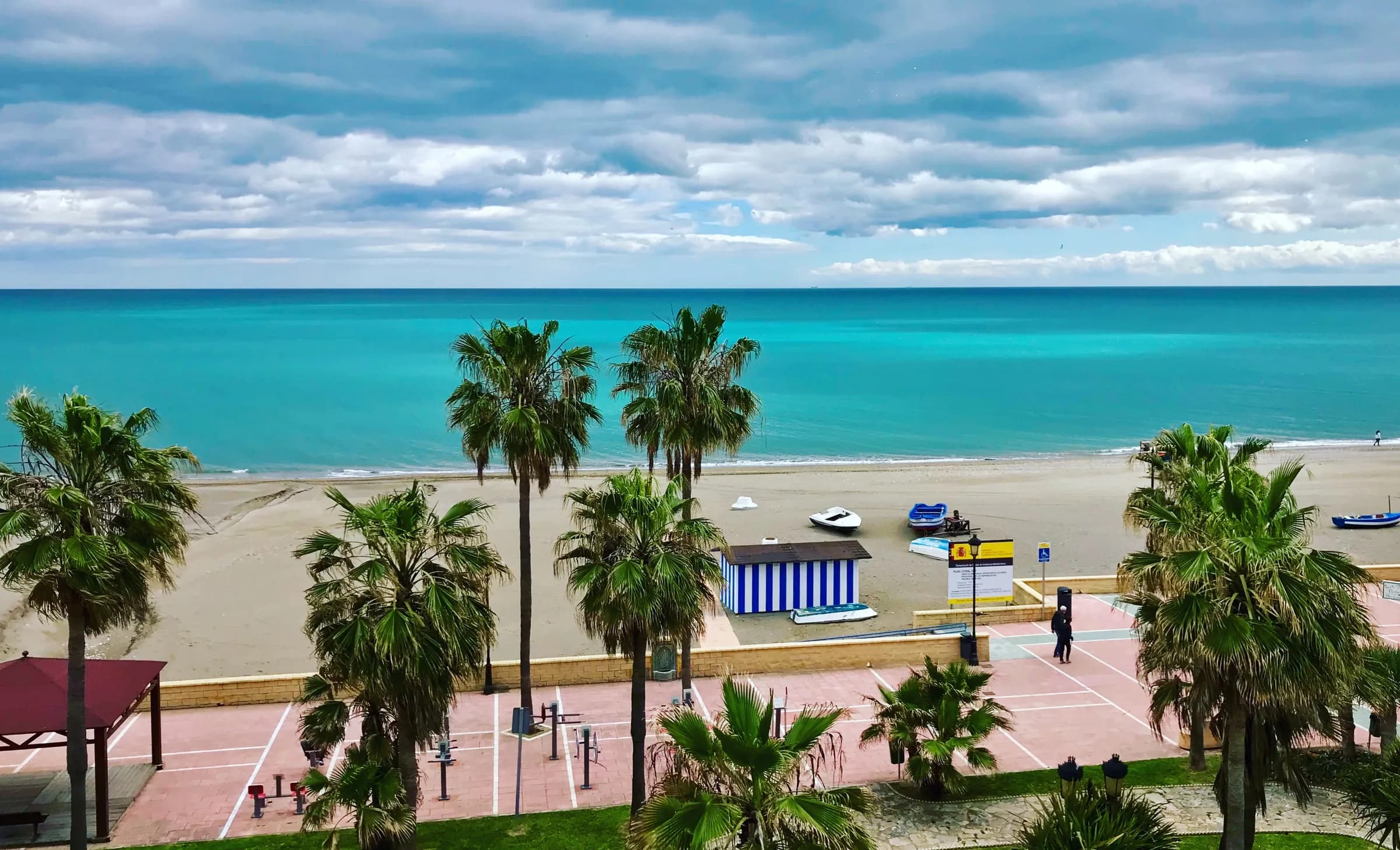
The sand is 30 seconds from the door, and the balcony looks straight out at it. Book direct and save up to 20%.
- 3 Bedrooms
- 6 Guests
- 96 m²
Frequently Asked Questions
Related Articles
Winter Sun on the Costa del Sol: A Long-Stay Guide
Winter sun on the Costa del Sol: a long-stay guide to weather, costs, what's open in Sabinillas, and daily life here from November to March.
Sabinillas Sunday Market: What to Buy & When to Go
The Sunday market in Sabinillas (the Rastro) is the western Costa del Sol's best Sunday-morning rummage: what to buy, when to go and how to get there.

Restaurants in Sabinillas: Where Locals Eat
A local guide to restaurants in Sabinillas and Manilva: the best chiringuitos, tapas bars and seafood spots, with prices and walking distances.
The Local's Costa del Sol, Monthly
One email a month: what's on in Sabinillas, the best local finds, and first pick of apartment dates. Free welcome gift: our Sabinillas Insider Guide.
We respect your privacy. Unsubscribe at any time.
Comments
No comments yetHave a tip, a question or a correction? Every comment is read and approved by hand before it appears, usually within a day.
No comments yet. Be the first to share a tip or ask a question.