The Town at the End of the Line
Every border produces a border town, and Gibraltar produced La Línea de la Concepción. It sits on the sandy isthmus that joins the Rock to Spain, about 35 km west of Sabinillas, and for 118 years its southern edge was a fence: la Verja, put up in 1908, sealed shut by Franco for a generation, and finally removed on 15 July 2026 under the new UK-EU treaty. Where it stood there is now an open crossing zone roughly 180 metres wide, with different-coloured tarmac marking where British territory begins. The treaty, the documents you should still carry and the whole history of the closure are covered in our Gibraltar border crossing guide, so we will not repeat them here.
This article is about the town itself, which the roughly 15,000 people who cross the frontier every day mostly never stop to look at. La Línea is not pretty in the way Casares is pretty, and nobody will sell you a postcard of it. What it has is the strangest setting of any town on this coast: the Rock filling the end of its streets like a stage set, a beach that looks straight at Gibraltar, a fishing quarter older than the town, and, since July, a place learning to live without the line that named it.
A Town Younger Than Its Own Fishing Quarter
La Línea only became a town in 1870, when it separated from San Roque; it was granted city status in 1913 and today has around 64,000 people. The name records why it exists. After losing Gibraltar in 1704, Spain built the Línea de Contravalación in the 1720s: a fortified line across the isthmus between the forts of Santa Bárbara and San Felipe, raised on the orders of Felipe V to seal the British in. The line was demolished in 1810, during the war against Napoleon, but the settlement that had grown along it stayed, and when it finally got a name of its own it took the line and the Inmaculada Concepción, patroness of the Spanish infantry, together.
The odd result is that the town is younger than parts of itself. La Atunara, the fishing quarter on the eastern shore, takes its name from the old tuna fishery and was landing catches centuries before La Línea existed on paper. It still lands them.
Living Against la Verja
For most of its history, La Línea's economy was Gibraltar. The town supplied the Rock with fresh produce from its market gardens and with labour, thousands of workers walking through the gates each morning to the dockyard. When Franco locked the frontier shut in 1969, that livelihood ended overnight: around 4,800 Spanish workers lost their jobs, families were split, and the town spent thirteen years pressed against a closed gate until the border reopened in the 1980s. It never fully recovered, and the decades since gave it a hard reputation built on smuggling, tobacco across the fence in one era, faster boats in another.
That reputation is why "is La Línea safe" is one of the most-searched questions about the town, so here is a straight answer. La Línea is an ordinary working Andalusian town with real economic problems, and the problems live in the port economics, not in the streets a visitor walks. The centre, the paseo marítimo, the beaches and the border zone are as unremarkable, in the safety sense, as any Spanish town of this size: take the same care with your bag and your parked car that you would in Málaga, and you will be fine. What you will notice instead is a town where every third conversation happens in two languages, and where the end of the fence was received less as news than as a long-overdue correction.
Two Hours in the Centre
The centre is compact and flat, and two hours covers it. Start at the Plaza de la Iglesia, where the Santuario de la Inmaculada has stood since 1879, a small colonial-style church with a bell tower; La Línea was too young to inherit a baroque monastery from anyone.
Two small museums reward the curious. The Museo Cruz Herrera shows the work of José Cruz Herrera, the town's best-known painter, born here in 1890, who made his career painting Andalusian and Moroccan life and died in Casablanca in 1972; the museum has held his work since 1975, and his warm, dark-eyed portraits are better than a town this size has any right to keep. A few streets away, the Istmo-Comandancia building, built in 1863-65 for the officers of the military garrison with stone from the old Santa Bárbara fort, now houses the municipal archive and exhibition rooms.
One practical note for 2026: the Mercado de la Concepción, the historic market hall at the heart of the centre, is closed for refurbishment, with the traders at a temporary site and reopening expected around early 2027; do not build a morning around it yet. And if you are driving in from the north on the A-383, the Mirador El Higuerón, on the high ground about 10 km outside town, is the classic photo stop: the whole isthmus laid out below, the Rock behind it, and Africa across the water on a clear day.
Playa de Poniente: Swimming with the Rock Behind
La Línea has around 14 km of coastline, which surprises everyone, and the town beaches hold Blue Flags most years. The one to know is Playa de Poniente, on the western side of the isthmus facing the Bay of Gibraltar: about 800 metres of sand with the north face of the Rock filling the southern view, calmer bay water, and sunsets behind Algeciras across the bay. Swimming with a 400-metre limestone cliff as your backdrop is a pleasure no other beach on this coast offers.
The eastern side belongs to the locals: Playa de Santa Bárbara near the old fort, Playa de Levante, and then La Atunara running north, wider, wilder and backed by the fishing quarter. This is where to eat. The bars and restaurants along the paseo marítimo and in La Atunara cook what the boats bring in: grilled clams, cuttlefish, fried fish and sardine espetos (sardines grilled on cane skewers), at prices a Marbella beach club would not recognise. Lunch here before walking across the border, rather than after it at Gibraltar prices, is the move that separates people who know this coast from people who do not.
Parking in La Línea for Gibraltar
For most visitors, La Línea's most useful service is still its car parks. Park in the lots around Avenida Príncipe de Asturias, right by the frontier: municipal and private car parks there typically charge around €7-8 for a full day, a five-minute walk from the crossing. Blue zone street parking is cheaper by the hour, but finding a space is luck. From the car parks you walk through the open crossing zone in a few minutes, then straight across the live airport runway, which remains the best free attraction in either country.
Since the fence came down there is no routine passport booth, but carry your passport or ID card anyway; spot checks remain possible while the new arrangements bed in. Mid-morning on a weekday avoids the commuter surges around 08:00-09:00 and 17:00-18:00. Everything on the far side, the Rock, the macaques, the tour logistics and a realistic day plan, is in our Gibraltar day trip guide.
July: la Velada
If your stay overlaps mid-to-late July, La Línea's Velada y Fiestas is the town with its guard fully down: ten days of fairground, horses, concerts and fireworks, running 17 to 26 July in 2026. Locals call it la Salvaora, and unlike most ferias on this coast it does not descend from a livestock fair; it celebrates the town's own founding, which for a place this young is the point. It is a proper local feria, almost no tourists, and it pairs well with the Virgen del Carmen processions happening the same month along the whole coast, including in La Atunara, where the fishermen carry their Virgin to the sea.
Getting There, and Making a Day of It
From Sabinillas the run is simple: west on the AP-7 towards Algeciras, La Línea exit, about 35 km and 30 minutes door to frontier. Without a car, Avanza's coastal buses connect through Estepona to La Línea's bus station, about a ten-minute walk from the crossing, though the journey stretches to well over an hour each way. Our day trips overview sets out how it compares with the other outings within reach.
The shape of a good day: arrive mid-morning, coffee and a look at the centre, Playa de Poniente for the view or the Cruz Herrera for the paintings, a long fish lunch in La Atunara, then walk across the border for the afternoon on the Rock. You will have seen both sides of a frontier that spent three centuries as one of Europe's sorest points, in the first year it stopped being one. Then drive the half hour back to our beachfront apartment in Sabinillas, where the border is close enough to visit and far enough to forget, and the only line that matters is the one where the sand meets the sea, 30 seconds from the door.
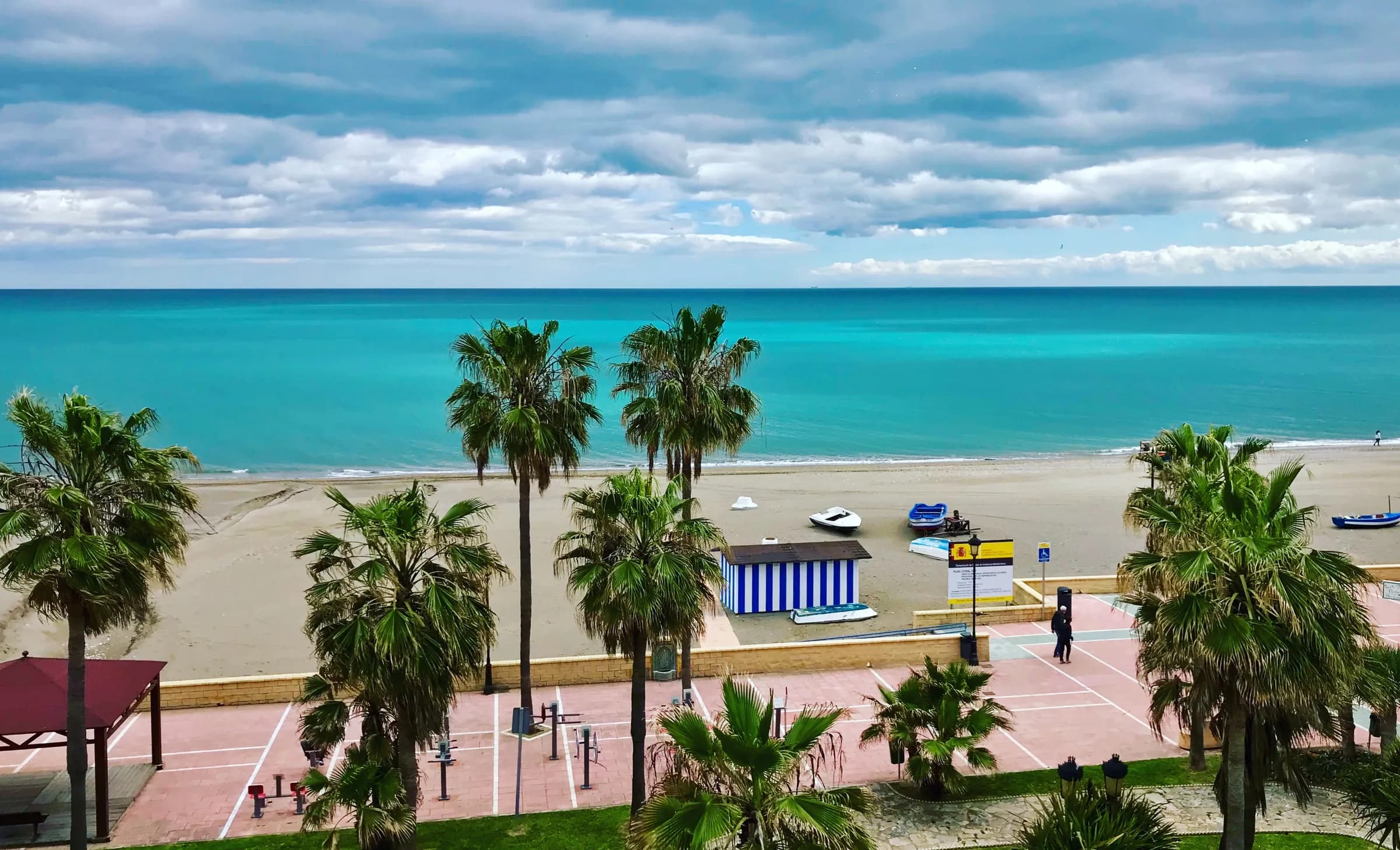
Stay Right on the Beach
The sand is 30 seconds from the door, and the balcony looks straight out at it. Book direct and save up to 20%.
- 3 Bedrooms
- 6 Guests
- 96 m²
Frequently Asked Questions
Related Articles

Gibraltar Apes in 2026: Getting Up the Rock & What It Costs
How to see the Gibraltar apes in 2026, with the cable car closed until 2027. Shuttle, taxi tour or walking up, tickets, prices and the rules.

Gibraltar Border Crossing 2026: Queues, Passports, Treaty
Routine Gibraltar border checks ended on 15 July 2026 and the fence came down after 118 years. Queue times, documents and the treaty, in plain English.
Day Trips from Sabinillas & the Western Costa del Sol
Best day trips from Sabinillas and the western Costa del Sol: Ronda, Gibraltar, Caminito del Rey, white villages and Tangier, with drive times and costs.
The Local's Costa del Sol, Monthly
One email a month: what's on in Sabinillas, the best local finds, and first pick of apartment dates. Free welcome gift: our Sabinillas Insider Guide.
We respect your privacy. Unsubscribe at any time.
Comments
No comments yetHave a tip, a question or a correction? Every comment is read and approved by hand before it appears, usually within a day.
No comments yet. Be the first to share a tip or ask a question.