Tarifa is where the south of Spain stops behaving like a holiday brochure. This is the southernmost point of mainland Europe, the seam where the Atlantic pours into the Mediterranean, and the windiest town in the country. On a clear morning you can see the mountains of Morocco across the water. The wind is not weather here. It's the whole point.
For kitesurfers, Tarifa is close to mythical, one of the most reliable wind destinations on the planet, with a coastline of beaches that draw riders from across Europe all summer. But it's more than a board-sports town. There's a 10th-century Moorish castle, a tangle of whitewashed streets, some of the best whale watching in Europe, and food built around tuna pulled straight out of the Strait.
From our beachfront apartment in Sabinillas, it's about an hour's drive. That makes it one of the best day trips on the western Costa del Sol, whether you want to learn to fly a kite or just stand on a dune and feel the place hum.
Why Tarifa Is Worth the Drive
Tarifa is not a resort. There are no high-rise hotels lining the front, no manicured marina selling the same five things. It's a working fishing port that happens to have become a magnet for kitesurfers, climbers, yoga teachers and people who quietly never went home. The pace is slower and scruffier than Marbella, and far more interesting for it.
The reason it works as a wind destination comes down to geography. The Strait of Gibraltar funnels air between two land masses, and two winds dominate. The levante blows hot from the east, off the Mediterranean, usually 20-40 knots in summer, sometimes more, kicking up a rough, choppy sea. The poniente comes cooler off the Atlantic from the west, gentler, rarely topping 50 km/h, and it's the wind most schools pray for when they've got beginners booked.
Get the timing right and you've got world-class conditions an hour from your front door. Get it wrong and you've still got a glorious old town, big skies and a beach you'll remember. Either way, it's a good day.
Getting to Tarifa from Sabinillas
Driving is the obvious choice: roughly 65 km, about an hour. Crucially, the whole route is on the free A-7, not the toll AP-7, so there's nothing to pay.
Head southwest out of Sabinillas, the opposite direction to Estepona. You'll pass Torreguadiaro and San Roque, swing around Algeciras, then climb onto the N-340 as the Strait suddenly opens up ahead of you. It's one of the great reveal moments of a Costa del Sol drive. Within 10 km of town, follow signs for "Centro" for the old town, or carry on for the beaches.
Public transport is possible but fiddly. There's no direct line from Sabinillas. You'd take a bus to Algeciras (the regional operator is Avanza), then change to a Comes bus for the final leg to Tarifa. It works in a pinch, but it ties you to a timetable and leaves you stuck in town: useless if you want to chase wind between Los Lances and Valdevaqueros. A car wins comfortably.
| Detail | Info |
|---|---|
| Distance from Sabinillas | ~65 km (about 1 hour by car) |
| Route | A-7 southwest via San Roque/Algeciras → N-340 to Tarifa (no toll) |
| Parking | Paid car parks in the centre; beach parking near Los Lances and Valdevaqueros |
| Petrol cost | Roughly €16-18 round trip (fuel runs around €1.60-2.00/litre) |
| Recommended duration | Full day (8-10 hours) or overnight |
| Best for kitesurfing | May-September for wind; May/June/late Sept best for learning |
A practical note up front: car break-ins do happen at the beach car parks here, especially in summer. Take everything of value with you and leave nothing on the seats.
Tarifa Kitesurfing: What to Expect
This is the part most people come for, so here's what to expect rather than just the sales pitch.
Tarifa earns its reputation. The wind blows more than 300 days a year, the beaches are long and forgiving, and there's a dense cluster of established schools who do this all day, every day. If you want to learn to kitesurf in Europe, there are few better places. But the same wind that makes it world-class also makes it humbling, and matching your level to the conditions is everything.
Is it good for beginners?
It can be excellent, on the right day. The shallow, sandy shelf at Los Lances lets you stand up and reset, which is exactly what you want when you're learning. The problem is intensity. When a proper levante is howling at 30-plus knots, schools will cancel beginner lessons outright, because trying to learn in that is miserable and unsafe. Your best bet as a first-timer is a lighter poniente day, or the shoulder months of May and late September when the wind is friendlier and the beaches are quieter.
Book with date flexibility and let the school steer you to the conditions, not the other way round. A good instructor turning you away on a wild day is doing their job.
What lessons cost and how schools work
A beginner taster session of two to three hours typically runs €90-140. A full beginner course (usually around 9-12 hours spread over three days) tends to land in the €330-450 region, after which most people can ride and self-rescue in steady conditions. Semi-private and private lessons cost more than groups but get you up faster. Equipment, harness and wetsuit are normally included; confirm that when you book.
Tarifa has dozens of schools and they cluster on the kitesurfing beaches. A few long-established names to look at:
- Dragon Tarifa: a big, well-known operation running courses and week-long lesson-and-stay packages.
- Addict Kite School: known for small groups and semi-private coaching.
- Freeride Tarifa and ION CLUB Tarifa (at Valdevaqueros) are other reputable, long-running options.
There are many more, and prices and packages shift constantly: treat the figures above as a guide and check directly before you commit. If you already ride, every school rents gear by the hour or day.
A first-timer's checklist
Before your lesson: Wear or bring a rash vest. The Atlantic side is cooler than the Mediterranean you're used to at Sabinillas: water sits around 20°C in summer and drops sharply on windy upwelling days. Most schools provide a wetsuit, but your own is comfier. Arrive early, drink water (the levante dehydrates you fast), and accept that you'll swallow some sea. Everyone does on day one.
Tarifa takes water safety seriously. If a school says conditions are unsuitable, that's the end of the conversation: it's protection, not red tape, and on a strong day the beaches themselves can be closed to learners.
The Beaches: Three Very Different Days Out
Tarifa's coastline isn't one beach but a string of them, each with its own character. If you're chasing wind, you'll likely move between them depending on the forecast.
Playa de Los Lances
The main kitesurfing and windsurfing beach, about 4 km north of the old town. Long, wide, sandy and shallow, with reliable wind and plenty of room: this is where the schools concentrate and where, on a good day, the sky fills with kites. Even if you never plan to ride, Los Lances is worth an hour just for the spectacle. Bring a coffee and watch a few hundred people play with the wind.
Playa de Valdevaqueros
About 10 km west of town, regularly named among Spain's best beaches. It's a touch more sheltered than Los Lances but still a serious wind-sports spot, with a more relaxed feel and quieter corners away from the main launch zone. The ION CLUB centre here offers gear and lessons. If you want the kitesurfing scene without the full crowd, this is the one.
Playa de Bolonia
The beauty of the bunch, a crescent of golden sand backed by a vast dune and pine woods, about 20 minutes' drive west. There's a small windsurf school, but the real draw is the setting and the Roman ruins next door (more below). It's calmer and more contemplative than the kite beaches; come here when you want to slow down rather than rig up.
The dune behind Bolonia is genuinely huge, a wall of pale sand you can climb for a sweeping view back over the bay. It's a steep, calf-burning trudge to the top, and worth every step.
The Old Town: History Behind the Hype
You can walk Tarifa's historic centre in 15 minutes, but those 15 minutes are packed.
The Castillo de Tarifa (the Castle of Guzmán el Bueno) dominates the front. Founded as a Moorish fortress in the 10th century, it's a low, thick-walled stronghold with towers and ramparts looking straight across the Strait to Africa. It's not the biggest castle in Andalucía, but the views earn it half an hour. Opening hours change with the season and it's usually shut early in the week, so check before you go.
The streets around it were laid out deliberately narrow and crooked to break the wind, and they still do. Step off an exposed plaza into a side alley on a blowy day and the sudden hush is startling. You'll find whitewashed houses, tapas bars wedged into corners, surf shops, galleries and a town that feels comfortably outside the mainstream resort circuit.
Down on the waterfront paseo, fishing boats come and go past a working boatyard, and at dusk locals fill the benches to watch the light go down over Morocco. It's ordinary life, lived well, and it's a big part of why people keep coming back.
Beyond the Kite: Whales, Ruins and Tangier
Tarifa is one of those rare day trips where the "other stuff" is as good as the headline act.
Whale and dolphin watching
From roughly April to October, the Strait of Gibraltar is one of Europe's best places to see cetaceans. It's a migration corridor and a feeding ground, and several species are resident year-round.
- April-June: sperm whales and fin whales moving through the Strait.
- July-August: the best window for orcas, which follow the bluefin tuna, plus pilot whales and dolphins.
- September-October: pilot whales and dolphins as the season eases off.
- Year-round: common, striped and bottlenose dolphins, and pilot whales.
A boat trip runs around €40-50 per adult (children less) and lasts two to three hours. FIRMM, a research-led operator, is the benchmark and briefs you properly before you sail. Boats are weather-dependent and book out fast in summer: reserve ahead, and bring anti-nausea tablets if your stomach is sensitive, because the Strait is rarely flat.
Baelo Claudia and the Bolonia ruins
Next to Bolonia beach sit the remains of Baelo Claudia, a Roman town that thrived from around the 2nd century BC. You can wander a forum, a basilica, a theatre, a temple complex and the fish-salting tanks that made the place rich on garum (fermented fish sauce). Entry is free for EU citizens with valid ID, and around €1.50 otherwise. It tends to close early (often by mid-afternoon and on Mondays), so do this in the morning if it matters to you. There are few places where you can walk a Roman street and then swim off the beach beside it.
A toe into Africa
From Tarifa's harbour, fast ferries cross to Tangier in around an hour. It's too much to fold into a day that also includes kitesurfing, but it's a tempting reason to come back, and proof of just how narrow this stretch of sea really is. If the idea grabs you, see our Tangier day trip guide.
Where to Eat in Tarifa
The food leans hard on fresh fish and Strait tuna, cooked without fuss. A few reliable options:
- Boccabuena: a relaxed tapas spot on Plaza San Martín. Grilled sardines, fried calamari, skewers, good home-made cheesecake, sometimes live flamenco in the evening. Around €20-35 a head with drinks. Busy at weekends; come early or book.
- Silos 19: more upmarket, with a stylish room and accomplished Mediterranean cooking; think grilled scallops, tuna steaks and aubergine with goat's cheese. Budget €35-55 per person and reserve ahead.
- Morilla: the value pick, beneath the Iglesia de San Mateo. The menú del día (starter, main, pudding, drink) lands around €12-15, and the grilled tuna is the thing to order.
Eat like a local: Most Tarifa kitchens run a menú del día at lunch (roughly 13:00-15:30) for €10-16: far cheaper than ordering à la carte and exactly how Spaniards do their main meal. Carry a little cash; a few smaller places still don't take cards.
Practical Information
| Detail | Info |
|---|---|
| Castillo de Tarifa | Opening hours vary by season; usually closed early in the week: check locally |
| Baelo Claudia (Bolonia ruins) | Free for EU citizens with ID; ~€1.50 otherwise. Closes early afternoon and on Mondays |
| Kitesurfing taster lesson | ~€90-140 (2-3 hours) |
| Beginner course (3 days) | ~€330-450, gear usually included |
| Whale-watching tour | ~€40-50 per adult (2-3 hours) |
| Parking | Paid in the centre and at the beaches; break-ins occur: leave nothing visible |
| ATMs / mobile signal | Plenty of ATMs in town; signal is good |
| Cash | Worth carrying some for smaller bars and beach kiosks |
A Suggested Day in Tarifa
08:30-10:00: Arrive and wander. Park near the old town, grab a coffee on a plaza and walk the narrow streets before the day heats up.
10:00-11:00: The castle. Open the Castillo de Tarifa and walk the ramparts for the view across to Africa. (If Baelo Claudia is a priority, do that this morning instead, before it shuts.)
11:00-12:30: Hit the beach. Drive to Los Lances or Valdevaqueros. Take your booked kitesurfing lesson now, or just watch the kites and swim.
13:00-14:30: Lunch. Morilla or Boccabuena, and take the menú del día.
15:00-17:00: Bolonia. Drive west, climb the dune, and enjoy the late light on the most beautiful beach of the lot.
17:00 onwards: Wildlife or wind-down. In season, fit in a late-afternoon whale-watching trip; otherwise head back to the old town for a drink on the front and the sunset over Morocco. Dinner before the drive home.
It's a full day but not a forced march, and Tarifa rewards flexibility: wind closes beaches, whales keep their own schedule, and the best plan is the one you adjust as you go.
Why Tarifa Stays With You
What sets Tarifa apart from the polished day trips up the coast is that it never tries to be comfortable. The wind doesn't stop. The water's cold. The town does its own thing. And that's exactly why people come back: to ride a kite across the Strait, watch a pilot whale surface off the bow, or just sit in the old town as the boats unload. It demands your attention, and it earns it.
From our place in Sabinillas, all of that sits an hour down the coast. If you fancy stepping off the resort version of the Costa del Sol for a day, Tarifa is the trip to take.
Planning Your Day Trip
Tarifa works as a long day out (leave early, home by 21:00) or an easy overnight. If kitesurfing is the goal, book lessons ahead, since schools fill through peak season (May-August), and choose dates with some give so the school can move you to the right wind. Whale-watching boats book out fast in summer too.
Base yourself at our beachfront apartment in Sabinillas and you can leave at first light for an unhurried drive and come back whenever the day's done. Having your own car hire makes chasing the wind between beaches far simpler.
For more inspiration nearby, browse our day trips from Sabinillas and our guide to water sports on the Costa del Sol. The complete guide to Sabinillas covers the town you'll come home to, and when you're ready, book your stay to make it your base on the wind.
Continuing up the Atlantic coast? Our guide to Zahara de los Atunes and Spain’s tuna coast picks up where Tarifa ends, about 40 minutes further on.
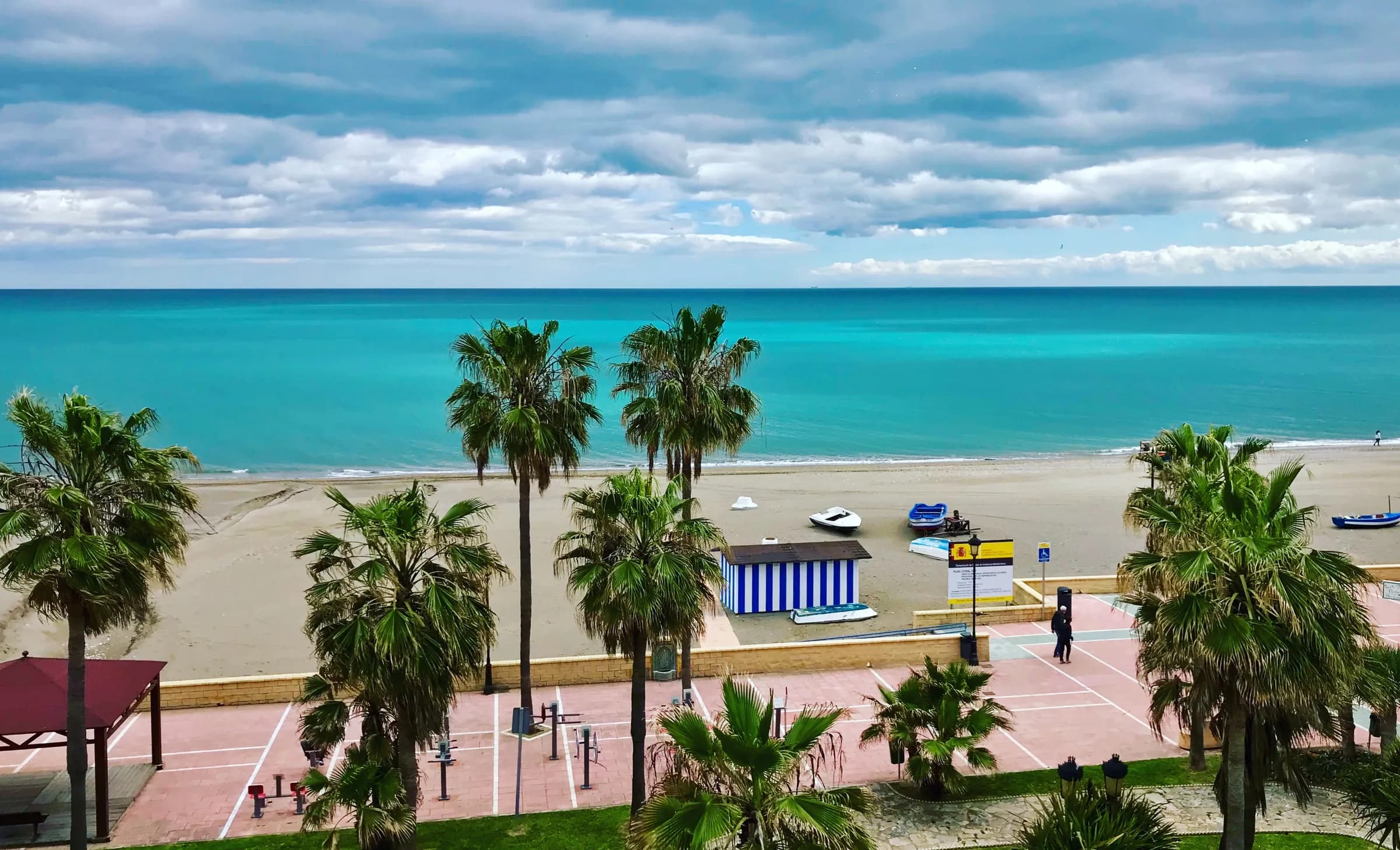
Stay Right on the Beach
The sand is 30 seconds from the door, and the balcony looks straight out at it. Book direct and save up to 20%.
- 3 Bedrooms
- 6 Guests
- 96 m²
Frequently Asked Questions
Related Articles
Day Trip to Morocco from Spain: Tarifa to Tangier
A day trip to Morocco from the Costa del Sol is easier than you think: the one-hour ferry from Tarifa to Tangier, the medina and the scams to dodge.

Water Sports Costa del Sol: SUP, Kayak, Jet Ski & Diving
A local guide to water sports on the Costa del Sol near Sabinillas: SUP, kayaking, jet skiing, snorkelling and boat trips, with costs and best months.
Things to Do in Gibraltar: A Day Trip from Sabinillas
The best things to do in Gibraltar on a day trip from Sabinillas: the Rock, the wild monkeys, St Michael's Cave, the border and duty-free, 30 minutes away.
The Local's Costa del Sol, Monthly
One email a month: what's on in Sabinillas, the best local finds, and first pick of apartment dates. Free welcome gift: our Sabinillas Insider Guide.
We respect your privacy. Unsubscribe at any time.
Comments
No comments yetHave a tip, a question or a correction? Every comment is read and approved by hand before it appears, usually within a day.
No comments yet. Be the first to share a tip or ask a question.