Where this fits: our day-trips overview ranks everything within reach of Sabinillas; this one is the vote for "best beach-and-lunch day of the summer."
The Anti-Costa del Sol, Two Hours West
Drive west from Sabinillas, past Gibraltar, past the wind farms above Tarifa, around the corner where the Mediterranean officially becomes the Atlantic, and the coast changes character completely. High-rises stop. The light gets bigger. And at the end of a quiet road across the marshes you reach Zahara de los Atunes: a low, white, sand-blown town of barely a thousand people, sitting on one of the finest beaches in Spain.
We send guests here when they ask for one "completely different" day out, and it rarely misses. There's no promenade of English breakfasts, no waterpark, barely a souvenir shop. What there is: roughly eight kilometres of broad, pale Atlantic sand, water the colour of bottle glass, dunes, a handful of chiringuitos, and the best tuna you will ever eat.
Fair warning about who it's not for: if your perfect day needs shops, entertainment or a guarantee of still water, stay Mediterranean. Zahara is for beach purists and food people.
The Tuna Story: Why This Town Eats So Well
Zahara's full name gives the game away: de los Atunes, "of the tunas." For centuries (the technique goes back to the Phoenicians) the towns of this coast have caught Atlantic bluefin tuna in the almadraba, an intricate maze of anchored nets set in the migration path through the Strait of Gibraltar each spring. It's slow, selective, brutal-but-ancient fishing, and it produces tuna so prized that a large share of the catch is flown to Japan.
What stays behind ends up on Zahara's tables, and it's the reason a town this small has a food scene this serious:
- The season: the almadraba catch runs late spring, roughly May into early June.
- The festival: Zahara's Ruta del Atún (a town-wide tuna tapas competition) is usually held in May, and it's worth planning a spring visit around; the whole town turns into one long tuna tasting.
- The rest of the summer: the restaurants serve almadraba tuna straight through: tataki, grilled lomo, the melting raw cuts (ventresca, tarantelo), even tuna burgers for the kids. Order tuna. Order it again.
Ten minutes north, Barbate is the working port that lands the catch, plainer as a town, but its fish market and tuna canneries are a worthwhile detour, and vacuum-packed almadraba tuna is the best edible souvenir on this coast.
How to Get There from Sabinillas
It's about 104 km, just under two hours door to sand:
- A-7/AP-7 west to Algeciras (the AP-7 toll section past Sotogrande saves a little time).
- N-340 around the Strait: the stretch past Tarifa is one of Andalucía's great drives: Morocco filling the horizon across 14 km of water, kitesurfers below, wind turbines above.
- Past Tarifa, follow signs for Barbate/Zahara down to the coast.
Two en-route stops worth building in, both covered in our Tarifa day-trip guide: the giant dune and Roman ruins at Bolonia (Baelo Claudia), where the fish-salting tanks are literally the ancient version of Zahara's tuna industry, and Tarifa's old town itself if you fancy breaking the drive with a coffee in Calle Batalla del Salado.
Park on the edge of Zahara and walk in; the village core is small, sandy-laned and best on foot. In August arrive before noon: Spanish holiday families fill the town and the parking with them.
The Shape of a Perfect Day
- Morning: drive over with a Bolonia stop: climb the dune before it gets hot, wander Baelo Claudia's forum and salting tanks.
- Midday: Zahara beach proper. Walk south along the sand toward Atlanterra: the further you go, the emptier and wilder it gets, ending in rocky coves below the cliffs.
- Lunch (the main event): a long, late, Spanish-length lunch of almadraba tuna at a beach restaurant or in the village lanes. Book ahead in July-August; turn up early otherwise.
- Afternoon options: more beach; or 25 minutes inland to Vejer de la Frontera, one of Andalucía's most beautiful hilltop white towns, cobbled, flower-hung, with big views over the coast you've just driven (a lovely counterpoint to our own white villages at Casares and Gaucín).
- Evening: 15 minutes north to Los Caños de Meca and Cabo de Trafalgar (yes, that Trafalgar; the 1805 battle was fought in the waters off this cape) for one of the great Atlantic sunsets, the sun dropping into open ocean beside the lighthouse. Then home via the fast road, about two hours.
Special mention for 12 August 2026: this coast's open western horizon makes it a superb place to watch the solar eclipse that sets over the sea that evening: the deep-partial maximum at ~20:39 viewed from Trafalgar, then a late tuna dinner in Zahara, is about as good as an eclipse plan gets in the south of Spain.
When to Go, and the Wind Question
- May is the connoisseur's month: Ruta del Atún, the almadraba landing the year's catch, warm days, empty sand.
- June and September are the sweet spot for a beach day: summer weather, a fraction of the crowd.
- July-August works well as a day trip precisely because you skip the accommodation crunch, but expect a lively, very Spanish holiday town and arrive early.
- The caveat this coast is famous for: wind. The Costa de la Luz is kitesurfing country for a reason. A poniente (westerly) day is perfect. A strong levante (easterly) means flying sand and a beach you won't enjoy. Check the wind forecast the night before, and if the levante is howling, swap the plan for Ronda or Casares and keep Zahara for a calm day.
The Atlantic itself is part of the pleasure: cooler and livelier than the Mediterranean you'll swim in back at the apartment, proper refreshing, with real (small) waves.
The Best of Both Coasts
That's the real trick of being based in Sabinillas: you live on the calm, warm, walk-everywhere Mediterranean, and the wild Atlantic of the Costa de la Luz sits within a day trip, no hotel change required. Spend the day in the big light and the big surf, eat the best tuna in Spain, watch the sun go down at Trafalgar, and be back at our beachfront apartment for a nightcap on the balcony over a sea that's flat as glass.
For more of the quiet-coast philosophy, see our guide to the quietest beach towns within reach; Zahara features there too, as the furthest and wildest of the lot.
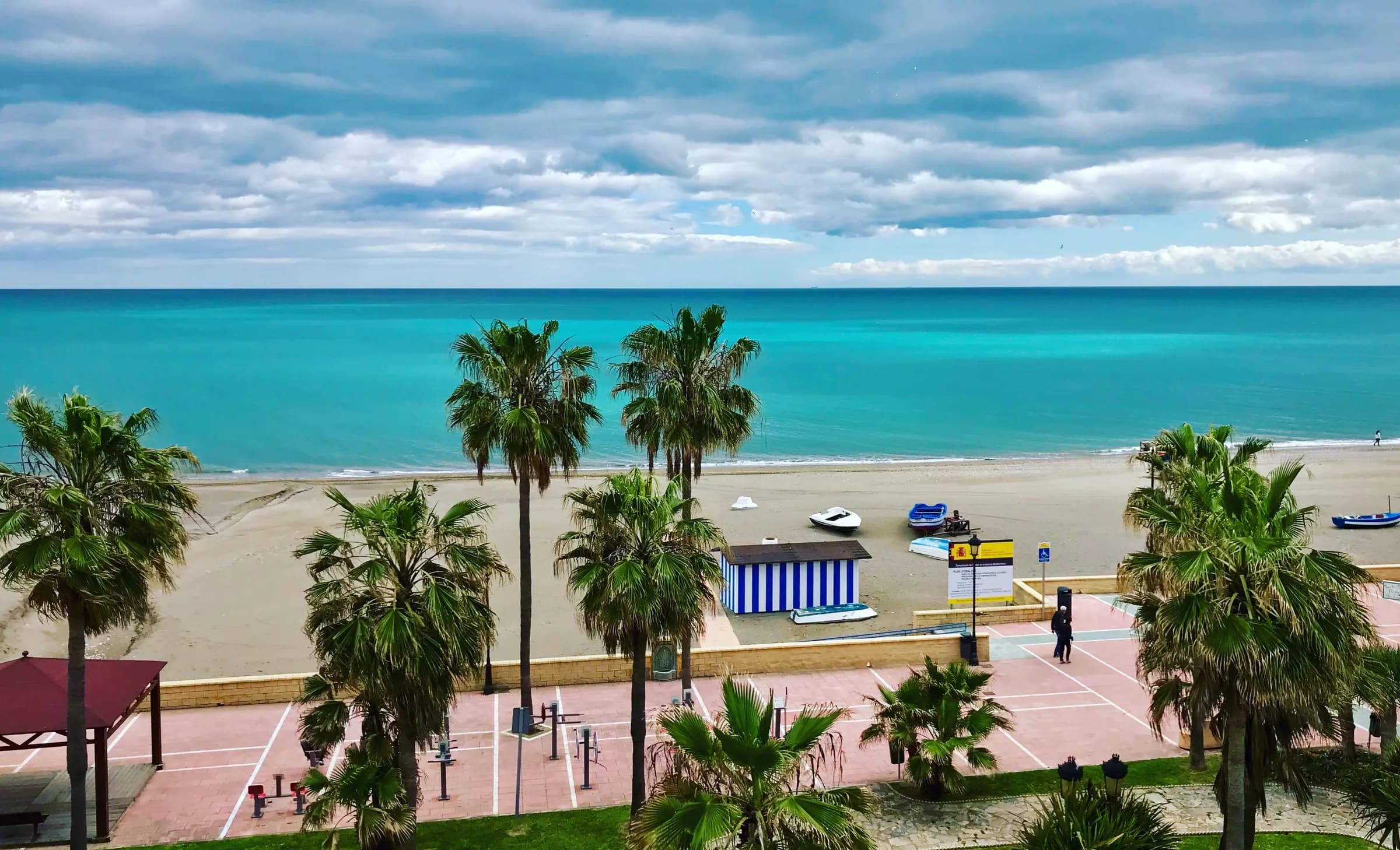
Stay Right on the Beach
The sand is 30 seconds from the door, and the balcony looks straight out at it. Book direct and save up to 20%.
- 3 Bedrooms
- 6 Guests
- 96 m²
Frequently Asked Questions
Related Articles
Solar Eclipse 2026 on the Costa del Sol: Recap, and Totality in 2027
The 12 August 2026 eclipse was a deep partial at sunset on the Costa del Sol. Recap with IGN times, and what's next: totality here on 2 August 2027.

Tarifa Kitesurfing: Day Trip Guide from Sabinillas
Tarifa kitesurfing for first-timers and pros: the windiest beaches in Europe, plain advice on schools and conditions, and how to drive there in an hour.
Quiet Beach Towns on the Costa del Sol (Not Marbella)
Tired of the Marbella crowds? These quiet beach towns on the Costa del Sol (Sabinillas, Manilva, La Duquesa and more) still feel like real Spain.
The Local's Costa del Sol, Monthly
One email a month: what's on in Sabinillas, the best local finds, and first pick of apartment dates. Free welcome gift: our Sabinillas Insider Guide.
We respect your privacy. Unsubscribe at any time.
Comments
No comments yetHave a tip, a question or a correction? Every comment is read and approved by hand before it appears, usually within a day.
No comments yet. Be the first to share a tip or ask a question.