The Rule Nobody Tells You Before You Arrive
If you are bringing a dog to the Costa del Sol, the first thing to know is that Spanish beaches are closed to dogs by default. There is no national law opening them; the use of a beach is regulated by the town hall it belongs to, and nearly every coastal municipality in Málaga province keeps dogs off its bathing beaches unless it has marked out a specific zone for them. The default answer to "can I take the dog on the sand?" is no, and in the summer months there are patrols and fines behind the no.
The good news is that this stretch of coast has two marked zones within ten minutes' drive of Sabinillas, one in each direction, and both were set up by their town halls rather than tolerated by them. This guide covers where they are, what they are like, and what the rules say, because the second thing nobody tells you is that even the dog beaches have rules.
One thing to say plainly before you plan around it: our own apartment does not take pets. This is a guide for anyone staying on this coast with a dog, and for the many guests who ask us on behalf of friends and family, not an invitation to bring one to us.
Sabinillas Beach: Promenade Yes, Sand No
Our own beach is a long, Blue Flag town beach with lifeguards, sunbeds and chiringuitos from late spring to autumn, and it is not a dog beach. Manilva's ordinance keeps dogs off the sand in the bathing season, and the lifeguard posts and local police enforce it. What you can do, all year, is walk a dog on a lead along the seafront promenade, which runs flat and paved from the fishing port past the town to Puerto de la Duquesa and the castle beyond. In the cooler hours it is one of the best dog walks on this coast, and there are cafés with outside tables along the way.
For the sand and the sea, drive ten minutes.
Manilva's Dog Beach: Las Arenas
Manilva's own playa canina opened in late April 2025 at Playa de las Arenas, beside the Playa Paraíso urbanisation in the Chullera stretch of the municipality's coast, west of the Castillo de la Duquesa. It had been announced early in 2024, worked on through that winter (proper access, a small viewpoint, and the fencing posts went in during February 2025), and the town hall marked the opening with a small event and a hand-out of clean-up bottles, which tells you the priority. The town's own description is a fenced area of about 400 square metres within the beach, and, in its words, the first dog beach in Málaga province with its own parking.
Four hundred square metres is a marked, fenced enclosure with the sea on one side, not a mile of open sand. That is the trade-off with a purpose-built dog beach: it is legal, it is signposted, and nobody will move you on, but the dog gets a pen and a stretch of shore, not the run of the coast. From Sabinillas it is roughly a ten-minute drive west along the coast road; put "playa canina Manilva" or "Playa de las Arenas" into your map app and follow the signs at the Playa Paraíso end. Because it is new, details like bins, water points and exact opening arrangements are still settling; treat anything you read online as provisional and go and look. Where Las Arenas sits among Manilva's other beaches, from Sabinillas to Punta Chullera, is laid out in our guide to the beaches of Manilva.
Casares Costa's Dog Beach: Piedra Paloma
In the other direction, a few minutes' drive east past the Sabinillas fishing port and along the coast into Casares Costa, is Playa de Piedra Paloma. Casares town hall lists it among the municipality's four beaches (with Playa Ancha, Playa Chica and Playa de la Sal) and describes it as a playa canina, "delimited to the west by the Torre de la Sal and to the east by the Piedra Paloma", made up of stones and sand, with a recently built chiringuito. The provincial council's own beach listing agrees: a marked zone suitable for walking dogs.
It is a different beast from Las Arenas. This is a stretch of natural coast rather than an enclosure: darker, coarse sand and shingle, low cliffs and scrub behind, the old salt tower at one end and the big rock that gives the beach its name at the other. Water shoes are a good idea for humans; the stones are hard on soft feet and the dog will not care. It has been the established dog beach on this part of the coast for years, and it is the one locals mean when they say "the dog beach". The town hall has been advertising a dog shower at its dog beach this summer, which is a nice touch if it is working when you visit.
The rules, straight from the town hall's page: keep your pet under control at all times, pick up after it, do not disturb other users, bring the vaccination record with all vaccines up to date, and any aggressive dog must be leashed and muzzled. Nothing exotic, and all of it enforceable.
The Rules That Apply Everywhere
Whichever beach you use, three things are not optional in Andalucía:
- Identification. Dogs must be microchipped, and the marked dog beaches ask you to carry the vaccination record. Bring the pet passport or the vet's card; a photo on your phone is better than nothing but not the same as the document.
- Potentially dangerous breeds. Dogs on Andalucía's perros potencialmente peligrosos list must be on a short lead and muzzled in public, and that includes the dog beach. Casares says so explicitly; Manilva will not be different.
- Clean-up. Bags, always. Fines for not picking up are the one rule the local police enforce on sight, dog beach or not.
Add the ordinary summer sense: shade and water for the dog, no midday sand in July and August (it will burn pads), and a rinse afterwards because the sea and the sand both dry to salt. If jellyfish are about, the purple flag on the lifeguard mast applies to dogs as much as to you, and a stung dog is a miserable afternoon.
What About Estepona, and Out of Season?
Estepona, the next town east, has no marked dog beach that we can find. A 2014 proposal to designate part of Playa de la Morocha went to the council, and search results still surface it as if it were current; there is no signposted dog zone on Estepona's beaches today that we could confirm. From Estepona the nearest official options are Piedra Paloma, immediately to the west, and Manilva's Las Arenas beyond it.
Out of season the picture loosens but does not change. The ordinances do not switch off on 1 October, and enforcement on empty winter beaches varies from town to town and patrol to patrol. The marked zones are usable all year and are the only place you are on firm ground; if you do walk a dog on an empty beach elsewhere in January, keep it on a lead, pick up, and accept that you may be moved on. Our guide to the quieter beaches west of Estepona covers the coast that Piedra Paloma sits in, dog or no dog.
Two Beaches, Ten Minutes Each Way
Two real dog beaches, ten minutes each way, and a promenade for the walks in between. If you are bringing a dog to the western Costa del Sol, that is more than most of the coast offers, and it is enough for a good week. Just do not expect the town beach in front of the apartments to bend the rule; it will not, and neither will we.
Stay Right on the Beach
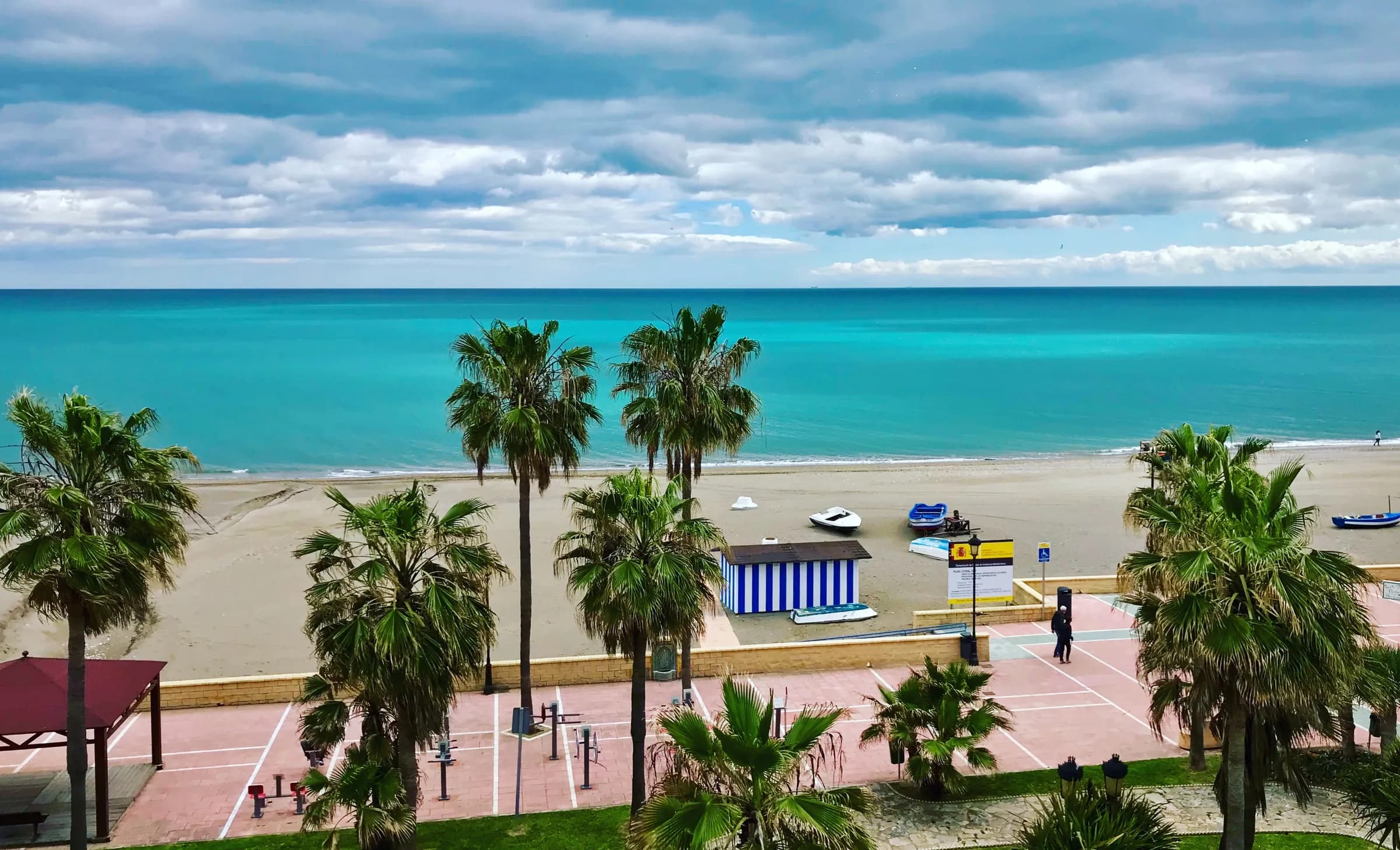
The sand is 30 seconds from the door, and the balcony looks straight out at it. Book direct and save up to 20%.
- 3 Bedrooms
- 6 Guests
- 96 m²
Frequently Asked Questions
Related Articles

Beach Flags in Spain: What Each Colour Means
Green, yellow, red and the purple jellyfish flag: what Spain's beach flags mean, who decides, and the fines for ignoring a red flag on the Costa del Sol.

Casares, Spain: White Village Guide & Day Trip
Casares, Spain is the cliffside pueblo blanco 20 minutes from Sabinillas. Castle, miradores, Roman baths and where to eat: a complete day-trip guide.
Hidden Beaches Costa del Sol: Quiet Coves West of Marbella
A local's guide to the hidden beaches of the Costa del Sol: the quiet coves and wild sands between Estepona, Manilva and Casares that the guidebooks miss.
The Local's Costa del Sol, Monthly
One email a month: what's on in Sabinillas, the best local finds, and first pick of apartment dates. Free welcome gift: our Sabinillas Insider Guide.
We respect your privacy. Unsubscribe at any time.
Comments
No comments yetHave a tip, a question or a correction? Every comment is read and approved by hand before it appears, usually within a day.
No comments yet. Be the first to share a tip or ask a question.