What Is the Sherry Triangle
The Sherry Triangle is a real, legally defined corner of south-west Spain. Only wine made within three towns in Cádiz province can be labelled 'Sherry' (or 'Jerez', or 'Xérès'): Jerez de la Frontera, Sanlúcar de Barrameda, and El Puerto de Santa María. Draw a line between the three on a map and you get the triangle that gives the region its name.
This is one of Spain's great wine regions, and one of its most overlooked. Rioja and Ribera del Duero crowd the supermarket shelves; sherry sits quietly to one side, and it's all the better for it. Nothing else ages quite like it. A properly aged oloroso or palo cortado has the depth of a fine Burgundy at a fraction of the price, and the bodegas that make it are still working cellars, not theme parks.
If you're staying on the western Costa del Sol, the triangle is one of the most rewarding day trips you can make. The drive is about an hour and a half. What you get at the end is a centuries-old industry that happens to open its doors to visitors, and pours generously when it does.
Jerez de la Frontera: The Home of Jerez Sherry
Jerez is the inland capital of the triangle and the source of the word "sherry" itself (an English mangling of "Jerez"). It's a working Andalusian city of around 210,000 people, not a town that lives off tourism. This is where the modern sherry trade took shape in the 18th and 19th centuries, much of it driven by British and Irish merchant families whose surnames still hang over the cellars: Osborne, Terry, Garvey, Williams & Humbert.
The old centre is a tangle of narrow lanes, whitewashed walls and shaded plazas. Locals fill the cafés at midday; the smell of espresso and frying fish drifts out of doorways. Jerez is also the spiritual home of two other Andalusian obsessions: flamenco and the Carthusian horse, shown off at the Real Escuela Andaluza del Arte Ecuestre. But the real reason you're here is the bodegas.
These are not tasting rooms bolted onto a gift shop. They are vast, cathedral-cool warehouses where hundreds of thousands of litres age in soleras: tiers of oak butts stacked three high, where older wine is gradually blended with younger in a continuous chain. It's a system found almost nowhere else, and it's the secret behind sherry's consistency from one year to the next.
Visiting Bodegas in Jerez
Bodegas Tío Pepe (González Byass) is the big one. The company has made sherry since 1835, and the visit is a properly run operation: you ride a little electric train through the estate, walk the barrel halls (keep an eye out for butts signed by famous visitors) and finish with a tasting. One cellar was designed by Gustave Eiffel. Tours run about 90 minutes. The base experience with a couple of wines is around €25; "The Colours of Sherry" with four wines a touch more; tapas pairings and premium VORS tours climb to €30-50. Book on tiopepe.com or call +34 956 357 016.
Bodegas Lustau is the connoisseur's choice: smaller, founded in 1896, known for single-vineyard almacenista sherries. Its "Cathedrals of Wine" tour pours five sherries plus a vermouth for around €26, with a premium VORS option from roughly €36. The cellars genuinely feel like a cathedral: high naves, sandy floors kept damp to hold the humidity. Less polish than Tío Pepe, more soul.
Other respected houses worth a look: Fundador (one of the oldest bodegas in Jerez, founded in 1730, tours from about €18), Bodegas Cayetano del Pino (small, family-run, around €20-50 depending on the wines), and Diez Mérito (one of the cheaper entry points, from about €12). Don't try to do more than one or two cellars in a morning; the tastings add up, and so does the alcohol.
Pro tip: Tour a Jerez bodega first thing (10:00-12:00) while your palate is fresh, then drive to Sanlúcar for a late lunch and an afternoon manzanilla. Dry sherries reward a clean palate; the lighter manzanilla sings alongside seafood.
Where to Eat in Jerez
Bar Juanito is the classic Jerez tapas bar: locals genuinely eat here, and the sherry list is one of the best in town. Order the espinacas con garbanzos (spinach with chickpeas) and the rabo de toro (oxtail stew); small plates run roughly €4-7. Reckon on €20-30 for a proper feed. If you enjoy this kind of unfussy local eating, it's exactly the spirit of the chiringuitos and tabernas in our own corner of the coast.
For a sit-down lunch, Albalá and Mantúa sit at the smarter end (Mantúa holds a Michelin star), while plenty of plazas in the centre have unfussy, mid-priced kitchens doing gazpacho, grilled fish and carrillada (braised pork cheek) for €12-25 a head.
Sanlúcar de Barrameda: Manzanilla & Seafood
Sanlúcar is where the triangle meets the sea. Jerez is history and industry; Sanlúcar is the opposite: a place to slow right down, eat prawns with your fingers, and drink ice-cold manzanilla while the Atlantic breeze rolls in off the Guadalquivir estuary. The town was named Spain's Capital of Gastronomy (Capital Española de la Gastronomía) in 2022, and it has earned it. Across the water you can see the wild dunes of the Doñana national park.
The heart of it all is the Bajo de Guía, a 200-metre run of seafood restaurants facing the beach where the river meets the ocean. Fishing boats tie up a few steps away. This is not a tourist strip dressed up for outsiders; it's where Sanluqueños themselves come to eat.
The Manzanilla Story
Manzanilla is made nowhere on earth but Sanlúcar de Barrameda. It's identical in method to fino (pale, dry, aged under flor), but the town's cool, salt-laden microclimate changes everything. Those damp north-westerly winds keep the cellars cold and the flor thick year-round, and they seem to leave a fingerprint on the wine: lighter, more floral, with a faint saline tang that fino doesn't have. Served properly cold in a copita, it's one of the great food wines of the world.
Bodega Visits in Sanlúcar
Most manzanilla houses are small and family-run, without the visitor machinery of Jerez. The big exception is Bodegas Barbadillo, the largest manzanilla producer and the most visitor-friendly. Its Museo de la Manzanilla is free to walk round, and you can add a guided cellar tour with a tasting on top: options range from a short museum visit with one glass to a 90-minute tour with three wines, roughly €5-27 depending on what you choose. The bodega is generally open Monday to Friday 10:00-19:00 and weekends 10:00-15:00, but check ahead and book through barbadillo.com or call +34 956 385 521. Smaller producers may open by appointment; the tourist office on Calzada del Ejército can point you to who's pouring that week.
Eating in Sanlúcar
The local hero is the langostino de Sanlúcar: a sweet, full-flavoured king prawn you won't find elsewhere, boiled simply in brine and served cold. Eat it with a glass of manzanilla and you've understood the whole region in two mouthfuls. (We take local food just as seriously when we welcome guests to our beachfront apartment; it's half the reason people come back.)
Casa Bigote, on the Bajo de Guía, is the institution: third generation now, and the standard-bearer for the genuine langostino. Mains run roughly €18-35; a full meal for two with wine climbs past €50. Book ahead, especially at weekends. Poma, a few doors along, is the other serious name, famous for its arroz marinero (a soupy seafood rice); budget €25-40 a head.
Or do it the local way: pull up a chair anywhere along the Bajo de Guía, order a ración of gambas, some fritura gaditana (mixed fried fish) and a cold manzanilla, and watch the sun drop behind Doñana. Fifteen to twenty-five euros, and quite possibly the best meal of your trip.
El Puerto de Santa María: The Coastal Third
El Puerto gets overshadowed by its two famous neighbours, which is a shame. It's a proper seaside town: wide beaches, a marina full of sailboats, and a far more relaxed pace than Jerez or Sanlúcar. For centuries sherry was shipped out from the docks here, and the place still carries that salt-and-sail character. A little catamaran, the El Vaporcito, even runs across the bay to the city of Cádiz.
Bodegas in El Puerto
Bodegas Osborne is the heavyweight here, founded in 1772 by an Englishman, Thomas Osborne, and the company behind the giant black bull silhouettes you see on hillsides all over Spain. The tour runs about 90 minutes, covering the soleras, the brandy, and the story of that bull, with a tasting at the end; there's a tapas-pairing version with Cinco Jotas jamón, plus the Toro Tapas restaurant on site. English-language tours typically start at 10:00. Book via osborne.es or call +34 956 869 100.
Bodegas Gutiérrez Colosía sits right on the riverfront and offers a smaller, more intimate visit, a good counterweight to Osborne's scale. Bodegas Caballero runs its tastings inside the medieval Castillo de San Marcos, a genuine 13th-century castle, which is a memorable setting for a copa. Check their official sites for current times, as smaller houses change their schedules seasonally.
Eating in El Puerto
Aponiente is the name everyone knows: chef Ángel León's "restaurant of the sea", set in a restored 19th-century tide mill, now holding three Michelin stars in the 2026 guide. The tasting menus are a serious event and priced to match (well north of €200 per person before drinks). Book months ahead, if you can get in at all.
For something you can walk into, Romerijo is the El Puerto ritual: a no-nonsense seafood hall where you buy boiled and fried shellfish by weight in paper cones and eat it at long tables: cheap, busy, brilliant. Bodega Obregón is a wonderfully old-school tavern pouring sherry straight from the butt. Sit-down places facing the marina do excellent fish for €20-40 a head. The town beaches, Playa de Valdelagrana and Playa de La Puntilla, are genuinely good for a swim.
Types of Sherry Explained
Sherry isn't one drink; it's a whole family, running from pale and bone-dry to almost black and syrupy sweet. Knowing the categories turns a confusing tasting list into an easy choice. Here's the cheat sheet:
| Type | Colour | Flavour | Alcohol | Best served |
|---|---|---|---|---|
| Fino | Pale straw | Light, dry, yeasty, faintly salty | ~15% | Well chilled, as an aperitif |
| Manzanilla | Pale like fino | Even lighter and more delicate, sea-salt edge | ~15% | Ice-cold, with seafood |
| Amontillado | Amber | Nutty, dry, more oxidised than fino | 16-18% | Lightly chilled, with cheese or soup |
| Oloroso | Dark brown | Full-bodied, intensely nutty, smooth, dry | 18-20% | Room temperature, with stews or after dinner |
| Palo Cortado | Dark amber | Rare halfway house: oloroso's body, amontillado's edge | 17-22% | Room temperature, endlessly versatile |
| Pedro Ximénez (PX) | Near-black | Thick, raisiny, intensely sweet | 15-17% | Room temperature, over ice cream or with dessert |
A word of warning many first-timers learn the hard way: most sherry is dry, not sweet. The image of a sticky after-dinner tipple comes from PX and the sweet "cream" blends. The wines the bodegas are proudest of (fino, manzanilla, amontillado, oloroso, palo cortado) are dry, savoury and made to drink with food. Try a chilled fino with a plate of jamón and you'll never look at it as a granny's drink again.
One to seek out: an en rama sherry: bottled with little or no filtering, so it tastes much as it does straight from the cask. La Gitana en Rama (manzanilla) and Tío Pepe en Rama appear seasonally and are worth pouncing on.
Getting to the Sherry Triangle from Sabinillas
By car (the easy way)
From Sabinillas it's roughly 130 km / about 1.5 hours to Jerez. Join the AP-7 motorway heading west, then take the A-381 (the "Ruta del Toro") across the Los Alcornocales cork-oak country straight into Jerez. It's a fast, scenic run. Parking in Jerez is easy: there are car parks across the centre, and most bodegas have parking or sit within a short walk of one.
Once you're in the triangle, the towns are minutes apart: Sanlúcar is 25-30 minutes north of Jerez (about 25 km), and El Puerto about 20 minutes south-west. All three fit comfortably into one day, or you can fold the trip into a wider loop of day trips around Cádiz province. For more on driving in the region, see our car hire tips for the Costa del Sol.
By public transport (the catch)
There's no direct rail link from Sabinillas, so the train only helps once you've reached the area. But it's genuinely useful within the triangle: the Renfe Cercanías C-1 line connects Jerez and El Puerto de Santa María in about 10 minutes for a couple of euros, running from early morning until late evening, 365 days a year. That makes a car-free Jerez-El Puerto combination very doable.
Sanlúcar is the snag: it has no railway station. You reach it by regional bus from Jerez (Los Amarillos / regional operators, around 45 minutes). So if you want all three towns without a car, the realistic plan is: train between Jerez and El Puerto, bus out to Sanlúcar, and accept that connections are slower than driving. For a single day covering all three, the car wins comfortably.
Don't want to drive at all? Organised sherry tours with transport run from the Costa del Sol resorts; ask us and we'll point you to a reputable operator.
Planning a Sherry Day Trip
A relaxed one-day itinerary that doesn't feel rushed:
- 08:00: Leave Sabinillas
- 10:00-11:30: Bodega tour and tasting in Jerez (book the time first; everything else hangs off it)
- 12:00-13:00: Wander the old centre, grab tapas at Bar Juanito
- 13:30-14:00: Drive to Sanlúcar
- 14:00-16:30: Late lunch on the Bajo de Guía: langostinos, fritura gaditana, cold manzanilla
- 16:30-18:00: Stroll the seafront, last copa with the Doñana view
- 18:00-20:00: Drive back to Sabinillas
If wine is the whole point of the trip, slow it down and stay a night; Sanlúcar at dusk, with the river breeze and a plate of prawns, is hard to leave. One firm rule: nominate a driver, or don't drive. Spain's limit is 0.5 g/l (0.25 mg/l on the breath), and the Guardia Civil run checks on the roads out of Jerez. Tasting flights add up fast.
Good to know: Most bodega tours run on set times (commonly 10:00, 12:00, 14:00 and sometimes 16:00), and the popular ones sell out in spring and autumn. Lock in your tour slot before you plan anything else around it.
For more on wine and food in this part of Spain, read our complete wine-tasting guide to Ronda, or the Manilva wine trail, a small but lovely Moscatel-producing region just up the road from the apartment.
Why It's Worth the Drive
Guests ask us the same question constantly: "What's worth driving to from here?" The Sherry Triangle is near the top of the list. It's close enough to reach in a morning, yet distinctive enough to repay the journey ten times over. You're not visiting a manufactured attraction; you're stepping into a living industry that's been doing this for centuries and is happy to share a glass.
If you have any interest in wine, food or Spanish culture, give the triangle a day. You'll find out why this quiet corner of Cádiz makes the world's most underrated wine, and you'll drink it the way it's meant to be drunk: cold, with seafood, among people who've been pouring it for generations.
Planning the rest of your stay? Our complete Sabinillas guide covers the beaches, restaurants, markets and best day trips from your base. When you're ready, we'd love to host you: check availability and book direct, and we'll make sure the fino is in the fridge.
Stay Right on the Beach
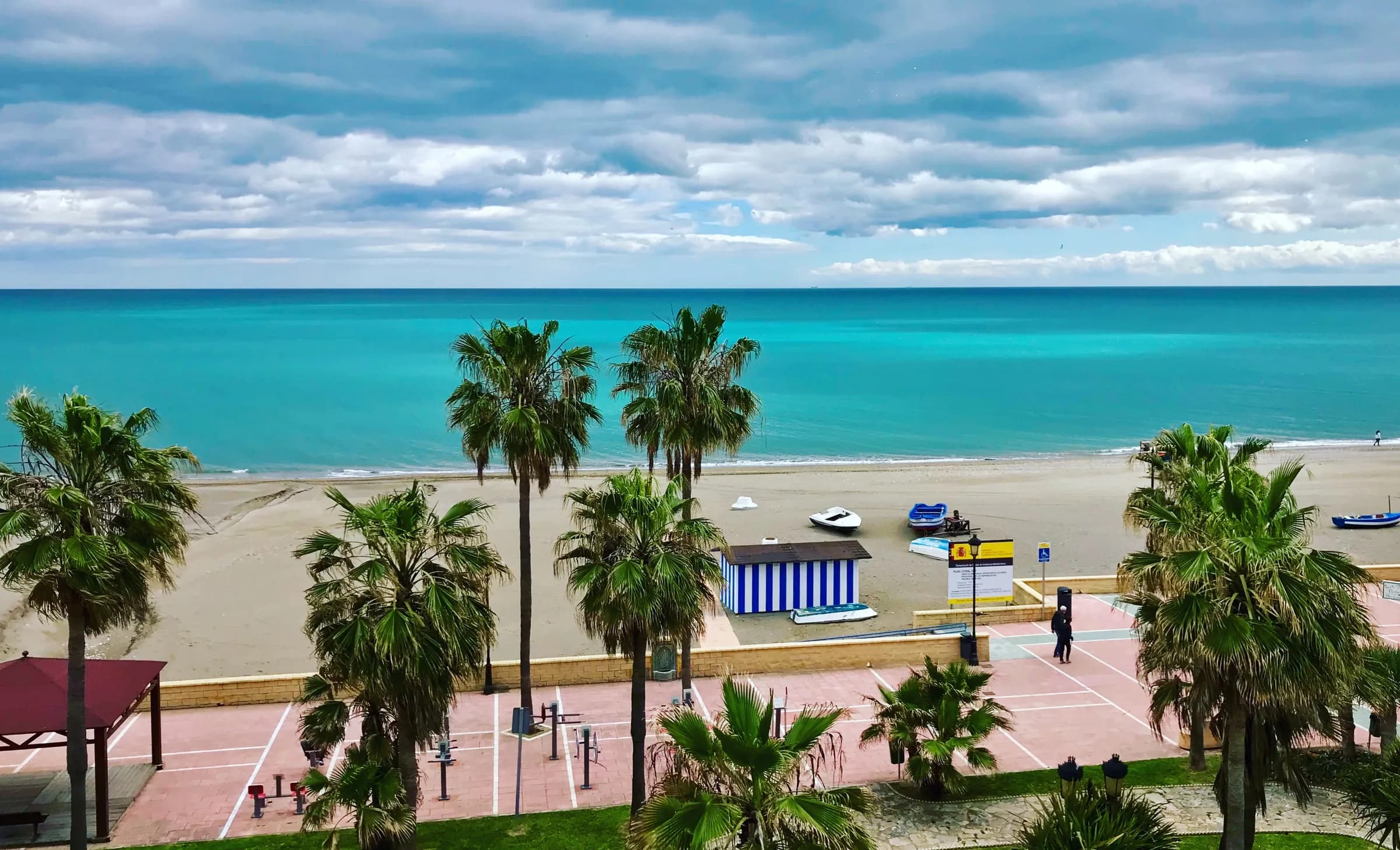
The sand is 30 seconds from the door, and the balcony looks straight out at it. Book direct and save up to 20%.
- 3 Bedrooms
- 6 Guests
- 96 m²
Frequently Asked Questions
Related Articles

Manilva Guide: Wine, Roman Baths & Beach Town
A local's guide to Manilva on the Costa del Sol: Europe's most southerly vineyards, free Roman sulphur baths, the Duquesa castle and the beach at Sabinillas.

Ronda Wine: Best Bodegas to Visit at Altitude
Ronda wine, explained: the high-altitude reds, which bodegas to visit, what tastings cost, and how to plan a wine day trip from the Costa del Sol.

Day Trips from Sabinillas & the Western Costa del Sol
Best day trips from Sabinillas and the western Costa del Sol: Ronda, Gibraltar, Caminito del Rey, white villages and Tangier, with drive times and costs.
The Local's Costa del Sol, Monthly
One email a month: what's on in Sabinillas, the best local finds, and first pick of apartment dates. Free welcome gift: our Sabinillas Insider Guide.
We respect your privacy. Unsubscribe at any time.
Comments
No comments yetHave a tip, a question or a correction? Every comment is read and approved by hand before it appears, usually within a day.
No comments yet. Be the first to share a tip or ask a question.