For about three weeks a year, the valley behind our stretch of coast changes colour. The chestnut woods that fill the Genal valley, green and anonymous all summer, turn gold, then amber, then a deep copper that gives the place its tourist-board name: El Bosque de Cobre, the Copper Forest. It happens while the beach here is still warm enough for lunch outside. Most visitors never find out.
We send guests up there every autumn, and the reaction is always some version of the same sentence: nobody expects New England half an hour behind the Costa del Sol. This is the guide we wish we could hand them printed: when the colour peaks, which roads in, which villages to string together, and the two walks that make sense in a single day from the coast.
What Is the Copper Forest?
The Copper Forest is not a forest in the wild sense. It is farmland: centuries-old sweet chestnut groves worked by ten villages of the Genal valley, in the Serranía de Ronda between Estepona and Ronda. The Málaga tourist board coined the name for the few weeks when the whole canopy turns, and it lists the villages that share it: Alpandeire, Benalauría, Cartajima, Faraján, Genalguacil, Igualeja, Jubrique, Júzcar, Parauta and Pujerra.
The chestnuts are the point, not a backdrop. The valley is one of the biggest chestnut producers in Spain, and October and November are harvest, so you will pass nets spread under trees, trailers of sacks, and hand-painted signs selling castañas by the kilo. Which leads to the one rule that matters: the groves are private fincas. You look at them from village miradores and from waymarked trails, and you do not wander into them or fill your pockets. Somebody's income is lying on that ground. Buy a bag in the village instead; it costs very little and tastes better for it.
When Does the Valley Turn?
Late October to mid-November, and the exact week moves with the weather. A hot, dry autumn holds the green longer; early rain and a cold snap bring the copper on fast. As a rule from years of watching it: the last week of October is the safe start, the first ten days of November are usually the peak, and by the third week of November the show is mostly on the floor. That carpet phase has its own appeal, ankle-deep leaves and bare silver branches, but if you want the postcard, aim for the first week of November.
Go midweek if you can. The valley is genuinely quiet Monday to Friday, then Málaga and Marbella arrive on autumn weekends and the Parauta car park fills by mid-morning. And remember the clocks have gone back: it is properly dark by 18:30, so this is a day trip that starts early and ends early.
Three Roads In from Sabinillas
The valley wraps around the back of Sierra Bermeja, so you have three ways in, and they suit different days.
Over the Peñas Blancas pass (the dramatic one). Up to Estepona, then the MA-8301 climbs to Puerto de Peñas Blancas at just under 1,000 m, a scenic 40-50 minutes from Sabinillas. This is the same road that serves the Sierra Bermeja trailheads, and from the pass the tarmac drops over the far side to Jubrique and Genalguacil. The moment the road tips over the ridge, the red peridotite gives way to a valley of copper below you. Best first view of the whole thing, by some distance.
Via Gaucín (the western edge). The A-377 inland past Casares to Gaucín, then the A-369 along the valley's western rim, the same run we describe in our white villages guide. The chestnut country here is thinner than in the upper valley, but the villages of the middle Genal, Benalauría and Algatocín among them, hang just off this road.
Via the A-397 (the quickest way to the densest colour). Coast road to San Pedro de Alcántara, then the A-397 mountain road towards Ronda, and a signed turn-off (the MA-7306, between km 11 and 12) drops you into Parauta, Cartajima and on to Júzcar. Allow about an hour and a quarter to an hour and a half from Sabinillas. One caveat we mean seriously: this road has a history of slope trouble. A landslip closed it outright from March 2025, and it only reopened fully that October after five million euros of repairs; since then the Junta has kept up periodic stabilisation work on the same slopes, which means short scheduled closures at the Igualeja end. Check the road is open on the day before you build a trip around it, and if it is shut, go over Peñas Blancas instead.
A Day That Works
Here is the shape we recommend to guests with a hire car and one free autumn day. Leave Sabinillas by 09:00 with a full tank; there are no petrol stations up in the villages. Take the A-397 route and start at Parauta, either on the enchanted forest trail if it has reopened (see below, it was still shut through 2026) or simply on the lane out of the village towards the groves, while the light is still low and the car park empty. Coffee in the village square afterwards.
Then drive the few kilometres to Cartajima, the little village above the head of the valley, for the miradores; the views down over the canopy are the best of the day. Push on to Júzcar, the blue village, or double back towards Igualeja and Pujerra, the chestnut heartland proper, where the groves crowd right up to the houses. Lunch at 14:00, Spanish time, wherever you have ended up; book ahead on November weekends, because these are small villages and one full dining room is all they have. Be back over the mountains before dark.
Two or three villages is the realistic maximum. The distances look tiny on the map and the roads make you pay for every kilometre. If you want the villages themselves properly told, castles, history, where to park, that is our white villages guide; this day is about the trees. And if you are staying inland or fancy pairing the valley with the gorge, Parauta and Cartajima sit only 25-30 minutes from Ronda, which makes a fine morning-and-afternoon split with our Ronda day trip.
The Walks Worth Doing
You do not need boots and a rucksack for the Copper Forest; two options cover almost everyone.
Bosque Encantado de Parauta. Read the status before anything else: the trail has been closed since the February 2026 storms, which undermined part of the access path, and at the time of writing the town hall is still chasing repair funding with no reopening date announced. Check with the ayuntamiento in Parauta or the tourist office in Ronda before you drive up for it.
When it is open, it is the best short walk in the valley. A signed, mostly surfaced trail runs from the edge of Parauta straight into old chestnut groves: about 3 to 3.5 km there and back, or nearer 4.5 km from the sports-ground car park. Along the way, figures carved from chestnut wood by a local artist, fairies, faces, a dragon or two, sit among the trees, which sounds twee and works completely, especially with children under ten. Moderate slopes, a couple of unhurried hours, and in the first week of November the canopy overhead is pure copper. It is the single easiest way to stand inside the landscape rather than photograph it from a car park.
A stretch of the GR-141. The Gran Senda de la Serranía de Ronda is a six-stage circular route through the Guadiaro and Genal valleys on the old mule paths that linked the Serranía to Gibraltar. Nobody sensible attempts a full stage as a coastal day trip; stage 4 alone, Benarrabá to Benalauría through the heart of the Genal, runs 12.3 km of proper up-and-down, and has been listed as closed at a damaged footbridge in any case. But the waymarks pass through the villages, so an out-and-back hour along the red-and-white flashes from Benalauría or Benarrabá puts you under the canopy on a real path, legally, with no navigation to think about. Turn round when the coffee wears off.
That is deliberately all the hiking we will give you here. The serious mountain routes on this side of the coast are a different day out, and they are covered in our Sierra Bermeja hiking guide.
Eating the Harvest
The valley does not just look like autumn; it serves it. From mid-October the village bars and ventas put chestnuts everywhere: roasted in paper cones, in soups, in stews with pork, in cakes and puddings. Pujerra, which lives off the crop more than anywhere else, holds its Fiesta de la Castaña across the turn of the month, the 2025 edition running 31 October and 1 November, with roast chestnuts by the sackful and chestnut dishes across the village. Confirm the year's dates with the town hall before planning around it. The wider tostón tradition, the communal chestnut roasts that mark All Saints across these hills and down to the coast, deserves its own telling, and it has one: our guide to All Saints and the tostón on the Costa del Sol covers the fires, the dates and where to join in.
What to Watch Out For
A short list, because the valley in November is wonderful and slightly awkward in equal measure. The three-week window is a gamble: book a trip for the colour specifically and you are betting on the weather, so aim for 1-10 November and make peace with nature's schedule. The roads wind without mercy; anyone prone to car-sickness rides in front. The valley runs noticeably cooler than the coast, often with morning mist that burns off by 11:00, so bring a layer you will not need at the beach. Some village bars close midweek out of season; carry water and something to eat rather than assuming. And the light goes at 18:30: plan to be off the mountain roads by then, not starting down them.
Copper Above, Sea Below
The best argument for the Copper Forest is what you return to. In the first week of November the coast at Sabinillas is 20-odd degrees in the afternoon, the promenade is quiet, and the sea is still warmer than it will be in June. Autumn is our quiet season, and it is quietly the best one: you can stand under a copper canopy at noon and eat grilled fish by the water at sunset, in the same day, with no crowds at either end. Our beachfront apartment sits 30 seconds from the sand and about an hour from the nearest chestnut tree, which is exactly the right distance: mountains for the day, sea for the evening. Ask us which week the valley is turning; by late October, we usually know.
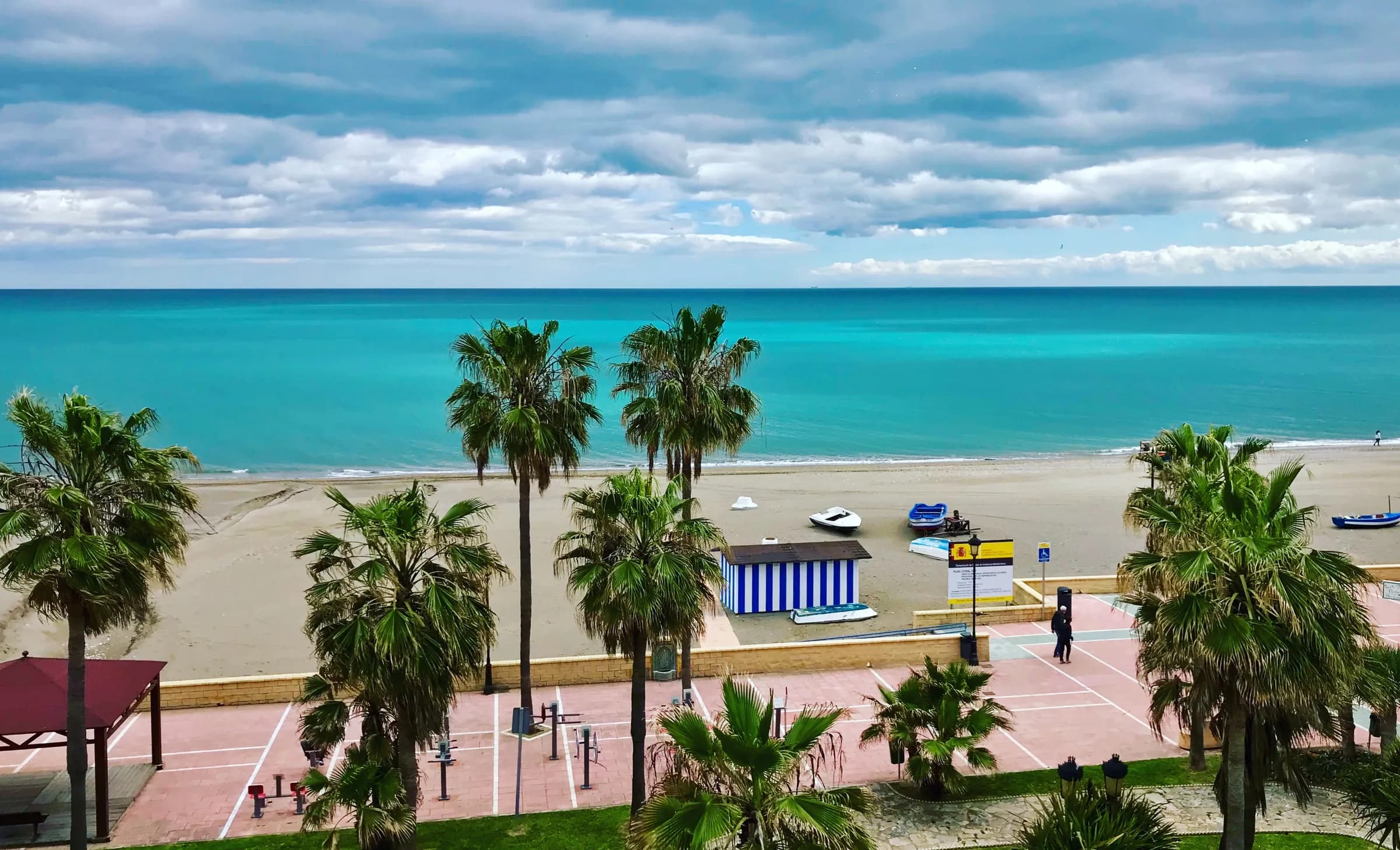
Stay Right on the Beach
The sand is 30 seconds from the door, and the balcony looks straight out at it. Book direct and save up to 20%.
- 3 Bedrooms
- 6 Guests
- 96 m²
Frequently Asked Questions
Related Articles

Hiking on the Costa del Sol: Sierra Bermeja Trails
A walker's guide to hiking on the Costa del Sol: Sierra Bermeja's red peridotite peaks, rare pinsapo firs and realistic trail grades, an hour from Sabinillas.
Pueblos Blancos: White Villages Drive from Sabinillas
The pueblos blancos within an hour of Sabinillas: Casares, Gaucín, Júzcar and Andalucía's white villages, with a driving route and road notes.

Ronda Day Trip from Sabinillas: Things to Do & Itinerary
A Ronda day trip from the Costa del Sol: the best things to do, where to eat, how to get there from Sabinillas or Málaga, and a full one-day itinerary.
The Local's Costa del Sol, Monthly
One email a month: what's on in Sabinillas, the best local finds, and first pick of apartment dates. Free welcome gift: our Sabinillas Insider Guide.
We respect your privacy. Unsubscribe at any time.
Comments
No comments yetHave a tip, a question or a correction? Every comment is read and approved by hand before it appears, usually within a day.
No comments yet. Be the first to share a tip or ask a question.