Order a drink anywhere on the Málaga coast and there is a fair chance a small plate of silver fish arrives with it. Either they are pale and sharp, slicked with oil and garlic, or they are golden and crisp with a wedge of lemon. Both are boquerones. Both come from the same fish. Which one lands in front of you depends on one word on the menu, and most first-time visitors order the wrong one at least once.
We have lived a short walk from the Sabinillas beach bars long enough to have eaten several thousand of these. This is what we tell guests on their first evening.
What are boquerones?
A boquerón is a fresh European anchovy, Engraulis encrasicolus, a slim silver fish of 9 to 15 cm that runs in huge shoals through the Mediterranean and up the Atlantic coast of Europe. Spanish has several names for it depending on where you stand: boquerón in Andalucía and most of the south, bocarte in the north, anchoa once it has been salted. Málaga people are nicknamed boquerones themselves, which tells you how far the fish and the city go back.
Boquerones vs anchoas
In Spain the word describes the treatment, and the treatment decides the taste.
| Boquerón | Anchoa | |
|---|---|---|
| The fish | European anchovy, fresh | The same anchovy, salt-cured for months |
| Colour | Silver-white flesh | Brown to dark red |
| Taste | Mild, clean, slightly sweet; sharp if cured in vinegar | Intense, salty, umami |
| How you meet it | Fried whole, or as vinegar-cured fillets on a tapa plate | In tins and jars, on pizza, in salads, on a gilda |
| Served | Cold (en vinagre) or hot (fritos) | At room temperature, straight from the oil |
The confusion for English speakers is that both end up translated as "anchovies". When a British menu says anchovies it almost always means the salted tinned kind. When a Spanish bar says boquerones it almost always means the fresh fish in vinegar. "White anchovies", the name you will see on delicatessen counters in the UK, is boquerones en vinagre under another label.
Boquerones en vinagre vs boquerones fritos
These are the two dishes that matter, and a bar that does one well does not always do the other well.
Boquerones en vinagre are the cold ones. The fish are headed, gutted and opened into fillets, then covered in white wine vinegar (some cooks cut it with water) for a few hours until the flesh turns opaque and white. They are rinsed, laid flat and dressed with olive oil, finely chopped garlic and parsley. Served cold, they taste of the sea with a clean acidic edge. They are the tapa most likely to appear free with a drink in a Sabinillas bar, and the thing to order alongside grilled bread rubbed with tomato. In the UK and the US the same dish is sold as white anchovies or marinated anchovies.
Boquerones fritos are the hot ones. Gutted, sometimes with the heads left on if the fish are small, rolled in flour, shaken, and dropped into hot olive oil for a minute or two. They come out crisp outside and soft inside, and you eat them whole with a squeeze of lemon and a pinch of coarse salt. The bones of a small boquerón are soft enough not to notice. This is the single most ordered tapa in Málaga and the backbone of the fritura malagueña, the mixed fry of small fish and squid that every beach bar sells by the plate.
A third version turns up often enough to know: boquerones al limón, where the fish sit in lemon juice and garlic for an hour before being floured and fried. The lemon tenderises the flesh and the result is softer and tangier than the plain fry. El Pimpi in Málaga is well known for them.
One rule of thumb: in a bar, a bare boquerones on the menu usually means the vinegar version; at a chiringuito it usually means fried. If it matters to you, say en vinagre or fritos and nobody will mind.
The Málaga style: boquerones victorianos
Málaga has its own way of frying boquerones and its own name for the fish. The boquerón victoriano is traditionally a small anchovy from the bay of Málaga, fried in olive oil in a fan of five fish pressed together at the tail. The food writer Dionisio Pérez described the fan in 1929 as five fish stuck together by the tail "en graciosa forma de abanico", and that is still how the better freidurías and chiringuitos send them out: a little open hand of crisp fish you pick up by the tail end.
The name has nothing to do with Queen Victoria. It comes from the Virgen de la Victoria, patron saint of Málaga, whose feast is on 8 September, because the small late-summer fish arrived in the bay around that date. The town of Rincón de la Victoria, just east of the city, has adopted the fish as its own and holds a Fiesta del Boquerón Victoriano in early September, with tastings and a restaurant route.
Two things before you go hunting for the "real" victoriano. The original was a fish of 5 to 7 cm; the legal minimum landing size today is 9 cm, so what you get is a bigger fish fried the same way. And local catches have fallen so far that most of the boquerón eaten in Málaga now comes from the Atlantic coast of Andalucía, Morocco or Italy. The plate is no worse for it. "Victoriano" today describes a style of frying more than a fish from one bay.
When to eat them
Boquerones are at their best from mid-spring to the end of summer, when the fish are feeding hard and carry the most fat. Boats on this coast land them most of the year, so you will see them on a menu in January too, but a plate of fritos in June tastes noticeably richer than one in December, and the chiringuitos on the Sabinillas paseo have them daily from roughly May to October.
Making boquerones en vinagre at home: the freezing rule
The apartment kitchen is fully equipped and the pescadería is a few minutes' walk, so plenty of guests want to try the vinegar version themselves. Do, but read this part first.
Anchovies, like most sea fish, can carry anisakis, a small parasite that causes an unpleasant allergic reaction in some people. Cooking kills it. Vinegar does not. The Spanish food safety agency AESAN lists boquerones en vinagre by name among the preparations that must be frozen first, and gives two routes: the professional standard of -20°C for 24 hours (or -35°C for 15 hours), or, for a home freezer, which usually reaches only about -15°C, at least four days, and count five to be sure the fish has frozen right through. Any bar in Spain serving boquerones en vinagre has to do this by law. If you ever see a sign saying "congelado previamente", that is why.
With that done, the method is short:
- Buy 500 g of the freshest boquerones you can find and ask the fishmonger to clean them ("¿me los limpia?"). They will remove heads and guts, and often open them into fillets.
- Freeze as above. Thaw in the fridge.
- Lay the fillets skin-side down in a dish and cover with white wine vinegar, about two parts vinegar to one part water, with a teaspoon of salt. Fridge for two to four hours, until the flesh is white all the way through.
- Drain, rinse briefly in cold water, pat dry. Lay in a clean dish, cover with olive oil, scatter chopped garlic and parsley. They keep in the fridge for two or three days.
Frying is simpler and needs no freezing, because the fish reaches well over the 60°C for one minute that AESAN gives as the cooking threshold: clean, flour, shake off the excess, fry in hot olive oil until golden, salt and lemon.
Where to eat boquerones on this coast
On the Sabinillas beach. Every chiringuito along the paseo fries boquerones from late spring to autumn, and most keep en vinagre on the cold list year-round. They buy from the Estepona auction and the local boats, so the fish is as fresh as it gets on this coast. Our guide to the best chiringuitos in Sabinillas covers which ones run the grill well; the boquerones follow the same rule, because a kitchen that times an espeto times a fry.
In town. The tapas bars of Sabinillas put boquerones en vinagre out with a beer as a matter of course; our local restaurant picks have the specifics.
To cook yourself. Pescadería Dieguichi and Pescadería Andalucía in Sabinillas sell boquerones in the morning, cleaned on request. The Friday and Sunday street markets do not sell fish. Where to go, when, and what to say at the counter is in our fish markets guide.
In Málaga. Seventy-five minutes east, the grill bars inside the Mercado Central de Atarazanas fry boquerones from late morning and serve them across the counter while you stand; go Tuesday to Saturday, since the fish stalls close on Mondays. In the old town, El Pimpi's boquerones al limón are the thing to order with a glass of sweet Málaga wine. The rest of the city's bars, and how a tapas crawl works there, are in our Málaga tapas guide.
What to order with them
Boquerones en vinagre want something to cut the acid: a cold beer, a dry fino, pan con tomate, a few olives or plain crisps. Spaniards often eat them with crisps, which sounds odd and works. Fritos want lemon, coarse salt, a cold beer or a glass of cold white, and a tomato salad on the side. In Málaga the traditional partner for victorianos is a salad of roasted red peppers.
They are not for anyone who dislikes eating a fish whole, bones and all. If that is you, order en vinagre, which are clean fillets, or ask for boquerones abiertos, butterflied and boned before frying.
Eating them from our balcony
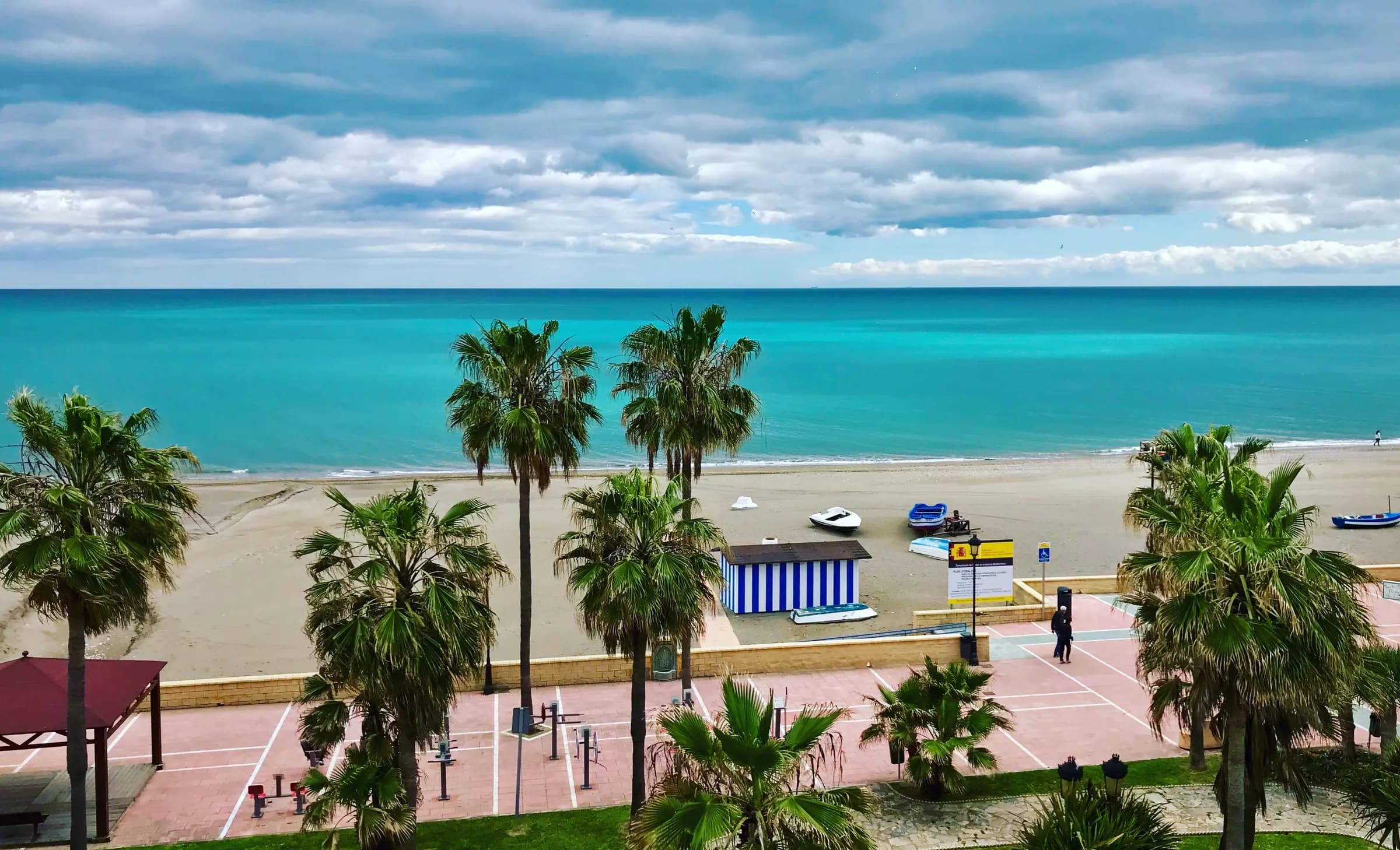
Our apartment sits on the first line of the beach in Sabinillas, 30 seconds from the sand and a few minutes from the pescaderías, with a kitchen built for exactly this kind of cooking and a sea-view balcony to eat it on. The chiringuitos are below the window. If a summer week of fried fish with the sea under the window sounds like your kind of holiday, check dates and book direct; low season starts from €110 per night.
Stay Right on the Beach
The sand is 30 seconds from the door, and the balcony looks straight out at it. Book direct and save up to 20%.
- 3 Bedrooms
- 6 Guests
- 96 m²
Frequently Asked Questions
Related Articles
Fish Market Málaga & Buying Fresh Fish on the Costa del Sol
Where to buy fresh fish near Sabinillas: the local pescaderías, Estepona's working fish auction, and the famous fish market in Málaga.
Best Tapas in Málaga: A Local's Bar Guide
Where to find the best tapas in Málaga: the bars locals use, what to order (boquerones, espeto, ajoblanco), and how the tapa-versus-ración thing works.
Chiringuitos on the Costa del Sol: Sabinillas Guide
A local's guide to the best chiringuitos on the Costa del Sol around Sabinillas and Manilva: where to eat espetos on the beach, what to order, and prices.
The Local's Costa del Sol, Monthly
One email a month: what's on in Sabinillas, the best local finds, and first pick of apartment dates. Free welcome gift: our Sabinillas Insider Guide.
We respect your privacy. Unsubscribe at any time.
Comments
No comments yetHave a tip, a question or a correction? Every comment is read and approved by hand before it appears, usually within a day.
No comments yet. Be the first to share a tip or ask a question.